Henry VIII’s Affair with Anne Stafford
The Constant PrincessHenry VIII’s affair with Anne Stafford unfolded while Katherine of Aragon was in confinement after the birth of their child. The king and his young companions went into the City at night in disguise, and Anne slipped away from the queen’s company to meet him. Its significance lay not only in Henry’s infidelity: when Katherine confronted him, he connected his conduct to doubts about the validity of their marriage, exposing a fault line that reached back to her marriage to Arthur, Prince of Wales.
The Secret Meetings
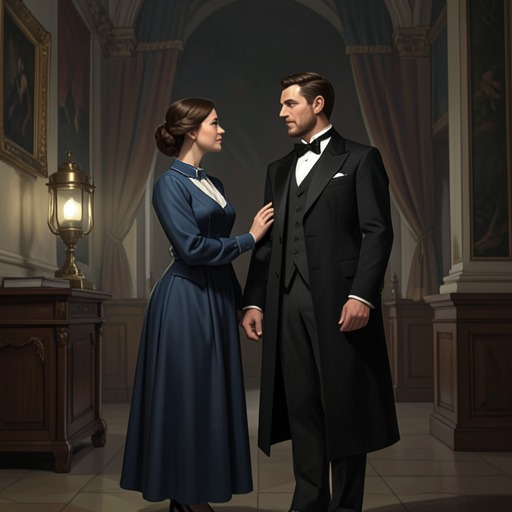
After Katherine went into confinement, Henry and the young men began going into the City in the evenings without guards, disguised. Anne Stafford, who was supposed to be with Katherine, used the cover of the queen’s household to slip away and meet the king. The affair took place behind the reassuring routines of court life: while Katherine was secluded with their child, her husband was making secret excursions beyond the court.
The disguise made the meetings difficult to identify. Henry and William Compton were similar in height, and both wore false beards and hats. When Anne’s family challenged her about her absences, she said she had been seeing Compton. Her brother, Edward Stafford, Duke of Buckingham, was already angered by the danger to her reputation and to his own good name. Her husband was furious at her conduct, and her sister warned Buckingham when Anne went missing through the night.
The family tested Anne’s account by confronting Compton. He was not the man with whom she had been meeting: the man in disguise was Henry. The discovery transformed what had seemed to be a risky flirtation with the king’s friend into an affair with the king himself. Buckingham left court in anger, and the matter became a public disturbance within the household even as its most intimate details remained hidden from Katherine.
Katherine Learns the Truth
Henry presented the quarrel to Katherine in the great hall as a minor storm. He was conspicuously jovial, speaking loudly and laughing for the benefit of the courtiers following them to breakfast. He said that Buckingham had insulted him and could stay away until he apologized; he also complained about Buckingham’s sister. Katherine answered coolly, but the king’s performance did not persuade her.
She waited until they were alone. After Henry had come to her, she left the bed and brought him a cup of small ale, then asked directly for the truth about his quarrel with Buckingham and his dealings with the duke’s sister. Henry’s sideways glance told her that he was about to lie. He offered a story about a masked entertainment, in which Compton and Anne had danced together, but Katherine recognized it as false and stopped him. She asked whether Anne had been his lover and Compton his friend and shield.
For Katherine, the lie itself sharpened the injury. During nearly a year of marriage, she had heard Henry’s boastfulness and youthful arrogance but believed she had not heard him speak deceitfully to her. His evasive account hurt her more than a plain confession would have. The affair threatened the trust between them at the very moment when she was confined with the child they had long needed.
The Marriage Dispute Beneath the Affair
Henry’s explanation reached beyond the immediate attraction to Anne. He confessed that, for a moment, he had thought he and Katherine were not married, and therefore that he need not keep faith with her. When Katherine pressed him, he said that doubts about whether she had been a virgin when he married her had contributed to his reasoning. The affair thus brought an old uncertainty into the open: whether Katherine’s marriage to Arthur had been consummated, and what that claim meant for her later marriage to Henry.
That question had already been treated as a matter of both dynastic consequence and church law. When Henry VII considered marrying Katherine, Dr. de Puebla warned that affinity could present an objection and that a papal dispensation would be needed even if the marriage to Arthur had not been consummated. He also emphasized that the Spanish monarchs’ consent mattered, since without their application for a dispensation the proposed marriage could not proceed. Henry VIII’s private doubt therefore echoed a larger dispute in which a claim about Katherine’s sexual history could affect the validity of a royal marriage.
The affair did not settle that dispute; it exposed how Henry’s doubts could serve as a permission he gave himself. His admission made Anne Stafford’s secret meetings part of a more consequential crisis: the king had treated uncertainty about his marriage as grounds to disregard its obligations. For Katherine, the betrayal was personal, but its terms were also political and legal, bound to the truth she had maintained about her first marriage.
Anne’s Ambition and the Court’s Reading
Margaret Beaufort later supplied Katherine with an account of how the affair had been uncovered. She described Anne’s family discovering the meetings, Anne’s claim that she had been seeing Compton, and the confrontation that revealed the king’s identity. Margaret also reported a more expansive ambition: Anne believed she might hold Henry’s affection, not merely for a season but for longer, and he had spoken of loving her and belonging to her until death.
Katherine understood the danger as more than a passing attachment. In Margaret’s view, Anne hoped to supplant the queen in Henry’s affections and become the leading mistress at court. Katherine considered the possibility that, if she died bearing Henry’s child, Anne might seek to have her own marriage annulled and marry the king. This was presented as the far edge of Anne’s ambition, not an accomplished plan, but it shows why the affair unsettled the court beyond its immediate scandal: a private liaison could be imagined as a route toward the queen’s place.
Henry’s disguise and Anne’s concealment had temporarily blurred identities: the king could pass for Compton, and Anne could disappear from the queen’s rooms without being recognized as meeting her sovereign. Once the truth emerged, the masks could no longer hide the competing claims beneath the episode—Henry’s desire, Katherine’s marital bond, Anne’s reported hopes, and the court’s concern for reputation and rank. The affair became a test of what the king believed marriage required of him, and of how much Katherine could trust the man who had promised to be her husband.