Henry’s Affair with Anne Stafford and Their Subsequent Reconciliation
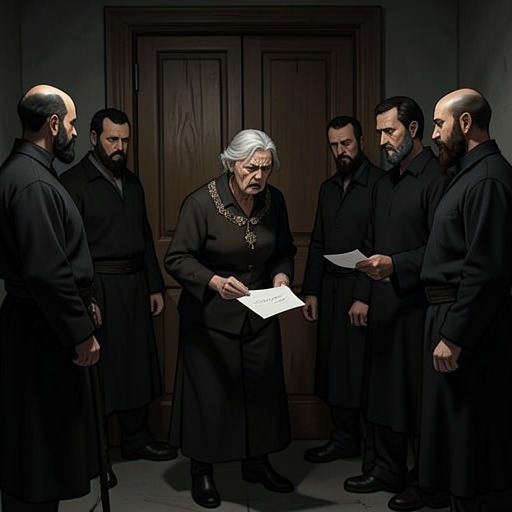
The Constant PrincessHenry VIII’s affair with Anne Stafford, the sister of Edward Stafford, Duke of Buckingham, tests Katherine of Aragon’s marriage at a moment when she is confined with a much-needed child. What begins as a court scandal becomes a private reckoning over fidelity, truth, and the political danger of dishonoring a queen. Katherine does not simply demand an account of Henry’s conduct: she makes clear that gossip about her could threaten the throne itself, then secures a reconciliation on terms of silence.
Discovery and Court Scandal
The episode comes to light through reports about Anne Stafford’s concealed meetings. Anne was married, and her brother was angered by her assignations with William Compton, Henry’s friend. The family feared that the flirtation risked Anne’s reputation and the duke’s good name. At first, Compton appeared to be the man involved. But as the absences continued, Anne’s relatives confronted her and questioned Compton; they came to believe that the king, not Compton, was her actual partner.
The meetings had taken place while Katherine was in confinement. Margaret Beaufort later explained that Henry and the young men had begun going into London in the evenings after the queen’s household withdrew for her confinement. Anne was thought to be sitting with Katherine, but was secretly slipping away to meet the king. When Anne was missing for an entire night, her sister alerted their brother. The family’s suspicion sharpened when they questioned Compton and concluded that he was not the lover Anne had been seeing. The distinction mattered: what had seemed a private flirtation involving the king’s friend was understood as an affair with Henry himself.
The disclosure brought consequences at court. Margaret Beaufort reported that Henry and the duke had exchanged angry words, after which Edward Stafford, Duke of Buckingham, left court and took both his sisters with him. The departure made the quarrel visible beyond the people directly involved. When Henry led Katherine into the great hall and the court followed, she could hear the heightened whispering around them. She raised the subject quietly, keeping her words from the surrounding company, and observed that court quarrels had begun to surface. The affair had therefore become not only a breach within the marriage but a disturbance in the royal household and among powerful courtiers.
Katherine’s Confrontation
Katherine’s response is shaped by her position as queen and by the circumstances of her confinement. She points out that Anne and her sister belong to her household, and that she has authority to choose or dismiss her own ladies. This is a measured assertion of control: she does not begin by making a public accusation, but reminds Henry that the women’s presence in her orbit is also a matter of her household’s governance.
In private, Katherine waits until they are alone before raising the matter directly. She waits until the couple has resumed intimacy, then brings Henry a cup of small ale and challenges the account she has heard. She understands that the story blaming Compton is not true and presses Henry to acknowledge that Anne was his lover. Her initial expectation is that he will lie, leaving her to uncover the truth and confront him with both the affair and his dishonesty. She imagines that such a confrontation might let her act as a wronged, righteous queen; instead, Henry’s betrayal leaves her with sadness and a sense of defeat.
The timing intensifies that feeling. Katherine is in confinement with their child, whom she describes as dearly needed, and she measures Henry’s conduct against his marriage vow to forsake other partners. Her question is not only whether he has been faithful in this instance, but whether she can rely on him to remain faithful for the rest of their lives. The affair makes the promise of lifelong fidelity feel vulnerable to momentary desire, and Katherine recognizes that a wife cannot compel a husband to keep his vows simply by expecting him to do so.
Scandal, Power, and Reconciliation
Katherine also confronts Henry with a different threat: a story about her own sexual past. The possibility is raised that she was not a virgin when Henry married her, and that she had been Arthur’s lover. Katherine rejects this accusation and turns it against Anne, claiming that Anne had deceived Henry. In doing so, she sacrifices Anne’s reputation and Henry’s tenderness toward her to defend herself and contain the greater danger. The exchange shows how quickly a private affair can become entangled with the disputed meaning of Katherine’s earlier marriage to Arthur.
Katherine then makes the political stakes explicit. If people are allowed to gossip about their superiors, she argues, scandal can spread without limit. An insult to the queen is also a threat to the king, because scandal directed at the queen can shake the throne. Her warning reframes the matter: Henry’s conduct has created a danger that extends beyond personal hurt, and he must understand the risk to his own authority as well as to Katherine’s honor.
Henry takes Katherine into his arms and asks forgiveness. Her acceptance is accompanied by a firm boundary: they will not speak of the matter again, and she will not allow anyone to dishonor either her or Henry’s mother. This is the episode’s reconciliation, but it is not a return to uncomplicated trust. Katherine has heard the admission, identified the vulnerability in Henry’s vow, and made silence part of the settlement. The account records neither a public resolution nor a renewed declaration of fidelity; it ends with forgiveness joined to deliberate closure.
Significance in the Marriage
The affair exposes the distance between the ideal of an indissoluble royal marriage and the private conduct of its king. Katherine invokes the vow of fidelity as a serious obligation, yet sees how little protection a vow offers if Henry is easily distracted. Her response is neither simple acquiescence nor open rupture. She speaks as a hurt wife, asserts her rights within her household, and argues as a queen who understands that scandal can imperil dynastic authority.
The episode also links domestic life to court politics through its concrete chain of discovery: evening journeys into London, Anne’s secret absences, her sister’s warning, the family’s questioning of Compton, the duke’s departure, and the whispers that follow Henry and Katherine into the hall. The reconciliation contains the immediate confrontation, but the silence it requires leaves its central fact intact: Katherine knows Henry has betrayed her, and she has answered by making the preservation of her own honor inseparable from the stability of his throne.