Isabella's Letter to Catalina
The Constant PrincessIsabella's Letter to Catalina is a short, sealed message from Isabella of Castile to her daughter, Catalina of Aragon, written while Catalina’s pregnancy and future in England remain uncertain after Arthur’s death. It gives practical instructions about money, residence, and a possible return to Spain, but its greater force lies in the gulf between those instructions and the comfort Catalina needs. Read twice, then folded with care, the letter becomes both a dynastic directive and the occasion on which Catalina recognizes that she must continue without the maternal protection she hoped to find.
Arrival and Form
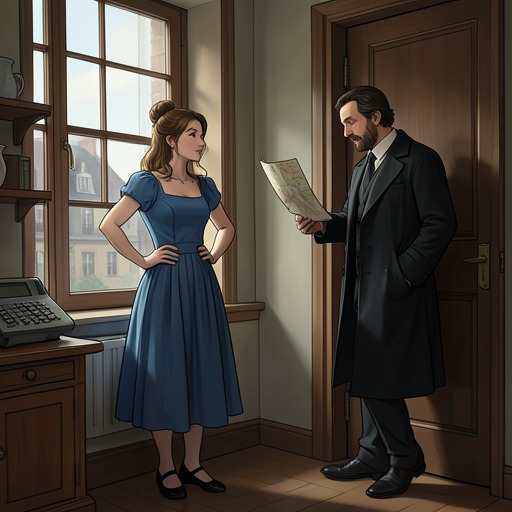
The letter reaches Catalina through the Spanish ambassador, who carries it concealed in a pocket in his sleeve. Before it is delivered, he asks whether Catalina will receive him; she agrees, and asserts that she should be addressed as Princess of Wales. When he corrects the title to Dowager Princess, she accepts the distinction and asks whether he has letters from Spain. She takes the letter without opening it immediately, maintaining her composure rather than appearing to seize eagerly on news from home.
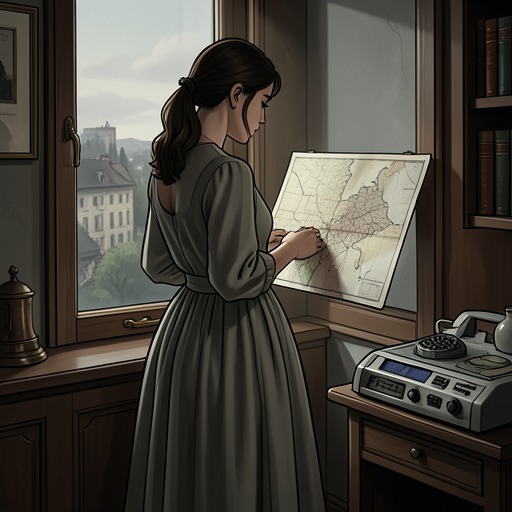
Only after the ambassador leaves does Catalina break the seals. The document is just one page, and its brevity wounds her: she wants to hear her mother’s voice and feels acutely that she is alone, young, and grieving. The letter’s physical smallness thus becomes part of its meaning. Catalina has been waiting for personal reassurance, but receives a compact set of political and financial directions instead.
Instructions for Two Possible Futures
Isabella’s message treats pregnancy as the decisive uncertainty. Catalina is to remain in whatever house has been provided until her next course confirms whether she is with child. If she is not pregnant, she must direct Dr. de Puebla to demand her jointure as Dowager Princess of Wales. She is to sail for Spain only after she has received the full amount, not before. The insistence on securing the money first makes the proposed return conditional on a settlement rather than an immediate act of maternal rescue.
If Catalina is pregnant, the plan changes. She is to tell Dr. de Puebla that her dowry must be paid in cash and at once, secure her allowance as Dowager Princess, and rest in hope of a boy. Isabella orders her to write promptly with her own view of whether she may be pregnant, and again when she knows for certain. Catalina is also to confide in Dr. de Puebla and remain under Doña Elvira’s chaperonage. The letter therefore makes Catalina’s body, title, finances, and place of residence parts of one succession problem: a possible child could alter the terms of her future in England, while the absence of a child would direct her toward Spain.
A Mother’s Letter, a Queen’s Policy
Catalina experiences the instructions as a refusal of the relationship she needs. She had hoped for affection, an offer to bring her home, or some recognition of how deeply she misses Arthur. Instead, the letter contains business and settlements. In her reading, Isabella has written not as a mother addressing her daughter but as a queen addressing a princess. That distinction does not make the instructions irrelevant or careless; it reveals the political duties governing Isabella’s response. She must seek either a grandson or a secure treaty, while Catalina is expected to carry out the arrangements that serve those ends.
Catalina folds the page carefully, matching its edges, and puts it into the pocket at her waist. The controlled gesture accompanies a change in how she understands herself: she will no longer expect the letter to relieve her grief or restore the protection of childhood. She sees herself as a Princess of Spain required to produce a grandson or uphold a treaty. At the same time, she recalls a promise to Arthur: she will become Princess of Wales again and Queen of England. The letter supplies a set of conditional plans, but Catalina resolves that her own commitment to Arthur will guide what she does.
Meaning in Catalina’s Later Course
The letter’s uncertainty about pregnancy gives its instructions a lasting relevance without resolving Catalina’s future. In January 1510, she suffers a pregnancy loss; the episode makes concrete the vulnerability behind the earlier instruction to rest and hope for a boy. Her experience also shows the distance between a dynastic plan, which treats pregnancy as a condition to be reported and managed, and the grief of the person living through it.
On 24 June 1509, Catalina had already been crowned Queen Katherine of England. The ceremony brought her, at last, to the queenship she had promised herself and associated with her destiny. Later, as Henry departed for France, she was invested as regent, governor of the realm, and captain general for home defense. These later positions are not outcomes promised by Isabella’s letter. Rather, they throw its limited alternatives into relief: the young widow whom it directs either toward a negotiated return or toward waiting for a male heir becomes a queen who occupies England’s throne and exercises authority in the king’s absence. The letter preserves the moment before that transformation, when a daughter’s longing for home meets a queen’s demand that she act for dynasty—and Catalina begins to claim a future of her own.