Katherine’s widowhood in England
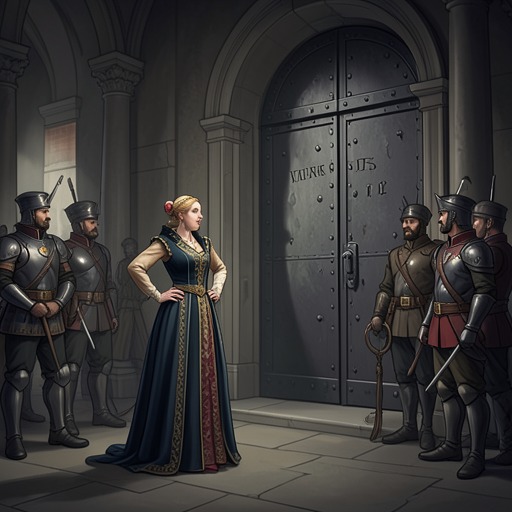
The Constant PrincessKatherine of Aragon’s widowhood in England was not a quiet interval between marriages: it was a prolonged struggle over money, status, and whether she could shape her own future. For seven years after Arthur, Prince of Wales’s death, the young widow remained in a foreign court where her dowry and promised support were disputed, her marriage to Harry Tudor was delayed, and her political prospects depended on decisions made by men and parents far away. She emerged from those years not only as Henry VIII’s queen but as a woman who had learned to exercise authority and to question the certainties in which she had been raised.
A widow caught in a financial settlement
Katherine’s precarious position was built into the marriage’s finances. The dowry became a point of contention between Henry VII and Ferdinand II of Aragon: Ferdinand had agreed to a substantial sum but sent only half, proposing that Katherine’s household goods make up the difference. Henry VII demanded the balance in cash. At Ludlow Castle, where Katherine and Arthur had lived, they ate from her gold plate; each careless scrape of a knife diminished its value, while the arrangement left her father-in-law with reason to expect that the eventual settlement would have to be paid in money rather than in household goods.
The contract also promised Katherine a widow’s jointure: a third of the revenues of Wales, Cornwall, and Chester until she remarried. Her parents asked Henry VII to return her dowry as well. Yet the formal terms offered little security in practice. Katherine believed that Henry VII would not repay the dowry or provide the promised revenues, noting that he had not even paid her allowance while Arthur was alive. The ambassador’s explanation that the obligations were written into the contract could not resolve her central problem: a claim on paper did not mean that she could make the king honor it.
Isabella of Castile’s instructions treated her daughter’s immediate future as a financial decision. Katherine was to remain in whatever house was provided until she could establish whether she was pregnant. If she was not, she was to have Dr. de Puebla demand her jointure and sail to Spain only after receiving the full amount. If she was pregnant, she was to seek immediate payment of the dowry in cash, secure her allowance as Dowager Princess of Wales, and rest in the hope of a boy. Isabella also required Katherine to report her condition and to remain under Doña Elvira’s chaperonage. In the letter, maternal care gave way to the business of protecting a dynastic alliance and its assets.
Poverty, delay, and isolation
Katherine understood that the contract could not compel Henry VII to act. An emissary from Spain was expected to escort her home once the jointure had been paid; her parents were also seeking the return of the dowry. She doubted that Henry would pay either sum. De Puebla reminded her that the jointure lasted only until she remarried and supposed that her parents would arrange another match. The possibility that she might already be betrothed elsewhere shocked her: she had continued to look toward a future marriage with Harry Tudor, but the English court had not made it happen.
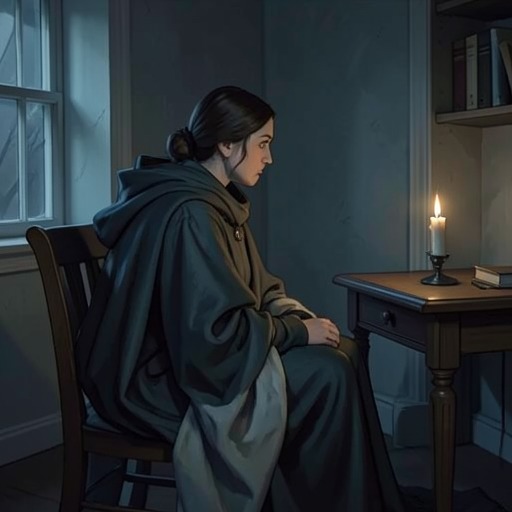
Her position was especially vulnerable because the prospective groom was still a child. At thirteen, Harry Tudor was someone she seldom saw and could not persuade to fulfill his promise. Without the dowry payment, Katherine felt unable to compel the English to honor the betrothal; under Henry VII’s hostility, she could force nothing. She interpreted this failure as having disappointed her mother and failed to secure the English alliance for which she had been raised. As Harry’s fourteenth, fifteenth, sixteenth, and seventeenth birthdays passed without anyone coming for her, waiting became the defining condition of her life in England.
The delay had material consequences for Katherine and her household. She turned the panels of her gowns, sold jewels to buy food, and sent for goldsmiths to sell her precious plate piece by piece. She knew that the plate was considered the king’s property, and she understood that each sale postponed her hoped-for marriage; nevertheless, she needed to feed her household. She could not pay her servants’ wages, and could not reasonably ask them to go hungry or beg on her behalf. Poverty was therefore not an abstract hardship but a daily constraint on the people who depended on her.
Her isolation deepened when she discovered that Doña Elvira was plotting against Ferdinand II in favor of Juana of Castile and Philip of Habsburg. Katherine dismissed Elvira in anger, accepting that the woman might speak against her or accuse her of lying. Elvira left for the Netherlands, and Katherine heard nothing further from her. The rupture deprived Katherine of a familiar attendant at a moment when she was already neglected, but she judged loyalty to her father more important than preserving that relationship.
From widowhood to queenship
When Katherine later looked back on her seven years of widowhood, she said she had taught herself to accept Arthur’s death as God’s will rather than blame those who survived him. That conviction made it possible for her to contemplate marriage to his brother not simply as an obligation to endure, but as a relationship she might enjoy. Her feelings toward the marriage changed as her circumstances changed: the young woman who had waited in poverty could take pleasure in being queen, in fine possessions and jewels, in her ladies’ company, and in being able to repay María de Salinas the wages owed to her.
Katherine also recovered an important friendship. She summoned Margaret Pole to court; the two embraced and wept with joy at seeing one another again. Margaret’s discretion mattered to her: she did not speak of Arthur, but understood what the new marriage had cost Katherine and why she had entered it. Through Margaret, the past was neither exposed as court gossip nor erased. Katherine could build a life at court while preserving a private bond with someone who recognized the loss that preceded it.
The transition to queenship became visible in the handling of Margaret Beaufort’s funeral. After Margaret died, Katherine recognized that the court lacked someone able to organize a royal funeral and summoned the Duke of Buckingham and Margaret Pole. She consulted the Royal Book, which contained Margaret’s handwritten funeral instructions, then reduced the requested scale and issued orders. The resulting ceremony was quiet and dignified. By managing this first public English occasion, Katherine demonstrated that her long years of waiting had not left her unprepared: she understood court temperament and ceremony, and could use them to establish herself as the leading woman of the new court before her coronation.
On 24 June 1509, she was carried from the Tower to Westminster in a cloth-of-gold litter borne by four white palfreys. Wearing white satin and a pearl coronet, she received the anointing, scepter, and ivory wand after Henry VIII was crowned. Her coronation fulfilled the destiny she believed she had been born for, while the crowd’s welcome affirmed the constancy she had maintained through years of neglect. The contrast was stark: a woman once unable to secure her allowance or compel the fulfillment of a betrothal now occupied a throne beside the king and took part in the public rites that established her authority.
The lasting consequences of waiting
Katherine’s years as a widow shaped how she exercised power after her marriage. She learned to influence Henry VIII indirectly, preparing him for requests so that councilors, petitioners, and advocates could approach him through her. She did not blame him for being unlike Arthur, and she understood her marriage to Harry as one she could enjoy rather than a vow imposed solely by duty. At the same time, her political work drew on the governing ambitions she associated with Arthur: she consulted advisers and the Privy Council about law, coastal defenses, ships, and military musters, and sought to make the kingdom more peaceful and powerful. Her later authority did not erase the years of dependency; it grew in contrast to them.
The widowhood also altered Katherine’s judgment of Isabella of Castile. After Isabella’s death, Katherine concluded that her mother’s contract had been carelessly written, that the promised summons to return to Spain had not represented a genuine willingness to receive her, and that Isabella had allowed her daughter to remain alone in a foreign country. This reassessment joined private hurt to political criticism: a queen she had once regarded as almost infallible could be loving yet wrong, and could pursue a plan at her daughter’s expense.
The end of widowhood did not end the demands placed on Katherine’s body and dynastic role. In January 1510, after her first pregnancy with Henry VIII, she suffered a pregnancy loss and a stillbirth. Her grief returned her to Arthur’s memory and to the promise she believed she had failed to fulfill. The episode makes clear how sharply her position had changed and how much remained unchanged: she was now queen, yet her private sorrow continued to be measured against the political expectation of producing an heir.
Katherine’s widowhood in England thus became both a period of deprivation and an education in power. The dowry dispute, unpaid support, diminished household resources, and years of waiting exposed the limits of contracts and royal promises when a woman had little leverage to enforce them. Her eventual queenship transformed that experience into practical authority, while the memories of Arthur, the failed settlement, and her mother’s decisions remained part of the cost—and the meaning—of her ascent.