King’s Great Matter
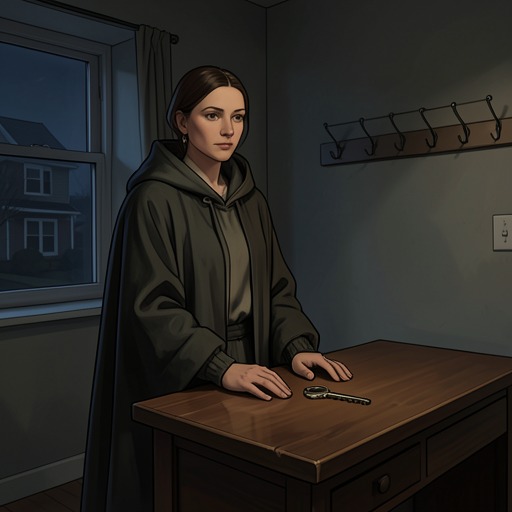
The Constant PrincessKing’s Great Matter turns the question of a royal marriage into a contest over law, dynastic succession, and political authority. At its center is Katherine of Aragon’s insistence that her marriage to Henry VIII cannot be judged apart from her earlier marriage to Arthur, Prince of Wales, and the promise she made to him. When the dispute reaches a court at Blackfriars Hall in June 1529, Katherine’s decision to appear in person makes her own testimony and presence part of the struggle.
Marriage, Dowry, and Dynastic Bargaining
The crisis has a long prehistory in the novel’s account of royal marriage as a negotiation between families and kingdoms. Before Katherine’s arrival in England, Edward Plantagenet, Duke of Warwick, is executed; in her recollection, his death clears away a rival claimant and is a price paid to secure the marriage her parents had arranged. The alliance is therefore shadowed from its beginning by the question of who may claim the English throne.
The financial terms deepen that political entanglement. Katherine’s household and dowry become points of conflict between Henry VII of England and Ferdinand II of Aragon. After Arthur’s death, Ferdinand seeks both the return of the dowry and the payment of the widow’s jointure: a third of the revenues of Wales, Cornwall, and Chester. Katherine doubts that Henry VII will pay, recalling that he had not even provided her allowance while his son was alive. The marriage question is thus never merely personal; money, widowhood, and the value of a renewed alliance shape the choices available to her.
The Marriage Claim and Its Legal Grounds
Henry VII’s proposal to marry Katherine himself brings the legal problem into view. Because she had been married to his son, affinity could obstruct a marriage between them. The proposed solution depends on a papal dispensation, while the claim that Katherine’s marriage to Arthur was never consummated is treated as crucial to overcoming the impediment. Rodrigo Gonsalvi de Puebla confirms that claim to Henry VII, and later stresses that even if the marriage was not consummated, a papal dispensation would still be necessary if Katherine’s parents did not apply for one.
That earlier negotiation establishes the legal language later used in King’s Great Matter: whether the first marriage was consummated, what the parties had said about it, and whether church authority could permit a subsequent marriage. The novel presents these matters as both questions of church law and instruments of royal policy. A statement about private marital history can determine whether a king’s marriage stands and whether the succession built upon it is secure.
From Queenhood to Public Dispute
Katherine’s coronation as Queen of England gives her a sacred and public authority that contrasts with the vulnerability of her marital position. She is anointed after Henry VIII, receives the symbols of queenship, and understands the ceremony as the fulfillment of her destiny. Later, when Henry VIII leaves to lead a campaign in France, he appoints her regent, governor of the realm, and captain general for home defense. These offices show her exercising political power even as the validity of her marriage becomes disputed.
The stakes of that dispute sharpen around her daughter, Mary I of England. At Blackfriars, Katherine sees the challenge not simply as a question about her status as Henry VIII’s wife, but as a threat to her daughter’s inheritance. She believes Anne Boleyn seeks the throne as well as the king, and she enters court determined to defend Mary’s place. The marriage proceeding therefore reaches beyond the couple: its outcome bears on the standing of a queen and the future of her child.
Katherine’s Appearance at Blackfriars
The court scene is framed through Katherine’s memories of her promise to Arthur and her awareness that words cannot be withdrawn once spoken. She recalls promising to love him and describes the promise, made when he was dying, as something she continued to honor. She also recognizes that the claim of nonconsummation—the account that had helped make her later marriage possible—now exposes her to public scrutiny. What had once served as a necessary legal assertion has become a vulnerability that can be used against her.
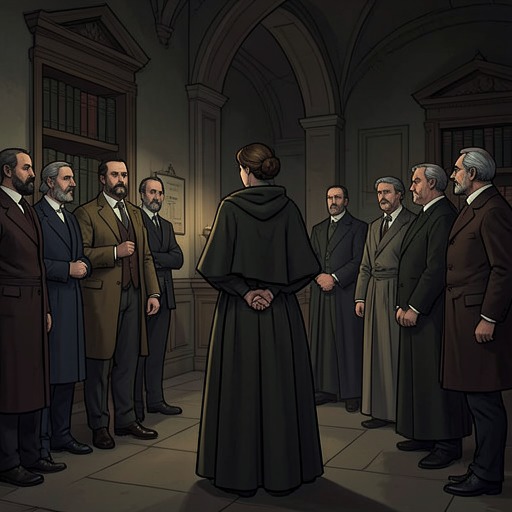
Katherine has prepared no legal defense and has made clear that she does not recognize the court. Nevertheless, when the usher summons her, she answers by entering the hall. She walks toward Henry VIII and stakes her case on his reluctance to state openly that she had been Arthur’s wife and lover before she became his. Her appearance turns the hearing into a direct confrontation: rather than allow the proceedings to continue in her absence, she makes herself, her history, and her claim to queenship impossible to exclude.
Significance
King’s Great Matter binds the novel’s recurring concerns—dynastic marriage, church authority, female political agency, and inheritance—into one public crisis. Its legal questions are inseparable from the consequences of royal decisions: a dispensation can authorize a marriage, a disputed claim about consummation can unsettle it, and the resulting uncertainty can threaten a daughter’s succession. The issue also exposes the cost of turning intimate promises into instruments of statecraft. At Blackfriars, Katherine’s answer is not a resolution of the legal dispute but an act of resistance: she appears, faces Henry VIII, and insists through her presence that her marriage and her daughter’s future cannot be decided as though she were absent.