Knowing that you do not know is the beginning of wisdom
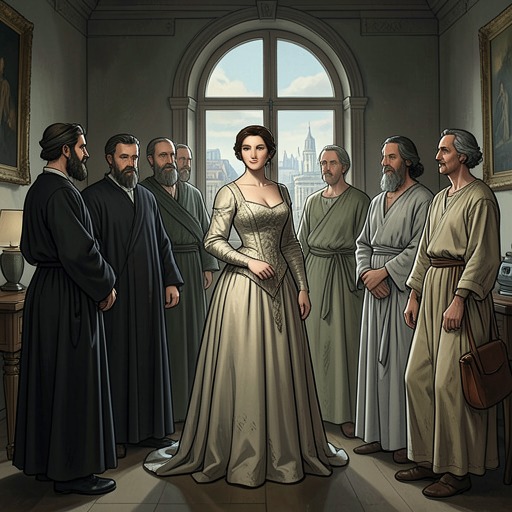
The Constant PrincessKnowing that you do not know is the beginning of wisdom is the principle a physician offers Katherine of Aragon when she can no longer answer his challenge to her religious certainty. Her admission that she does not know becomes, in his account, not a failure of faith but the beginning of humble inquiry.
The Exchange Behind the Expression
The physician sets the phrase within a conversation about religious difference. He argues that shared faith and the effort to live well matter more than the difference between their religions, and that cruelty committed for power is a more fitting object of opposition than people who worship a forgiving God. Katherine answers that she has been taught to regard herself as a child of the true religion and him as an infidel, but her assertion carries less conviction than before.
Katherine’s Admission
Unable to reply, Katherine describes the conflict between her mother’s teaching and the goodness she perceives in the physician. She says that she does not know, and that she must take the question to God and pray for guidance. The expression’s central idea is enacted in that pause: rather than claim certainty, she acknowledges the limits of her knowledge.
Humility and Practical Counsel
The physician interprets her admission as the beginning of wisdom, contrasting humble questioning with arrogant assertion. He then turns from religious counsel to practical advice: he will send a list of foods she must avoid and medicine to strengthen her humors, and warns her against cupping, leeches, and harmful potions. His assurance that a baby will come gives the exchange an immediate personal consequence. The expression thus links intellectual humility not only to religious reflection but also to attentive, concrete care.