Lambeth Palace
The Constant PrincessLambeth Palace is a destination in Catalina’s journey to London, where she is to be received under royal escort. Its significance in the narrative lies in that transition: the palace marks the intended endpoint of a formal passage into English court life, though the recorded encounter with her escorts takes place on the road, at Kingston-upon-Thames.
Destination on the Road to London
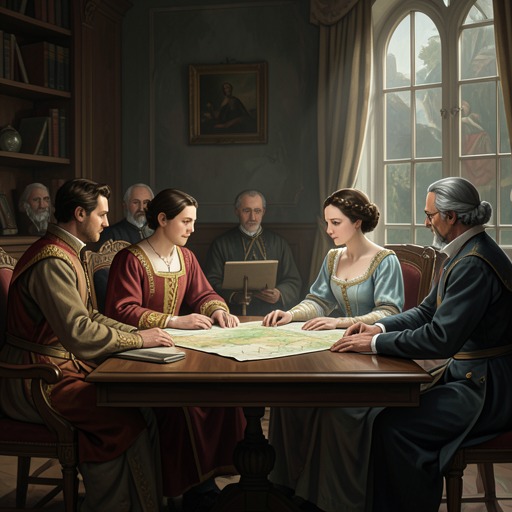
After Henry VII and Arthur, Prince of Wales, return swiftly to Windsor, Catalina’s much larger train makes its way toward London at a slower pace over muddy roads. She travels in a litter carried by mules, accompanied by her ladies-in-waiting and Spanish household, with her trousseau in great chests and guards assigned to her dowry treasure. At Kingston-upon-Thames, the party halts to meet Edward Stafford, Duke of Buckingham, and Henry VIII, then Duke of York, who have been appointed to accompany her to Lambeth Palace.
The Escort at Kingston-upon-Thames
The meeting happens before the party reaches the palace. Catalina hastily leaves her litter, unwilling to risk another dispute with Doña Elvira over a young woman meeting men before her wedding. When Doña Elvira urges her to wear her veil before Edward Stafford, Catalina corrects the duke’s name and insists that she be addressed as Princess of Wales. She says that a veil would be inappropriate because the escort is acting under royal command, and that Henry VIII, a ward of Margaret Beaufort restored to his family fortunes, is owed the greatest respect.
Catalina approaches the waiting party barefaced, at once fearful and daring. The scene sets her careful observance of rank beside her readiness to act on her own judgment: even as a foreign princess entering a new court, she asserts the title and protocol by which she understands her position.
Narrative Role
The palace is identified as the escort’s destination, not as the setting of the Kingston meeting. The distinction gives Lambeth Palace a threshold role in this episode: Catalina is being conducted toward an English royal residence, while the first personal encounter on the route allows her to display the composure and command of status that will shape her public identity. The account supplies no description of the palace itself; its importance here comes from its place in the journey and the ceremony of arrival it anticipates.