Spanish army
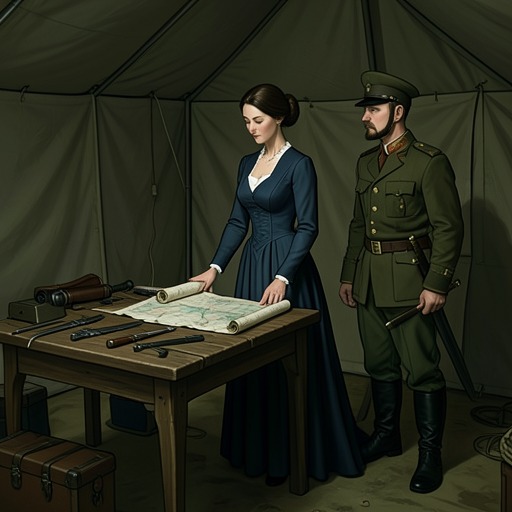
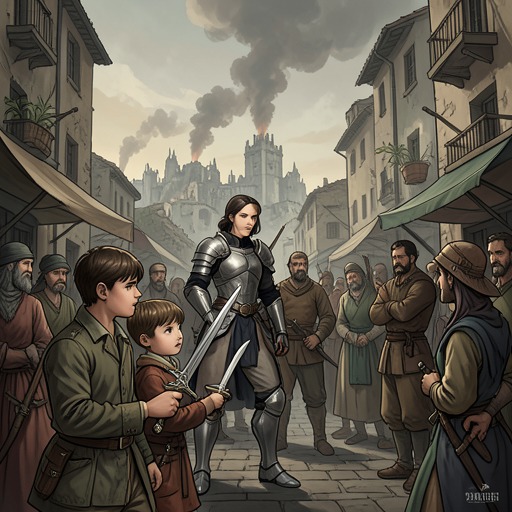
The Constant PrincessThe Spanish army was the royal force of Isabella of Castile and Ferdinand II of Aragon, and the instrument of their long campaign against Granada, the Nasrid stronghold. The book presents it not only as an army in the field but as a body that could recover from disaster through discipline, labor, and supply. Its methods left a lasting imprint on Catalina of Aragon, who grew up among its campaigns and later carried its lessons into her own military leadership.
Campaign and recovery at Granada
During the siege of Granada, the army’s camp was accidentally devastated by a fire begun by a single candle. In the confusion, soldiers formed lines and passed buckets from an irrigation channel; a general rallied those who had fled and arranged a defensive formation in case the Moors attacked. They did not. The episode shows the army’s immediate task shifting from siege to survival and the restoration of order.
The following morning, the camp was reduced to smoldering remains, and retreat seemed unavoidable. Isabella of Castile instead ordered that the campaign continue. The army had ridden out expecting a decisive advance against the last great Moorish kingdom in Spain; now it had to regroup and rebuild. Its recovery was not represented as an instant reversal of fortune, but as a sustained effort under difficult conditions.
Labor, fortification, and supply
The army turned to earthworks, construction, and the practical necessities of a continuing siege. Soldiers and high-ranking nobles alike worked in the heat and slept on hard ground in the cold. The Moors watched from Granada’s high fortifications and recognized the Christians’ determination, even as the strength of the position made a direct assault seem futile. The red fortress stood above a broad plain, protected by steep rock faces that ladders could not reach and attackers could not readily climb.
The besiegers gradually built a permanent base. A round chapel, made in a form local builders could construct quickly, came first; then came a modest royal residence with an Arabic courtyard, shelters for the lords, stables, and secure stores. Isabella had pawned her jewels to buy gunpowder and explosives from Venice, and their protected storage took priority before the later barracks, kitchens, halls, and other facilities. The camp became a stone town called Santa Fe. The army’s ability to establish this base made it possible to continue a siege that had appeared doomed after the fire.
Alliance and campaigns beyond Granada
The army’s role belonged to a larger dynastic and religious strategy. In Catalina’s childhood understanding, an alliance with England would provide wealth and ships for Spain’s campaigns against Muslim powers, while helping counter the danger posed by the French. This is presented as her inherited view of the crusading purpose of Spanish policy, not as a complete account of every military objective.
That alliance shaped operations in 1512, when the English royal fleet sailed to join Ferdinand II of Aragon’s campaign against the French army. The English force was meticulously provisioned, but its deployment also served Ferdinand’s plan: English troops were kept inactive at Fuenterrabia, where their presence distracted the French, while Ferdinand advanced into Navarre. The arrangement exposed the costs of allied strategy for the English soldiers, who were left idle and became sick and demoralized. It also showed that the value of an army could lie in the threat it posed and the enemy forces it held in place, not only in a battle it fought.
Inheritance and the limits of victory
As a five-year-old, Catalina saw her mother restore order in the burning camp and watched Isabella’s resolve prevail over panic. Later, Catalina recalled the sustained work required to supply a campaign and treated reliable provisioning as essential to victory. Her childhood therefore offered a practical education in command as well as a political and religious one: the army’s experience joined royal determination to the daily labor that kept a force operating.
That inheritance did not remain unquestioned. After a later English victory over the Scots, Katherine of Aragon considered the example of her parents’ campaigns and recognized the danger of pursuing a defeated enemy into further devastation. She concluded that Isabella of Castile and Ferdinand II of Aragon had driven the Moors overseas without ending the conflict, and that one generation’s triumph could leave another facing renewed war. The Spanish army thus carries two meanings in the narrative: it embodies the discipline and logistical persistence that formed Katherine as a commander, but its victories also become part of the history through which she learns that warfare can perpetuate the very enmity it claims to settle.