Pharaon
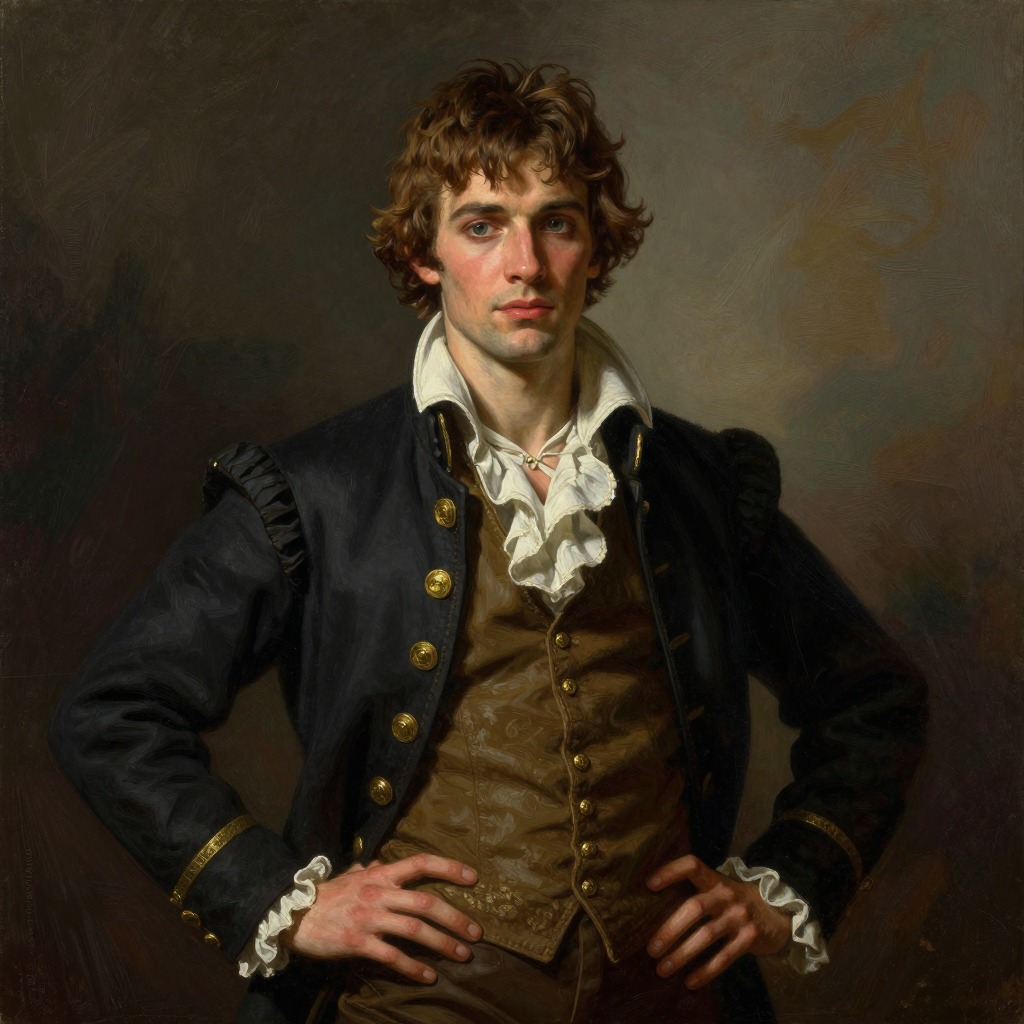
The Count of Monte CristoThe Pharaon is the three-masted merchant vessel belonging to the Morrel & Son shipping firm of Marseilles, and its arrival in port on the 24th of February, 1815, opens the entire narrative of The Count of Monte Cristo. Built, rigged, and laden at the old Phocee docks, and belonging to an owner of the city, the ship is the object of intense local interest, so that the ramparts of Fort Saint-Jean are covered with spectators as it approaches. The vessel draws on past the strait between the Calasareigne and Jaros islands, doubles Pomegue, and enters the harbor under topsails, jib, and spanker, handled with such skill that experienced observers see at once that no accident has befallen the ship herself, even as the idlers on shore ask one another what misfortune could have happened on board. The pilot steers the Pharaon toward the narrow entrance of the inner port, while a young man, with activity and vigilant eye, watches every motion of the ship and repeats each direction of the pilot; this young man is Edmond Dantes, the mate, whose competence on this voyage will be the seed of both his fortune and his ruin.
The Ship as the Ladder of Dantes' Rise
The Pharaon is the vehicle of Dantes' entire social ascent. When the owner, M. Morrel, comes alongside in a skiff, Dantes reports that the ship has lost its captain, the brave Captain Leclere, who died of brain-fever off Civita Vecchia after a long talk with the harbor-master at Naples. The cargo, Dantes assures Morrel, is all safe, and he advises the owner not to take 25,000 francs for the profits of the voyage. Morrel, observing Dantes' handling of the vessel, remarks that a sailor need not be so old as Danglars to understand his business, and declares that Dantes seems to understand it thoroughly. The owner then reveals his intention to make Dantes captain of the Pharaon, a prospect that fills the young sailor with tears of joy, as he thanks Morrel in the name of his father and of Mercedes. The ship thus becomes the concrete promise of Dantes' future: a captaincy at twenty, with a hundred louis pay and a share in the profits, a future he describes to his father as more than a poor sailor could have hoped for.
The Ship as the Occasion of the Conspiracy
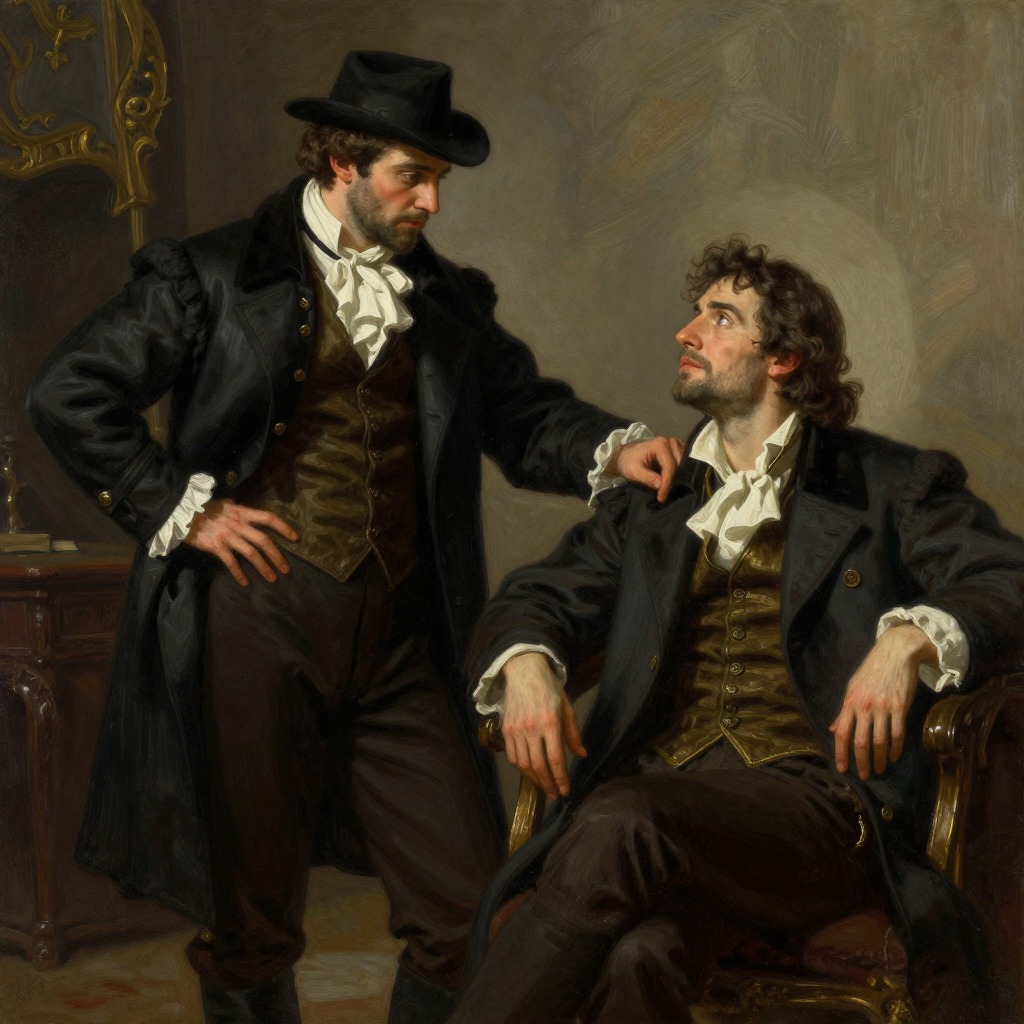
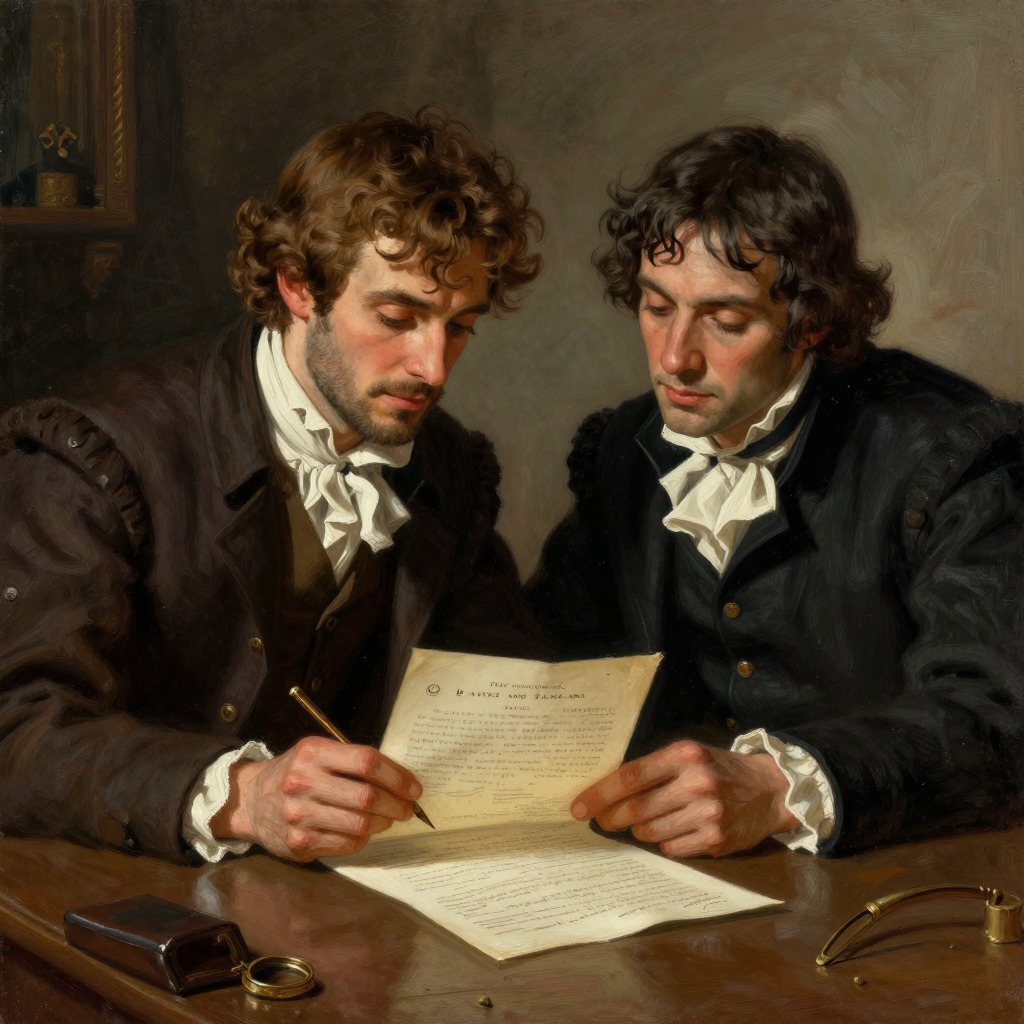
The Pharaon is also the instrument of Dantes' destruction. The supercargo, Danglars, who is obsequious to his superiors and insolent to his subordinates, and who is as much disliked by the crew as Dantes is beloved, seizes on the ship's voyage as the material for his plot. Danglars notes that Dantes, after the captain's death, assumed command without consulting anyone and caused the loss of a day and a half at the Island of Elba, where he delivered a packet to Marshal Bertrand and even spoke with the emperor. Danglars, who had seen Dantes give the packet and a letter to the captain's care, and who had himself been present when the letter was handed over, uses this knowledge to write an anonymous denunciation, in a disguised left-handed script, accusing Dantes of being a Bonapartist agent entrusted by Murat with a letter for the usurper and by the usurper with a letter for the Bonapartist committee in Paris. The denunciation specifies that proof will be found on arresting him, for the letter will be found upon him, or at his father's, or in his cabin on board the Pharaon. The ship, which had been the promise of Dantes' happiness, thus becomes the site where the evidence of his supposed crime is said to lie, and the instrument by which his enemies destroy him.
The Ship as the Symbol of Morrel's Ruin and Salvation
The Pharaon's fate is intertwined with that of the Morrel family. After Dantes' imprisonment, the ship is left without a captain, and Danglars, who has maneuvered himself into the position of temporary commander, hopes to make it permanent. Years later, when the house of Morrel & Son is on the brink of ruin, having lost five ships in two years and suffered by the bankruptcy of three large houses, the owner's only hope is the return of the Pharaon, expected from the Indies with a cargo of cochineal and indigo. The ship, however, is reported lost, wrecked in a storm off Cape Blanc and Cape Boyador, with the crew saved by the vessel La Gironde. The news of the Pharaon's loss is the final blow that drives Morrel to the brink of suicide, as he faces debts of 287,500 francs with only 15,257 francs in hand. Yet at the very moment of his despair, a miracle occurs: the lookout signals the Pharaon, and a ship bearing on her stern the words "The Pharaon, Morrel & Son, of Marseilles" enters the harbor, an exact duplicate of the lost vessel, loaded as that had been with cochineal and indigo, with Captain Gaumard giving orders and old Penelon making signals to M. Morrel. This phantom ship, which is the instrument of the unknown benefactor's salvation of the Morrel family, is the same vessel that had once carried Dantes to his doom, and its reappearance completes the cycle of the novel's opening.
The Ship's Narrative Significance
The Pharaon is thus a central symbol of the novel's themes of fortune, betrayal, and redemption. It is the concrete object through which Dantes' rise is promised, his fall is accomplished, and the Morrel family's salvation is achieved. The ship's return, like Dantes' own return as the Count of Monte Cristo, is a resurrection that reverses the earlier catastrophe, and the vessel's name, which means "Pharaoh," evokes the biblical story of Joseph, who was raised from prison to become the savior of Egypt, just as Dantes is raised from the Chateau d'If to become the savior of the Morrel family. The Pharaon, in its double role as the instrument of Dantes' ruin and of Morrel's salvation, embodies the novel's central paradox: that the same object can be the vehicle of both destruction and deliverance, and that the hand of providence works through the very things that seem to bring about the greatest misfortune.