Bishop Manuel Aringarosa
The Da Vinci CodeBishop Manuel Aringarosa, the president-general of the conservative Catholic prelature Opus Dei, is a figure driven by a desperate, single-minded faith that makes him both a powerful ally and a tragic pawn. His conviction that the Church is abandoning its rigorous traditions, combined with a personal crisis that threatens to destroy his life's work, leads him to embrace a shadowy figure known only as the Teacher. This alliance sets in motion the murders of Jacques Saunière and the three sénéchaux of the Priory of Sion, a chain of violence that ultimately shatters Aringarosa's world and reveals the depth of his manipulation.
Identity and Background
Aringarosa is introduced as a man of the soul, not the flesh, his face dominated by a flat, crooked nose shattered by a fist in Spain when he was a young missionary. He wears a traditional black cassock and a 14-karat gold bishop's ring with purple amethyst and large diamonds, a symbol of his high office that he prefers not to draw attention to when traveling among the public. As president-general of Opus Dei, he has spent the last decade spreading the message of "God's Work," a congregation founded in 1928 by the Spanish priest Josemaría Escrivá that promotes a return to conservative Catholic values and encourages sweeping sacrifices. The prelature's traditionalist philosophy exploded across the world after the 1934 publication of Escrivá's spiritual book The Way, and Opus Dei has become the fastest-growing and most financially secure Catholic organization globally. Aringarosa is deeply troubled by the media's portrayal of Opus Dei as a brainwashing cult or an ultraconservative Christian secret society, and he is acutely aware of scandals involving misguided members, such as those who drugged recruits with mescaline or used the barbed cilice belt excessively. He believes the media gravitates toward scandal and that people fear what they do not understand.
The Threat and the Teacher
Five months before the novel's events, Aringarosa's world is shaken by a devastating blow. He is summoned to Castel Gandolfo, the Pope's summer residence, where the Vatican secretariat and two high-ranking cardinals inform him that the Secretariat Council has voted unanimously to revoke the Vatican's sanction of Opus Dei. The Holy See will disassociate itself from the prelature, citing concerns over aggressive recruiting, corporal mortification, and policies regarding women. Aringarosa is stupefied and argues that Opus Dei is the only Catholic organization whose numbers are growing, but his pleas are dismissed. The secretariat tells him that the Lord giveth and the Lord taketh away, and that Opus Dei will be given six months to break away voluntarily. Reeling from this news, Aringarosa is contacted by a man who calls himself the Teacher, a title common in the prelature. The Teacher claims to have ears everywhere and proposes a plan to uncover a sacred relic that will bring Aringarosa enormous power, enough to make the Vatican bow before him and save the Faith. Aringarosa, seeing this as divine intervention, places enormous trust in the Teacher, agreeing that Silas will answer only to the Teacher for several days and that the two of them will not speak directly.
Role in the Conspiracy
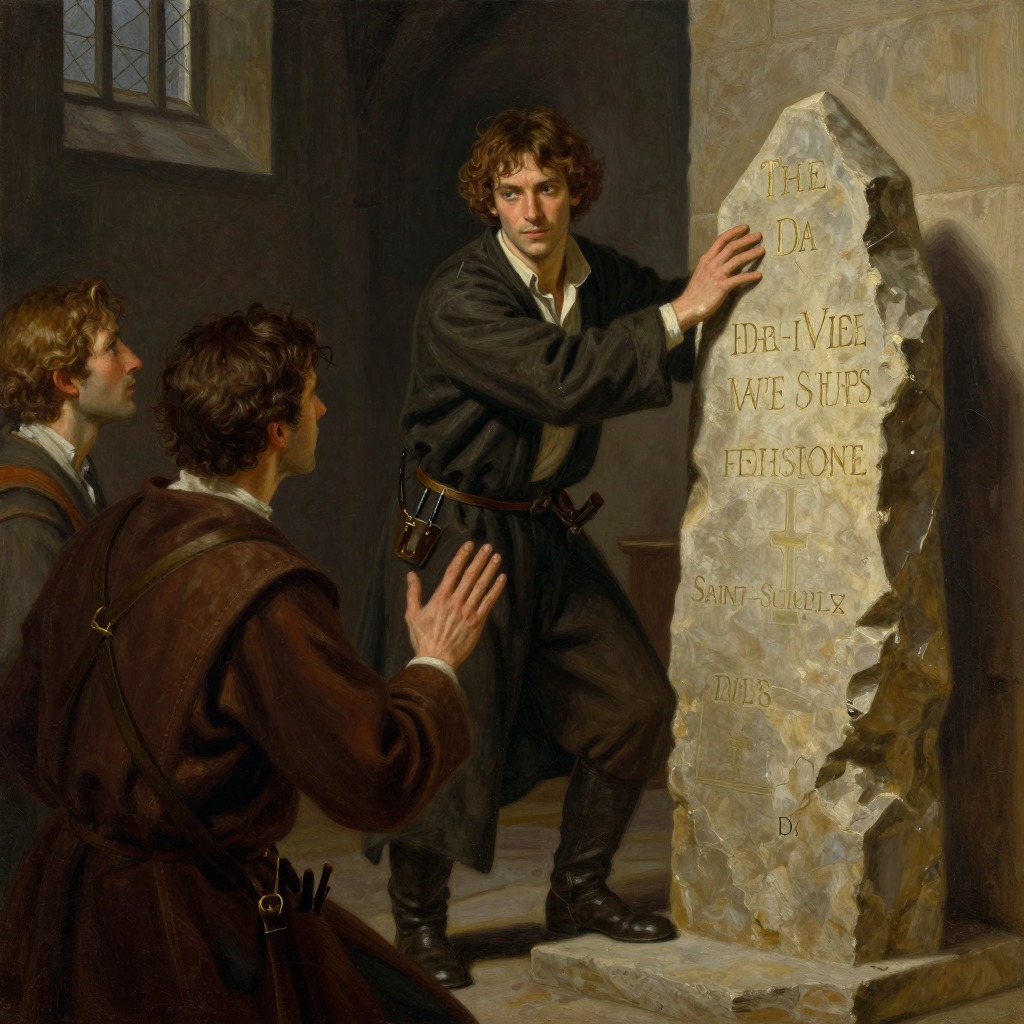
Aringarosa's role is that of a financier and facilitator. The Teacher demands a fee of twenty million euro, a sum Aringarosa secures by traveling to Castel Gandolfo again to collect large-denomination bearer bonds drawn on the Vatican Bank. He signs a document, and the secretariat, though uneasy, provides the funds. Aringarosa believes the money is a pittance for something so powerful. He also uses his influence to get Silas into the Church of Saint-Sulpice, calling the abbé to request that a visiting Opus Dei numerary be allowed to see the church at night. The abbé, in turn, calls Sister Sandrine Bieil, the church's conservatrice d'affaires, to arrange the visit. Aringarosa is unaware that the Teacher is using him as a pawn; the Teacher's true identity is that of Sir Leigh Teabing, a British Royal Historian who has been manipulating Aringarosa's desperation for his own Grail quest. The Teacher's plan is to have Silas murder the four top Priory members, obtain the keystone, and then use the bonds as payment, all while keeping Aringarosa in the dark about the true nature of the operation.
Downfall and Realization
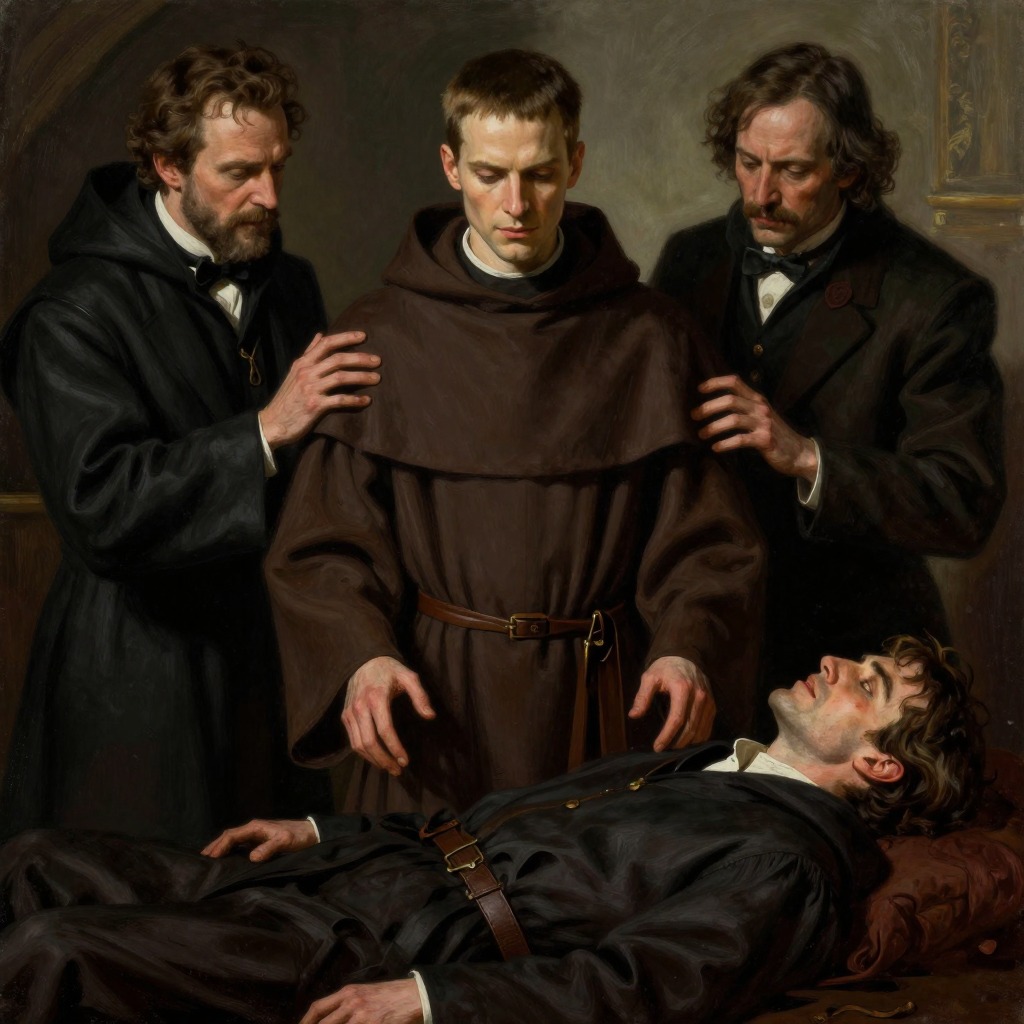
As the plan unravels, Aringarosa's faith is shattered. He learns from Bezu Fache that a nun has been murdered in Saint-Sulpice and that four other people have been killed. Realizing he has been cut loose and used, he confesses everything to Fache, and they race to catch up with Silas before the Teacher can persuade him to kill again. Aringarosa changes his flight plan to London, bribing a pilot with his bishop's ring, desperate to stop the horrific chain of events. In London, he arrives at the Opus Dei Centre just as police are raiding it. In the ensuing chaos, Silas, who has been betrayed by the Teacher and is now a fugitive, opens fire. Aringarosa is shot in the chest. As he lies bleeding in Silas's arms, he tells the monk that they were both deceived and that the Teacher was never going to deliver the Holy Grail. He urges Silas to pray for forgiveness, saying that forgiveness is God's greatest gift. Aringarosa survives the shooting and is taken to St. Mary's Hospital. In his recovery room, he meets with Fache, who returns the briefcase of Vatican bonds. Aringarosa, feeling only shame, asks Fache to divide the contents among the families of the deceased in Paris. He is left to contemplate his uncertain future, having lost everything he sought to protect.
Thematic Significance
Aringarosa embodies the tragic consequences of blind faith and desperation. His unwavering belief in the righteousness of his cause makes him vulnerable to manipulation by a cynical and ruthless figure like the Teacher. He represents the institutional Church's fear of change and its willingness to embrace extreme measures to preserve its power, a theme that the novel explores through the lens of the sacred feminine and the suppression of the truth about Mary Magdalene. His arc serves as a cautionary tale about the dangers of allowing fear and ambition to override moral judgment, and his ultimate act of seeking restitution for the families he wronged suggests a final, painful glimpse of the humanity he had lost.