Holy Grail
The Da Vinci CodeThe Holy Grail is the central, transformative mystery of The Da Vinci Code, a concept that is radically redefined over the course of the narrative. Far from being the chalice of Christ, the Grail is revealed to be a person: Mary Magdalene, the wife of Jesus and the bearer of his royal bloodline. This secret, protected for centuries by the Priory of Sion, is the explosive truth that the novel's characters seek, and its potential revelation threatens to upend the foundational doctrines of the Christian Church.
The Grail as a Person and a Bloodline
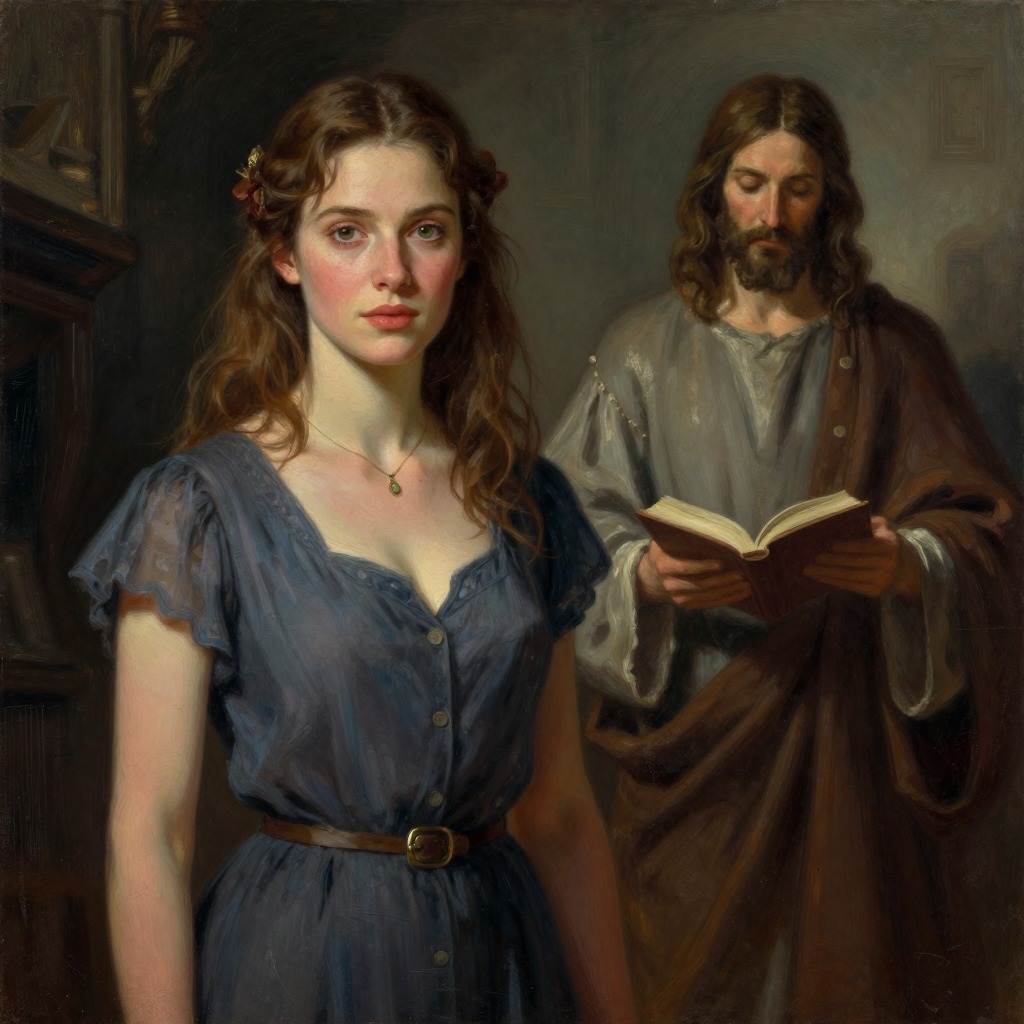
The novel systematically dismantles the traditional image of the Holy Grail as a cup. Through the explanations of Robert Langdon and Sir Leigh Teabing, Sophie Neveu learns that the Grail legend is an allegory. The word "Sangreal" itself is a clue, derived from "Sang Real," meaning "Royal Blood." The Grail is therefore not an object but a woman—Mary Magdalene—who was the "chalice" that held the blood of Jesus Christ. This interpretation is supported by the novel's claim that Jesus and Mary Magdalene were married and had a child, a daughter named Sarah, who was taken to France after the crucifixion. The Grail, in this context, represents the sacred feminine and the lost goddess, a concept that was systematically suppressed by the early Church.
The Grail in Art and Symbolism
The novel argues that the true nature of the Grail has been hidden in plain sight for centuries, encoded in works of art and literature. Leonardo da Vinci, a former Grand Master of the Priory of Sion, is presented as a key figure who embedded clues in his masterpieces. The most prominent example is The Last Supper, where the figure to Jesus' right is identified not as the Apostle John, but as Mary Magdalene. The painting is said to contain a hidden "M" shape, representing Matrimonio or Mary Magdalene, and the V-shaped space between Jesus and Mary is interpreted as the symbol of the chalice and the female womb. The Mona Lisa, too, is presented as an androgynous figure, a fusion of the male god Amon and the female goddess Isis, whose name is an anagram of "Mona Lisa." The pentacle, drawn on Jacques Saunière's body, is explained as a pre-Christian symbol of the sacred feminine, representing Venus and the divine goddess, a symbol later distorted by the Church into a sign of evil.
The Grail's Guardians and the Quest
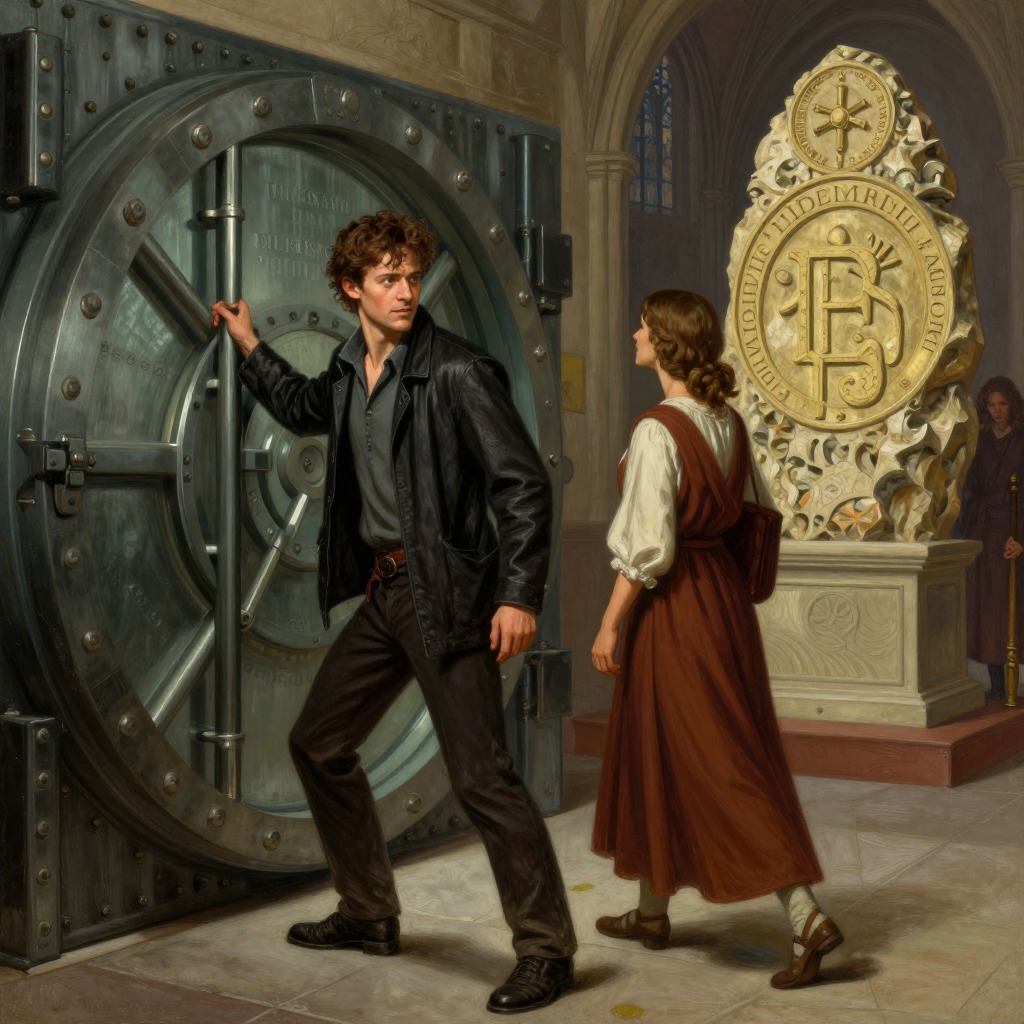
The Priory of Sion is the secret society charged with protecting the Holy Grail—the Sangreal documents that prove the bloodline of Jesus and Mary Magdalene, as well as the location of her tomb. The novel's plot is driven by a quest for the "keystone," a cryptex designed by Leonardo da Vinci that contains a map to the Grail's hiding place. The keystone is a test of merit, a puzzle that only the worthy can solve. The quest is framed as a race against time, with the villainous Sir Leigh Teabing seeking the Grail to expose the Church's "greatest cover-up," while the Church, through Opus Dei, seeks to destroy the evidence to protect its own power. The final revelation is that the Grail is not hidden in a distant, forgotten location, but lies beneath the Louvre's inverted pyramid, a symbol of the chalice, directly on the ancient Parisian Rose Line, the world's first prime meridian. This location, a place of art and history, is presented as a fitting and ironic final resting place for the sacred feminine, guarded by the blade and chalice symbols fused into the Star of David on the floor of Rosslyn Chapel, a decoy that points to the true location.