Lieutenant Jerome Collet
The Da Vinci CodeLieutenant Jerome Collet is a senior officer of the French Judicial Police (DCPJ) who serves as Captain Bezu Fache's second-in-command during the investigation of Jacques Saunière's murder. He operates the surveillance equipment that tracks Robert Langdon through the Louvre, coordinates field agents, and ultimately becomes the officer who uncovers the listening post in Leigh Teabing's barn, revealing the scope of the conspiracy.
Identity and Role
Collet is introduced as the agent who fetches Robert Langdon from the Hotel Ritz Paris. He identifies himself with a sharp, authoritative bark and presents a Polaroid of Saunière's corpse to the professor. His physical description is thin and washed out, with sallow eyes, and he wears an official blue uniform. He drives the Citroën ZX that carries Langdon to the Louvre, navigating the city with a dissonant two-tone siren. Once at the museum, Collet establishes himself at the command post set up in Saunière's office, where he huddles over an audio console with AKG headphones, monitoring the conversation between Fache and Langdon in the Grand Gallery. He also attends to the GPS tracking system, watching a red dot on a floor plan of the Denon Wing that marks Langdon's location.
Key Actions and Objectives
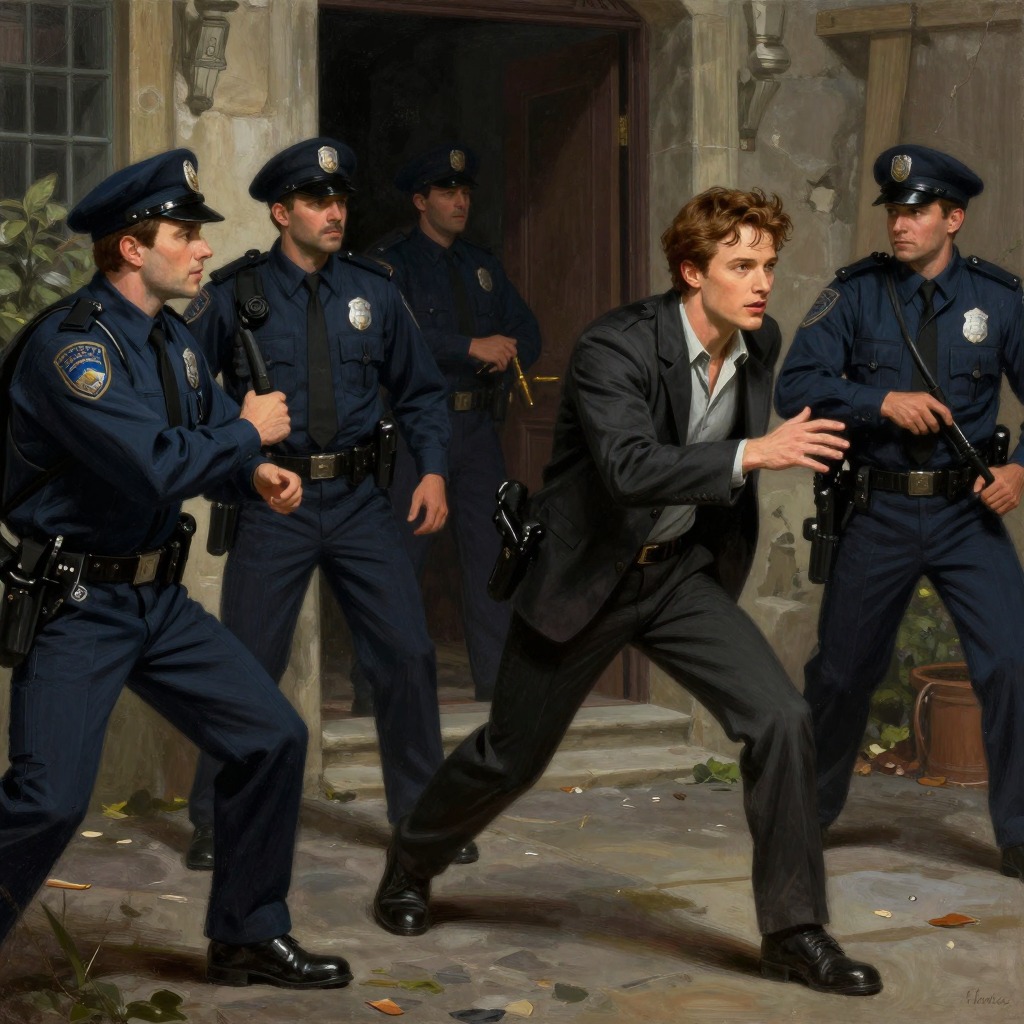
Collet's primary function during the Louvre phase is to maintain the technical surveillance of Langdon. He adjusts his audio gear to ensure the feed is crystal clear, and he observes the GPS signal as Langdon moves through the museum. When Langdon and Sophie Neveu escape, Collet is the officer who reports the GPS dot's movement to Fache, first announcing that Langdon has jumped from the bathroom window and then tracking the signal as it moves south across the Seine on a delivery truck. He coordinates the initial pursuit, broadcasting the truck's changing location. Later, at the roadblock outside the Depository Bank of Zurich, Collet is the officer who stops the armored truck driven by André Vernet, questioning the driver and inspecting the vehicle. He is also the one who receives the tip that leads the police to Château Villette, and he leads the raid on the estate, only to be outmaneuvered by Teabing's intercom trick and the escape in the Range Rover.
Relationships and Conflict
Collet operates under the direct command of Captain Bezu Fache, and their relationship is marked by tension and a clear hierarchy. Fache is often impatient with Collet, snapping at him for interruptions and questioning his competence. After the escape from the Louvre, Fache berates Collet, telling him to "try to do something right for a change." Collet, in turn, is acutely aware of Fache's reputation and methods, musing that Fache's intuition seems "almost supernatural" and that he is a master of the delicate art of cajoler. He also notes Fache's personal investment in the case, suspecting that the captain needs the arrest to silence his critics and secure his pension. Despite this, Collet shows a degree of independent judgment, questioning Fache's orders to wait before storming Château Villette and later, after the dust settles, publicly defending Fache's actions to the press, suggesting the manhunt was a ruse.
Change and Ending
Collet's most significant moment comes when he discovers the surveillance listening post in the hayloft of Teabing's barn. This discovery, which reveals that Saunière and other prominent figures had been bugged, shifts the investigation's focus and provides crucial evidence against Teabing. In the aftermath, Collet is seen giving a press conference in front of Château Villette, where he deflects questions about Fache's mistakes by suggesting the captain's public manhunt was a deliberate sting operation. This act of loyalty and damage control indicates Collet's role as a stabilizing force within the DCPJ, capable of managing the fallout from a high-profile case.
Narrative Role and Evaluation
Collet functions as the operational eyes and ears of the police investigation, providing a grounded perspective on the chase. He is a competent but not exceptional officer, often a step behind the protagonists and his own captain. His technical expertise with surveillance equipment is essential to the plot, and his discovery of the listening post is a key turning point. He is a flat character in the sense that he is defined by his professional role and loyalty to the force, but his final act of public defense of Fache adds a layer of institutional solidarity that rounds out his character.