Alexander Duggan’s passport
The Day of the JackalAlexander Duggan’s passport is the Jackal’s most important documented identity in the evidence traced here: a genuine passport issued under the name of a man who had died decades earlier. It lets the assassin present himself as Alexander Duggan and even prove that identity, while the records attached to the document eventually give investigators a way to follow his movements. The passport’s strength and weakness are the same: it passes as official identification, but each routine record made in its name leaves another mark behind.
Identity and Construction
The name on the passport is Alexander James Quentin Duggan. A British records check established that a passport had been applied for in that name on July 14, issued the following day, and mailed on July 17 to the address on the application. The application followed the normal procedure and used the normal form; the decisive fraud lay in the identity itself. Alexander James Quentin Duggan had been born on April 3, 1929, and died in a road accident in his home village on November 8, 1931, aged two and a half.
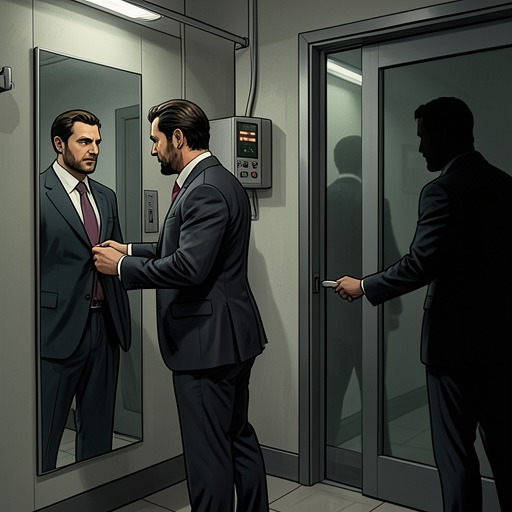
That discovery transforms a plausible name into evidence of deliberate impersonation. The passport does not merely give the Jackal a different name: it gives him the documentary standing of a person whose existence can be checked against official records, while the real Duggan’s death makes the identity impossible. The contrast between a routinely issued document and its impossible bearer is central to how the disguise works. To an inspector checking the passport alone, Duggan could be demonstrated as a legal identity; to the investigators who checked the underlying records, that same demonstration exposed the deception.
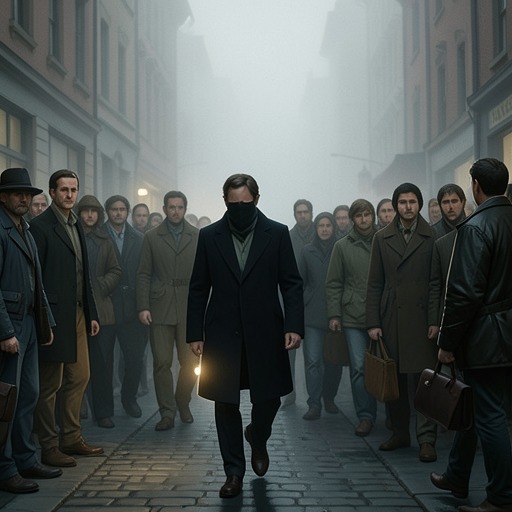
The passport also belongs to a wider reserve of disguises. The Jackal knows that the French police are looking for someone carrying a passport in the name of Charles Calthrop, while he is travelling as Alexander Duggan. He has, in addition, three sets of false papers, including two foreign passports, with matching disguises. The Duggan document is therefore not his only means of evasion, but it is the identity he can openly substantiate at this point: he believes he can prove that he is Duggan even as the manhunt searches for Calthrop.
The Identity Enters the Records
The route by which investigators uncover the fraud shows how the passport becomes legible to institutions beyond the border. In Britain, a team working through death certificates identifies Duggan as a child killed in 1931. The senior inspector reports the birth and death details to Superintendent Thomas, who orders the remaining passport checks to continue but redirects the inspector to investigate the address where the document was sent. He also asks for the photograph submitted with the application, hoping to compare the supposed Duggan with the man known as Calthrop in his new disguise.
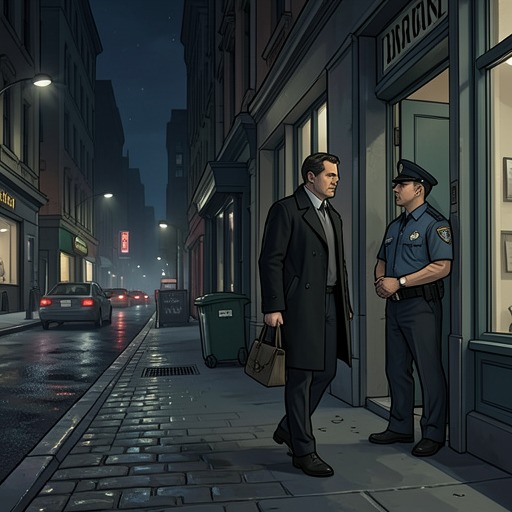
The address leads not to a stable home but to a small tobacconist and newsagent in Paddington. The proprietor accepts mail for customers without fixed addresses for a fee. He cannot confidently remember a regular customer called Duggan; he thinks he may recall the man who collected the envelope, perhaps wearing dark glasses, but cannot be certain. The address has served its practical purpose as a temporary point for receiving mail, yet it offers no reliable witness who can identify the applicant. Even so, the inquiry has recovered both the passport’s delivery destination and a photograph from its application file.
The document’s use in France generates a separate chain of records. French archives show Alexander Duggan entering the country on the Brabant Express from Brussels on July 22. A report from the same frontier post records him travelling back toward Brussels on the Etoile du Nord Express on July 31. A hotel registration card from the Paris police, bearing a passport number that matches the information received from London, shows that Duggan stayed at a small hotel near the Place de la Madeleine from July 22 through July 30. The apparently ordinary stay is thus fixed by intersecting records: a name at the border, a passport number on a hotel card, and a British investigation revealing that the named person was dead.
A Traceable Cover
The passport gives the Jackal a practical advantage because it is more than a disguise visible to other people. It is backed by paperwork that can survive a routine check, and the Jackal understands that the French investigators are initially searching under a different name. He reasons that a rough description of a tall, blond foreigner would fit thousands of visitors in France in August; the Duggan identity appears to separate him from that broad field. After learning that the operation has been exposed, he still considers his assumed name and legitimate passport a source of protection, alongside the additional false papers he carries.
But the same bureaucratic validity that sustains the cover also makes it searchable. French authorities can retrieve border reports, hotel cards, and archived records under the name Duggan; British investigators can check the passport issue against death certificates and the application file. The archival system is vast rather than instantaneous or infallible, and the papers yield information in stages: first the dead namesake, then the postal address and photograph, then the French entry and departure records and hotel stay. The investigation advances not through a single dramatic recognition but by connecting records created for unrelated administrative purposes.
Consequences and Significance
Once the passport is exposed as a false identity, it helps narrow the investigation without immediately revealing the Jackal’s whereabouts. The Paris hotel proprietor confirms that the man being sought was no longer there by August 15. Claude Lebel chooses a quiet visit rather than a raid, then leaves a plain-clothes detective at the hotel in case Duggan returns. The passport has supplied a past itinerary and a possible point of return, but not a current location.
Its significance lies in that double result. As a usable document, Alexander Duggan’s passport lets the Jackal pass through borders and register at a hotel under a coherent identity. As an entry in linked national records, it gives the police evidence to reconstruct part of that journey and recognize that the identity is fraudulent. It is neither a perfect invisibility cloak nor a simple incriminating object: its protection depends on the gap between the name printed on it and the records that can be brought to bear on that name. The manhunt closes that gap by combining routine documents, personal records, and the photograph attached to the application.