Algerian War
The Day of the JackalThe Algerian War is the conflict behind the novel’s central rupture between the French state and soldiers who believe the government has abandoned them. Its meaning unfolds through opposing experiences: an officer’s conviction that Algeria must remain French, a military defeat that hardens into political violence, and private grief carried by the families of those sent to fight. The war does not stay in the past. Its unresolved losses and betrayals shape the OAS campaign against Charles de Gaulle and make the threat of another upheaval seem immediate.
The war as political rupture
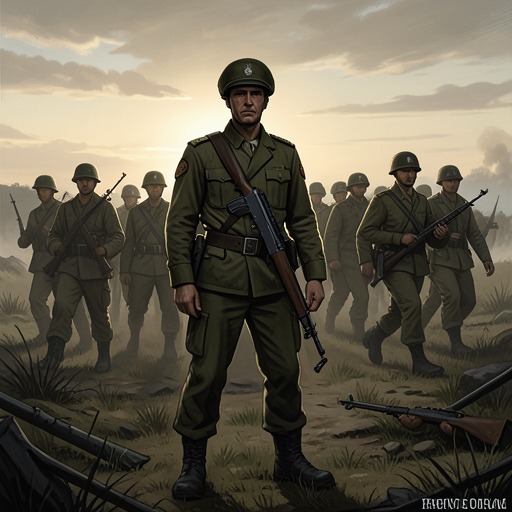
The novel presents the French withdrawal from Indochina as a formative precedent for Marc Rodin. After combat there and a frustrating year in France, he arrived in Algeria in 1956 convinced that the Army could still fulfil its purpose. He regarded the country as part of France, not a distant possession, and imagined that fighting there would vindicate the soldiers who had died in the earlier war. The political question of Algeria’s future consequently became, for him, a test of whether France would honour its Army or repeat what he considered a betrayal.
The change of government initially seemed to confirm Rodin’s hopes. When Charles de Gaulle returned to power in 1958 and spoke of French Algeria, Rodin took the words as assurance that the Army would receive wholehearted national support. He expected a forceful restoration of authority and misunderstood the direction of policy. As negotiations with the National Liberation Front became apparent, the difference between his expectation and the government’s course became impossible for him to dismiss. The novel makes that reversal central: the same leader Rodin had revered as the promise of national recovery became, in his eyes, the man who would relinquish Algeria.
Combat and the widening conflict
Rodin’s experience of the fighting reinforces his belief while the rebellion expands around him. In the countryside, his men fought the National Liberation Army; he later moved from the rural fighting to Bone and Constantine, where the conflict took a different form. Bombs planted in cafes, supermarkets, and play-parks brought violence into places used by French civilians. The novel describes the severe measures Rodin took in Constantine and notes that they earned him the name Butcher in the Casbah. His view of the conflict is inseparable from coercion: he sees the attacks on civilians as evidence that more force is needed, while the methods he uses deepen the brutality of the war.
The account also exposes the gap between Rodin’s certainty and the conditions around him. He treats the rising cost of the conflict, France’s weakening economy, and the demoralisation of conscripts as secondary to the cause. Yet the rebellion spreads despite the killings and destruction. His faith that greater backing from Paris will resolve the war allows him to discount signs that the political and military situation is changing. The war thus shapes him not only through combat, but through the increasingly rigid beliefs with which he interprets its failures.
The Army, de Gaulle, and the failed putsch
When Charles de Gaulle’s policy makes clear to Rodin that Algeria will not remain French, his earlier loyalty collapses into hatred of the government and the political order. He leads nearly his whole battalion into the April 1961 putsch. The novel gives particular weight to the way de Gaulle defeats the rebellion: radios distributed among the troops, initially regarded by officers as harmless entertainment, carry the President’s appeal when the Army’s loyalty is put to the test. Conscripts across Algeria hear the same voice that had once addressed the nation in wartime, and units lose officers and sergeants as soldiers choose where their allegiance lies.
Rodin retains 120 officers, non-commissioned officers, and enlisted men, in part because his battalion contains more veterans of Indochina and the Algerian countryside than many other units. With other putsch participants, they form the Secret Army Organisation, determined to overthrow de Gaulle. The failed uprising does not end the conflict for these men; it redirects it. As French settlers flee and the war’s final weeks bring further destruction, the organisation’s leaders face exile. Rodin’s transition from commander in a colonial war to a leader of an underground campaign makes the consequences of the Army’s division visible in the novel’s present-day assassination threat.
Private losses and inherited loyalties
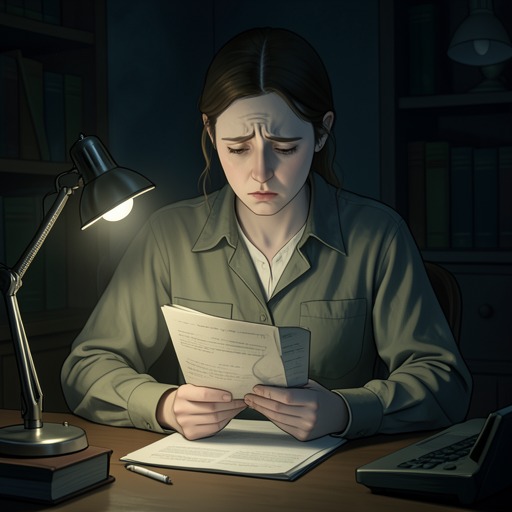
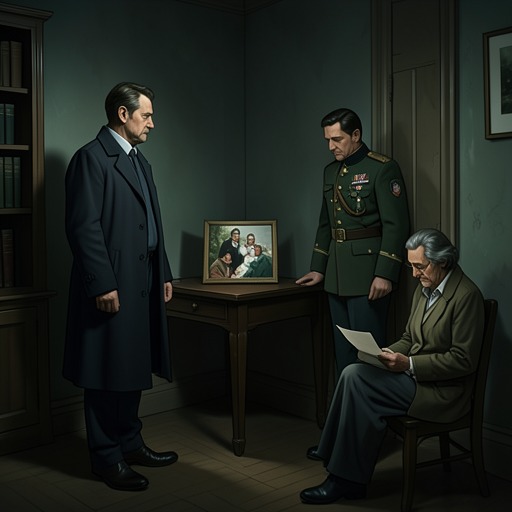
The war’s political arguments are matched by the intimate cost of combat. Jacqueline Dumas learns of her brother Jean-Claude’s death from François, the platoon commander who brings her a letter Jean-Claude had carried. The young soldier had been hit in the lungs during a dawn skirmish with the National Liberation Army. François recounts the unit’s four-mile withdrawal through scrub as the opposing force closed in, the calls for air support, and the fighter-bombers that arrived at eight. Jean-Claude, who had volunteered for a demanding regiment to prove himself, died beside a rock while coughing blood. The particulars of the account bring the battlefield into a family home and make grief the ground on which Jacqueline first seeks to understand the war.
Her relationship with François extends that private history into political allegiance. During his leave, he tells her of the Army’s perceived betrayal, secret negotiations with the imprisoned Ahmed Ben Bella, and the prospect of handing Algeria to the National Liberation Front. She comes to hear the man her father admires described as a traitor. The novel shows how a soldier’s account can recast public policy for someone outside the battlefield: Jacqueline’s knowledge and loyalties develop through loss, intimacy, and François’s interpretation of events.
Viktor Kowalski’s history connects the war to another generation of soldiers. After six years in Indochina, he is sent to Algeria and returns to serve under Rodin. Before that assignment, while attending a weapons-training course near Marseille, he meets Julie, who becomes pregnant. Kowalski leaves for Algeria; JoJo and his wife supervise Julie, and, with her agreement, adopt the daughter she gives birth to in 1955, naming her Sylvie. Kowalski receives the news in a letter and is privately pleased, though he tells no one. Years later, when he considers Sylvie’s leukemia, Rodin’s account of political betrayal helps direct his anger toward the politicians in Paris. The war’s legacy therefore reaches beyond the men who fought: it shapes a father’s sense of responsibility and the way he understands his daughter’s threatened life.
Continuing consequences
By 1963, the Algerian conflict has become the history from which the OAS draws both its adherents and its justification. The execution of Jean-Marie Bastien-Thiry and the capture of Antoine Argoud weaken the organisation, while Marc Rodin takes over operations aimed at assassinating de Gaulle. In the novel’s account, this passage from military revolt to clandestine violence is not a separate crisis: it grows from the defeat of the putsch and the conviction among its survivors that the state has betrayed the Army and abandoned Algeria.
That conviction does not make the assassination plot a continuation of battlefield combat in any literal sense. It shows instead how the war’s unresolved political loyalties are carried into the metropolitan struggle. The novel sets Rodin’s certainty against the consequences of his cause, and individual memories of combat against the sweeping claims made in the name of France. By linking Algeria to failed revolt, exile, private bereavement, and the threat to the President, the story presents the war as an active inheritance: its fighting has altered, but its conflicts continue to govern the choices of those who survived it.