Colette de la Chalonnière
The Day of the JackalColette de la Chalonnière is the estranged wife of Baron Alfred de la Chalonnière and the mistress of a declining country château. She enters the plot as a woman trying to imagine a life beyond an abandoned marriage; her attraction to The Jackal briefly appears to offer that life, until she discovers the rifle he intends to use against Charles de Gaulle. Her sudden shift from desire to recognition exposes the lethal distance between the lover she thought had followed her and the assassin concealed within him.
Marriage, Resistance, and the Empty Château
Colette’s present is measured against two very different versions of her past. In 1942, as a teenage girl carrying messages for the Resistance in the mountains, she met a lean, commanding partisan in his mid-thirties, known by the code name Pegasus. She fell in love with him and married him the following year, while expecting their son. Their wedding took place in secret in a cellar chapel, and she gave birth at her father’s house. The memory of that young Resistance captain sets the measure against which she now regards her husband: the man in a society-magazine photograph is an ageing Baron with a lined face and scrawny neck, far removed from the hawk-faced figure she once loved.
The magazine clipping makes the distance between the two men—and between past promise and present reality—painfully concrete. Sent by a friend, it shows Alfred grinning at the camera while looking toward a starlet’s exposed bosom. The woman, a cabaret dancer who had risen from bar hostess, describes the Baron as a very good friend and says she hopes one day to marry him. Colette reads the image not simply as evidence of Alfred’s infidelity, but as a reminder of the vanished captain she had married. Her first anger at the accompanying letter has subsided by the time she reads it again; what remains is weary disgust.
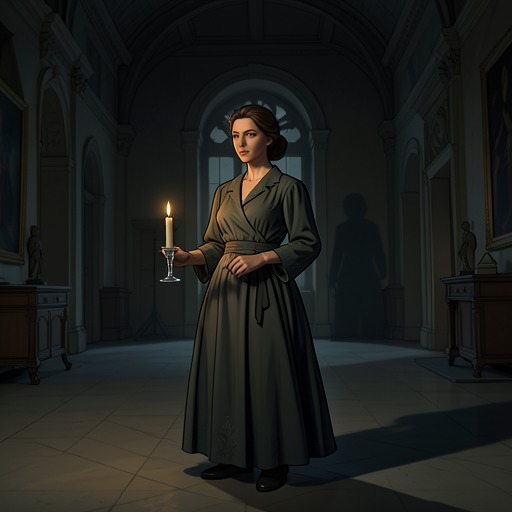
She has returned to the château after a leisurely drive from Gap, where old Ernestine and Louison, the gardener, welcome her home. The two long-serving household workers now function almost as curators of a property whose life has contracted: two-thirds of its rooms are shut and covered against dust. Colette recognizes herself as mistress of an empty castle. There are no children playing in the park and no master of the household preparing to ride from the courtyard. The house remains, but the family life that once gave it purpose has gone.
A New Attachment
Alone in bed with her coffee, Colette considers what she can do with the rest of her life. Her response to the magazine clipping turns into a resolve not to accept Alfred’s conduct passively. In front of a full-length mirror, she assesses her mature figure, its proportions and the effects of the hours she has spent riding and walking in the hills. The scene locates her attention on her own body, but also shows how closely her thoughts are organized around whether it can still attract a man.
Her mind returns to the man who had been with her just over a day earlier. She remembers him as a good lover and regrets not staying in Gap. In her imagined alternative, the two of them would travel together under a false name, like lovers on the run. The fantasy matters because it turns concealment into a form of romance: the assumed name that will soon conceal an assassin’s purpose looks, to Colette, like the means to escape her stale marriage. When a village van arrives at the château, she watches its delivery and then sees a blond man beside three suitcases and a hand-grip. Recognizing him, she smiles with pleasure and understands his arrival as proof that he has followed her.
Discovery and Death
The attachment ends when Colette discovers what the luggage contains. After a telephone call, The Jackal realizes that something about the line troubles him and returns upstairs. He finds Colette among the open suitcases, surrounded by slim steel tubes from which the coverings have been removed. A telescopic sight and a silencer are visible among the parts; she is holding the rifle’s barrel and breech. The weapon turns the suitcases from signs of a lover’s arrival into evidence of a hidden operation.
Colette understands the purpose of the gun: The Jackal means to kill de Gaulle, and he is working for the OAS. His silence confirms her accusation. She tries to run for the door, but he catches her, throws her onto the bed, and strikes her to stop her scream. The violence is swift and decisive; the man she welcomed has become the person who must silence her to protect his plan. Ernestine and Louison are elsewhere in the house, and The Jackal judges that their deafness will keep them from hearing what has happened.
Narrative Significance
Colette’s short arc is built around a reversal of recognition. She first reads The Jackal through the language of desire and escape, interpreting his arrival at the château as a romantic pursuit. The exposed rifle parts force a different reading: the false identities and concealed luggage belong to a planned assassination, not a shared adventure. What seemed to promise release from a loveless marriage instead draws her into the danger of a conspiracy she had not known existed.
Her story also gives the château’s emptiness a sharper meaning. The closed rooms, absent children, and missing master register the collapse of her household before The Jackal arrives. His presence briefly offers a vivid alternative to that isolation, but the intimacy is inseparable from deception: when Colette sees the weapon and names its purpose, the possibility of escape disappears. The final image of The Jackal returning to the task of packing his disguises while ignoring her body makes the imbalance unmistakable. For him, the château is a temporary hiding place; for Colette, it is home, and the discovery that transforms it into the scene of her death.