Corrèze
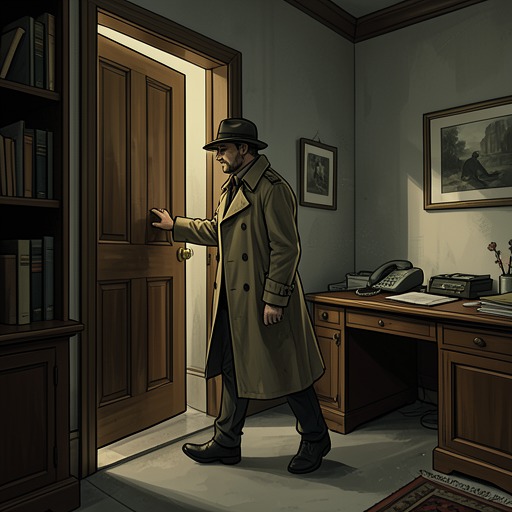
The Day of the JackalCorrèze is the remote department where the Jackal goes to lie low before his planned attack in Paris, and where the traces of his passage give Claude Lebel a new basis for the manhunt. The region first offers concealment: a château in its heart gives the assassin a place to rest and wait. Then a hidden sports car, found in woodland between Egletons and Ussel, converts that refuge into a field of inquiry for local police and Lebel’s national investigation.
Setting and the Jackal’s refuge
The Jackal calculates that he is days ahead of the assassination and needs somewhere to remain out of sight until the appointed time. Corrèze lies about 250 miles across country from his position, and he chooses to make the journey by car despite the risk that police will trace his false identity and search for the vehicle. The department’s distance from Paris serves his immediate purpose: it gives him room to wait while he plans how and when to leave for the capital.
He reaches a château in the heart of Corrèze and settles in for the interval before his assignment. There he bathes, eats a substantial country meal, drinks wine, coffee, and brandy, and studies the ornate ceiling while planning the days ahead. He expects to move in about a week and recognizes that leaving may be difficult; his concealment is therefore temporary, not a retreat from the plot.
The abandoned car and its discovery
On August 20, Marcange Caller, a gamekeeper shooting vermin on an estate between Egletons and Ussel, follows a wounded wood pigeon into dense rhododendron. He finds the bird fluttering in the driving seat of an open sports car hidden within the shrubbery. At first, the car suggests a lovers’ outing, despite a warning notice at the entrance to the woods. Closer inspection overturns that explanation: branches conceal the vehicle, but some have been cut and planted in the earth, with their pale ends smeared with soil to disguise them.
Bird droppings on the seats indicate that the car has been there for several days. Caller takes the pigeon and his gun back through the woods to his cottage, intending to mention the vehicle to the village constable when he goes into the village. The discovery is ordinary and local in origin, but its details make the car more than an abandoned vehicle: its deliberate concealment points to someone trying to erase his route.
The search spreads
Lebel receives word shortly before six from Commissaire Valentin at the regional police headquarters in Clermont-Ferrand. He orders a team to Ussel and directs it to use the car’s location as the centre of a square search. Officers are to ask at farmhouses, shops, cafés, hotels, and woodcutters’ shelters about a well-dressed, tall blond Englishman who speaks French and has been carrying three suitcases and a handgrip. Lebel warns that the man may look as though he has slept rough and may be carrying substantial cash.
The operation must also remain quiet. Lebel instructs the local police to keep the press away, suggesting that they describe the work as a search for a possibly dazed survivor of a car crash. If they find the fugitive, they are not to approach him; they must surround him and hold him until Lebel arrives. Corrèze thus becomes the setting for a coordinated search whose first task is to turn scattered local observations into a location without alerting the quarry.
A landscape of clues
The car’s transformation supplies Lebel with a further line of reasoning. He suspects that the Jackal bought paint in Gap and that the vehicle had already been altered if it was driven overnight from Gap toward Ussel. If so, the timing suggests that the Jackal had been warned that his assumed identity, Alexander Duggan, was under scrutiny. Lebel considers the possibility of an informant but does not treat the evidence as proof of who delivered the warning; he links the suspected leak to the Jackal’s ability to leave the car and disappear into the department.
Corrèze consequently marks a shift in the pursuit. The Jackal has found the quiet interval he needs, but the hidden car gives the police a fixed point from which to reconstruct his movements and question the surrounding communities. The department’s role in the plot is not simply that of a secluded refuge: its rural concealment preserves the assassin’s freedom for a time, while the traces left in that landscape allow the search to close in.