Formation of the OAS
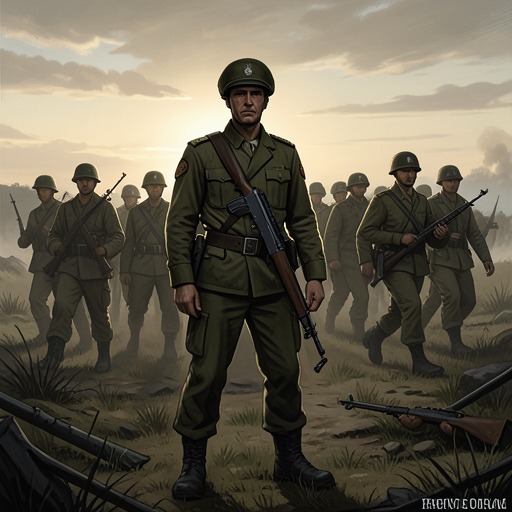
The Day of the JackalThe formation of the Secret Army Organisation (OAS) followed the failure of the April 1961 military putsch against Charles de Gaulle. As the revolt collapsed, Marc Rodin retained the loyalty of 120 officers, non-commissioned officers, and enlisted men; together with other putschists, they formed a secret organization pledged to overthrow the President. The OAS was therefore born not from a successful seizure of power but from the surviving personnel and convictions of a defeated military rebellion, carrying its conflict into clandestine action.
From military defeat to underground organization
Rodin’s commitment to the revolt grew out of his belief that the Army had been betrayed by civilian politicians. The French withdrawal from the colonial war in Asia had hardened his conviction that politicians and Communists were alike in their hostility to the military. He regarded soldiers as the people who sacrificed themselves in combat while civilians remained protected from its costs. To him, the abandonment of that war was a betrayal of the men who had died, and he resolved that there must be no repetition of such a surrender in Algeria.
When Charles de Gaulle returned to power in 1958, Rodin initially believed that the new leader would give the Army the support it needed. De Gaulle’s public identification with French Algeria seemed to promise the political backing Rodin had long wanted. The President’s subsequent policies, including moves toward negotiations with the National Liberation Front, overturned that expectation. When Rodin became convinced that de Gaulle’s vision of France did not include a French Algeria, his former hope gave way to hatred of the political system and of the President himself. He led nearly his entire battalion into the putsch of April 1961.
The radio that broke the revolt
The putsch failed before its commanders could secure the Army’s loyalty. In the weeks before negotiations with the National Liberation Front were announced, thousands of inexpensive transistor radios had been distributed to troops across Algeria. Officers and senior non-commissioned officers generally treated them as a harmless comfort: they brought music to barracks marked by heat, flies, and boredom. But when the Army’s allegiance was tested, the radios also carried Charles de Gaulle’s appeal directly to conscripts stationed throughout the territory.
That broadcast confronted soldiers with a competing claim to loyalty. Many battalion commanders found that officers and sergeants had left their units; in some cases only a handful remained. The account presents the revolt as broken by the same radios that had seemed merely recreational. The distribution of a commonplace object had created a communications channel through which the President could reach the troops over the heads of the officers attempting to mobilize them. For Rodin, whose own convictions remained unshaken, the outcome was a military defeat and the destruction of the expectation that the Army would rise as one behind the putsch.
The OAS takes shape
Rodin’s unit did not dissolve with the failed revolt. Its 120 remaining officers, non-commissioned officers, and enlisted men joined other putschists to form the Secret Army Organisation, committing themselves to overthrow Charles de Gaulle. Their formation marked a change in the struggle’s means: the failed effort to turn the Army into an instrument of revolt gave way to an organization able to continue the fight outside the ordinary military chain of command.
The organization took shape amid the violent aftermath of the putsch and the impending end of French rule in Algeria. During the final seven weeks, as French settlers sold their property and fled the war-torn coast, the Secret Army carried out what the narrative describes as a last, destructive revenge on what its members were leaving behind. Once that period ended, the leaders whose identities were known to the Gaullist authorities faced exile. The OAS thus began with a core of surviving soldiers but developed within a wider crisis of defeat, flight, and underground resistance.
Leadership and the widening campaign
In the winter of 1961, Rodin became deputy to Antoine Argoud, the OAS operations chief in exile. Argoud, a former Free French officer who had fought for the liberation of France and later commanded cavalry in Algeria, supplied the organization’s initiative and strategic imagination. Rodin contributed organization, cunning, and practical judgment. Their division of roles joined a political-military campaign to the practical work of keeping an underground organization active after its defeat and dispersal.
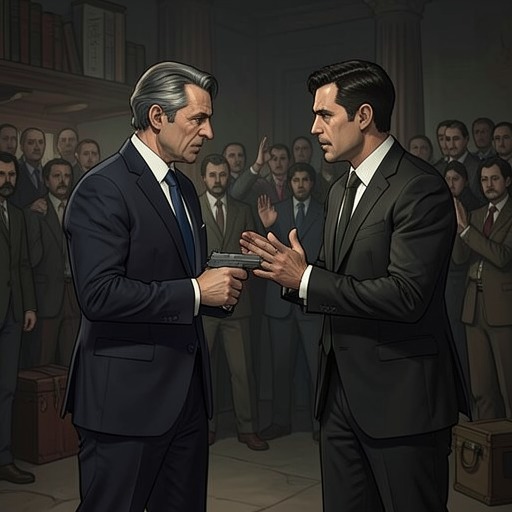
Argoud’s removal later exposed how much the OAS depended on this command structure. The Action Service secretly transported him across a frontier and delivered him, bound and blinded, to police outside their own building. Although his capture demoralized the OAS, his little-known deputy Rodin was positioned to take command of operations aimed at assassinating Charles de Gaulle. The change demonstrated both the vulnerability created by the capture of a senior leader and the consequence of having a successor able to assume operational control.
Under Argoud, the campaign against Gaullist France was conceived as more than armed action. He understood it as a struggle involving terror, diplomacy, and public relations, and arranged for Georges Bidault, head of the National Resistance Council, to present the OAS’s opposition in newspaper and television interviews across Western Europe. This effort placed a respectable political argument beside the organization’s violence. The OAS’s formation had begun with a remnant of a failed putsch; its later campaign sought to make that remnant a continuing political and operational force, even as capture, exile, and declining support narrowed its prospects.