Hotel du Cerf
The Day of the JackalHotel du Cerf is a former Savoyard hunting lodge on the outskirts of Gap, where The Jackal pauses during his journey through the hills and where Claude Lebel’s pursuit nearly catches up with him. Its rustic comfort, open rooms, and everyday hotel business offer the fugitive a temporary refuge. But the booking leaves a trace in police records, and the hotel’s apparent promise of a two-night stay helps draw an entire operation around a man who has already gone.
Setting and Arrival
After travelling north through Digne and Sisteron along the RN85 and following the Durance upstream, The Jackal enters Gap at dusk. He considers continuing towards Grenoble, but, with no need to hurry and August making rooms harder to find, decides to look for a country-style hotel. Just outside town he finds Hotel du Cerf, its bright gables recalling its former life as a hunting lodge belonging to one of the Dukes of Savoy. Several rooms remain vacant, and the hotel retains an atmosphere of rustic comfort and good food.
The stay gives The Jackal a measure of ordinary ease amid his flight. He takes a leisurely bath rather than his usual shower, and dresses in a dove-grey suit, silk shirt, and knitted tie. A maid agrees to sponge and press the checked suit he has worn all day so that it will be ready by morning. At dinner, in a panelled room overlooking wooded hills, the guests chatter while cicadas sound among the pines. The scene is one of summer hospitality and routine, sharply unlike the pursuit gathering around the hotel without its guests’ knowledge.
A Temporary Base
The next morning, The Jackal rises after the sun is already high and receives his freshly pressed checked suit from the maid, Marie-Louise. Shortly after half past ten, he drives his Alfa Romeo into Gap and uses the post office’s long-distance telephone to call Paris. He emerges tight-lipped and hurried. At a nearby hardware store he buys midnight-blue lacquer, white paint, two brushes—including a fine camel-hair brush for lettering—and a screwdriver, then returns to Hotel du Cerf to settle his bill.
The purchases show that the hotel is not simply a place to sleep: it is a temporary base between stages of his escape. While his three suitcases are loaded into the car, The Jackal handles the practical business of checking out. The day clerk later recalls that he seemed hurried and nervous and paid with a new hundred-franc note. During the clerk’s brief absence to fetch change, The Jackal looks through the hotel register. On a previous page he notices an entry for Mme La Baronne de la Chalonniere at Haute Chalonniere in Correze. The register, an ordinary record of arriving guests, thus supplies him with a lead that will shape his next move.
The Booking Becomes a Lead
The hotel’s own records also bring the fugitive into sharper focus for the police. During the night, investigators searching French archives for the name Duggan find that Alexander James Quentin Duggan entered France from Brussels on July 22 aboard the Brabant Express and left Paris for Brussels on July 31. A hotel card from Paris records his stay there from July 22 to July 30 and gives a passport number matching information received from London. Those earlier records establish a trail under Duggan’s name; the booking at Hotel du Cerf gives the investigators a current address.
When information from the regional headquarters at Lyon reaches Lebel, he confirms that Duggan has registered at Hotel du Cerf for two days, beginning the previous night. He declines to issue an all-stations alert immediately. If the fugitive is still driving in the countryside, Lebel reasons, a local officer might mistake him for the driver of a stolen sports car and try to stop him; Lebel believes The Jackal would kill anyone who attempted to intercept him, and that the gun may be in the car. Instead, he orders an armed force to wait around the hotel for the fugitive’s return, stressing that nobody should be hurt if it can be avoided.
The Raid and Its Aftermath
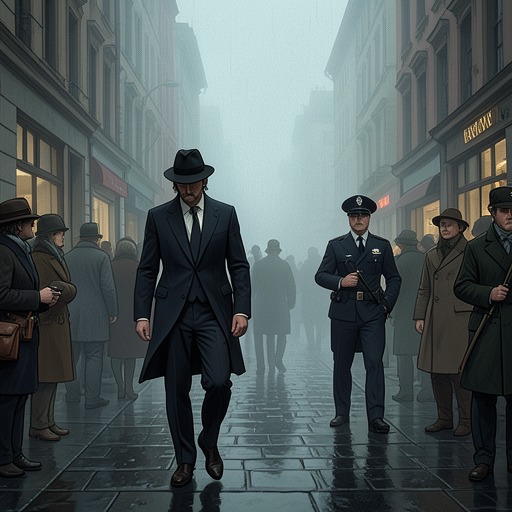
The operation turns the hotel into the centre of a carefully assembled trap. Police in Gap put steel roadblocks across the town’s exits and post men in the undergrowth around the barriers. Officers with submachine guns and rifles set out from Grenoble and Lyon, while a helicopter is prepared at Satory Camp to carry Lebel to Gap. Yet The Jackal has already left the hotel. The convoy passes him earlier on the road without stopping him; by the time Lebel arrives, the opportunity to intercept him at the lodge has passed.
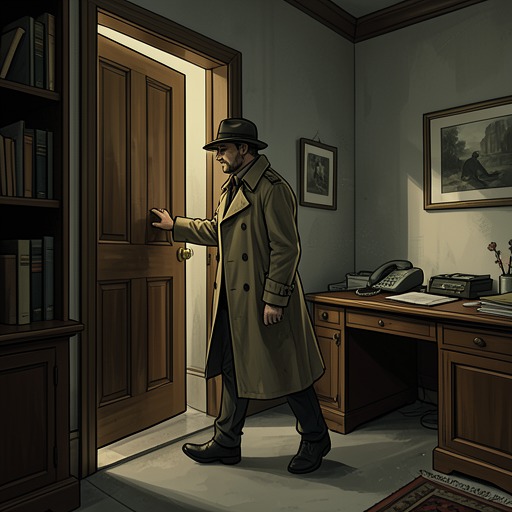
At 4:50 p.m., five hours after the hotel has been isolated, Lebel reaches the entrance with Lucien Caron, who carries a loaded and cocked MAT 49 submachine gun beneath his mackintosh. The proprietor, busy with the accounts, is the one person in town who has not understood that anything is happening. The operation has already disturbed the hotel’s normal routine: the trout seller has not arrived with the day’s fresh catch. Lebel and Caron question the proprietor, then uniformed police search the staff areas, the bedroom, and the grounds. The proprietor and staff are not lying; The Jackal changed his plans that morning and departed.
Hotel du Cerf is therefore both a useful lead and a failed interception point. Its records allow the police to place The Jackal inside France and identify where he is staying, while his departure before the raid exposes the limits of a booking as a guide to a fugitive’s movements. The contrast is central to the hotel’s role in the manhunt: its established comforts and predictable routines briefly accommodate a highly controlled disguise, but the same routine leaves paper evidence behind. When Lebel reaches the empty hotel, the building can confirm where The Jackal had been, not where he has gone.