Josef Grzybowski
The Day of the JackalJosef Grzybowski, called JoJo the Pole, is a Polish former legionnaire whose most consequential act is to help Viktor Kowalski ensure that his infant daughter has a family. Living in Marseille with his wife, Madame Berthe, he turns an old soldier’s blunt solidarity into a lasting arrangement: the couple adopt Sylvie with her mother’s agreement, while Viktor remains a distant, largely silent father. JoJo’s role links the brutal world of the Legion to an improvised household built through loyalty, persuasion, and care.
Identity and Life in Marseille
JoJo is a former legionnaire invalided out of Indochina. He has settled in Marseille and married a cheerful widow who runs a wheeled snack stall along the platforms of the main station. Since their marriage in 1953, the two have worked together: Madame Berthe serves the snacks, while her husband, limping behind her, takes the money and gives change. The detail gives their life a distinctly practical rhythm, shaped by his disability and their shared trade rather than by military ceremony.
In his free time, JoJo frequents the bars used by legionnaires from nearby barracks. There he meets younger recruits and talks over the old days, including his own service at Tourane. This routine brings him into contact with Viktor Kowalski, another Polish ex-legionnaire. Their bond begins among men who share military experience, but its defining expression is not combat. It emerges when Viktor asks JoJo what should be done about a child on the way.
Friendship with Viktor Kowalski
Viktor tells JoJo that Julie is pregnant and wants to end the pregnancy. JoJo agrees with Viktor’s opposition. The two men recall that they were both once Catholics, a shared past that gives their decision a moral frame, though the scene presents it through their direct, rough exchange rather than through formal religious observance. JoJo’s response is immediate and unequivocal: he stands with Viktor in protecting the unborn child.
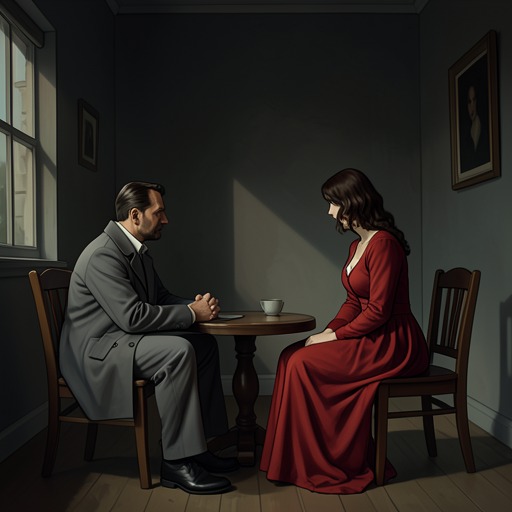
Their resolve becomes a concrete plan during a drunken night. In the small hours, the two agree that JoJo and his wife will take the baby, and they drink to the decision with the solemnity of men who are profoundly intoxicated. By morning, JoJo remembers his promise but cannot work out how to tell Madame Berthe. He circles the subject cautiously, then blurts it out while they are in bed. Her delighted response changes an anxious pledge between two men into a shared undertaking by the couple; the adoption can proceed because JoJo does not act alone.
Sylvie’s Adoption and Viktor’s Will
While Viktor returns to Algeria to rejoin Marc Rodin’s battalion, JoJo and Madame Berthe supervise Julie’s pregnancy in Marseille. Their methods are a mixture of threats and cajolery. When Julie’s former pimp begins hanging around, JoJo warns him off; the man, already wary after a legionnaire had once broken his jaw, gives up that source of income and looks elsewhere. The incident shows JoJo’s protectiveness in its forceful, unsentimental form, while the couple’s continued supervision of Julie makes the intended adoption possible.
Julie gives birth to a blue-eyed, golden-haired girl in late 1955. Adoption papers are filed by JoJo and Madame Berthe with Julie’s agreement, and the adoption goes through. The couple name the child Sylvie. Julie returns to her former life, while the Grzybowskis become the girl’s parents. They inform Viktor by letter. He is strangely pleased, but tells no one; the narrative connects his silence to a life in which anything he possessed seemed liable to be taken away. JoJo’s household therefore gives Sylvie a stable family connection, while Viktor’s place in her life remains private and distant.
Three years later, before a long combat mission in the Algerian hills, Viktor is encouraged by a chaplain to make a will. He leaves his worldly goods to the daughter of Josef Grzybowski, now living in Marseille. The decision extends the bond beyond the adoption: Viktor formally names Sylvie as the person to inherit from him, even though he has little property and spends his accumulated pay during rare periods of leave. The will is filed with his military dossier. When the French security forces later investigate Viktor in connection with terrorism in Bone and Constantine, that dossier is recovered, bringing the otherwise personal connection between the two men into official view.
Later Contact and Narrative Role
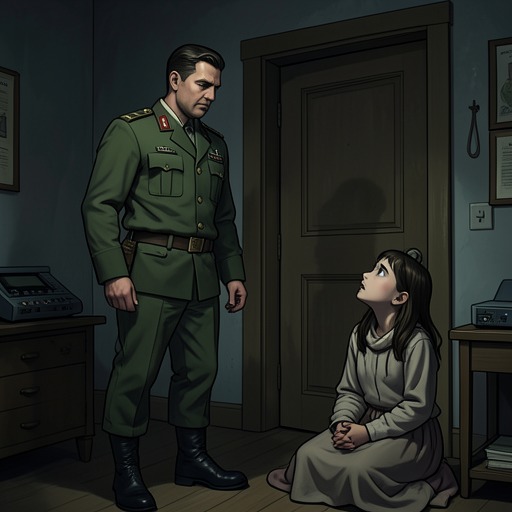
Years afterward, JoJo is still the person Viktor seeks when he learns that Sylvie is seriously ill. Viktor reaches him by telephone after obtaining his number through international enquiries. JoJo says that he had been trying to trace Viktor for three months and hesitates as he confirms the bad news. Sylvie has grown weaker and thinner; by the time a doctor diagnosed her illness, she had already been put to bed. She is in the next bedroom from the flat where JoJo is speaking. The domestic setting makes the distance between the old friends tangible: Viktor has to ask by telephone for news of the daughter JoJo has raised.
JoJo is not given a separate military or political campaign of his own. His importance lies in the durable consequence of a decision made with Viktor and then carried out with Madame Berthe and Julie’s consent. The episode also distinguishes his care from sentimentality: it takes the form of a promise kept, a pregnancy supervised, legal adoption papers, a letter to an absent father, and continued involvement when Sylvie falls ill. Through JoJo, the story shows how a friendship formed among legionnaires can outlast their shared service and shape the life of a child.