Kidnapping of Antoine Argoud
The Day of the JackalThe kidnapping of Antoine Argoud turned a covert French operation in Munich into a public shock in Paris—and, by removing a senior OAS leader, helped elevate the deputy whose command would sharpen the threat against Charles de Gaulle. Its method was as striking as its result: after German security organisations refused a formal request, the SDECE Action Service seized Argoud abroad and left him in the parking area of the very police headquarters that would receive him.
Background and Target
On February 22, a memorandum from the director of Service Two of the French external intelligence and counter-espionage service reached the head of the Action Service. It reported that Antoine Argoud, a former French Army colonel and one of the main leaders of the subversive movement, had fled to Germany. Intelligence indicated that he intended to remain there for several days. The memorandum proposed that he might be seized, but recorded that the request made to the competent German security organisations had been refused. Since those organisations now expected French agents to be pursuing Argoud and other OAS leaders, the memorandum urged maximum speed and discretion. The job was handed to the Action Service.
The operation thus arose from a gap between information and official cooperation: French intelligence had located Argoud, but its overt request for German assistance had failed. The response was not to abandon the pursuit. Instead, the service assigned to the task would act quickly and covertly against a political exile on German territory. That decision supplies the episode’s central tension: the intended secrecy of the operation would be broken by the conspicuous manner in which its captive was eventually delivered.
Seizure in Munich
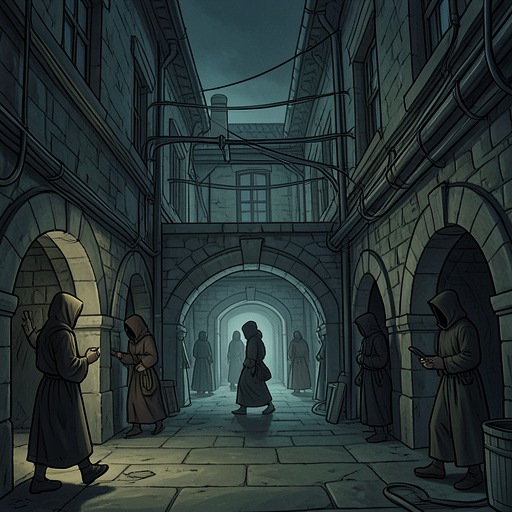
In the middle of the afternoon on February 25, Argoud returned to Munich from Rome, where he had been meeting other OAS leaders. Rather than go directly to Unerdstrasse, he took a taxi to the Hotel Eden-Wolff, where he had booked a room, apparently for a meeting. He never reached it. In the hotel hall, two men addressed him in faultless German. Taking them for German police, he reached into his breast pocket for his passport.
The apparent routine of an official encounter lasted only an instant. The men seized both his arms, lifted him off his feet and carried him outside to a waiting laundry van. When Argoud fought back, they struck him: a hand chopped across his nose, another blow landed in his stomach, and a finger pressed the nerve below his ear until he lost consciousness. The sequence made deception and force complementary parts of the seizure. Their German was convincing enough to prompt him to produce his passport; the sudden assault then prevented him from resisting or identifying what was happening.
Delivery in Paris
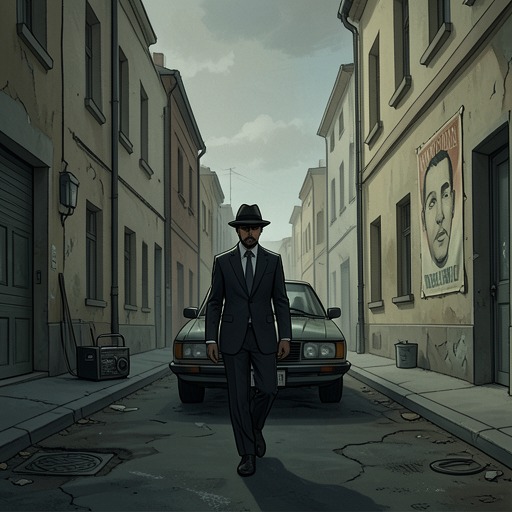
Twenty-four hours later, a hoarse caller telephoned the Brigade Criminelle at the Paris Judicial Police headquarters at 36 Quai des Orfèvres. Speaking for the OAS, the caller said Argoud was tied up in a van parked behind the building. A few minutes later, officers opened the van and saw him stumble into their midst. His eyes had been bandaged for the journey; they would not focus, and he needed help to stand. Dried blood covered his face, his nose had bled, and the police removed the gag from his mouth. Asked whether he was Colonel Antoine Argoud, he managed to answer yes.
The choice of destination transformed a clandestine abduction into an audacious piece of theatre. The Action Service had spirited Argoud across the frontier during the previous night, then placed him outside the French police’s own building. The anonymous call presented him as a parcel waiting in the police parking lot; the narrator identifies this as the agents’ private sense of humour. That joke depended on the contrast between the victim’s helpless, injured condition and the captors’ control of the entire route—from hotel hall to van, across the border and into the police compound. Argoud remained imprisoned until June 1968.
Political Consequences
The operation inflicted enormous demoralisation on the OAS by removing one of its principal leaders. But it also produced an unintended succession. Argoud’s shadowy deputy, the little-known but equally astute Lieutenant-Colonel Marc Rodin, was able to assume command of operations aimed at assassinating Charles de Gaulle. The account therefore presents the seizure as a bad bargain: a tactical success against the organisation’s existing leadership helped make room for a new commander and did not extinguish the assassination threat.
That reversal gives the episode a consequence beyond the fate of its captive. The operation was commissioned to act against the OAS leadership, yet its success altered who directed the campaign rather than ending it. Argoud’s forced removal and Rodin’s rise are joined as cause and consequence: the same intervention that weakened the organisation in the short term opened the way for the plot that would dominate the ensuing manhunt.