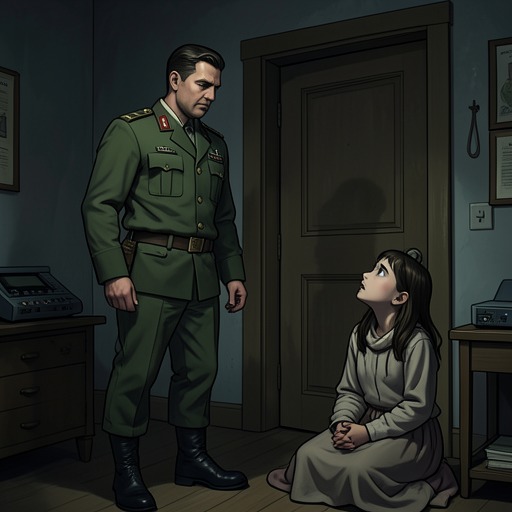
Kowalski’s capture, confession, and killing
The Day of the JackalViktor Kowalski’s capture, confession, and death convert an OAS security failure into the first usable trail toward the assassin hired to kill Charles de Gaulle. The French authorities draw him from Rome with a personal bait, hold him under pressure until he talks, and then lose the chance to question him again. What survives is not a name or a complete account, but a handful of fragments whose significance emerges only through patient reconstruction.
The Marseille ruse
Kowalski had been in Rome when French operatives sought to bring him within reach. Colonel Rolland later explained that they used JoJo Grzybowski, an old friend, as bait. JoJo, his wife, and their daughter were kept in protective custody until Kowalski was in French hands; only then were they allowed to return home. The operation thus made the family’s confinement part of the trap, while presenting the reunion with an old friend as the lure.
Rolland said that the original purpose was to obtain information about Kowalski’s chiefs. At the time, the French had no reason to suspect the plot against the President. That distinction matters: the capture began as an inquiry into OAS leadership, not as a planned interrogation of a known assassination conspirator. By the time the wider threat came into view, Kowalski had already been questioned and was dead.
A confession in fragments
The interrogation yielded no neat account. In the early hours, Rolland worked through the disordered transcript and recognized that the missing pieces might be buried in Kowalski’s final, failing attempt to communicate. One word, rendered incorrectly by a French transcriber, was Kleist. Because Kowalski was Polish, Rolland considered how he would have pronounced it, corrected the spelling, and asked staff to search the Vienna telephone directory for a person or place by that name.
The search produced two columns of private individuals named Kleist and two locations: a boys’ primary school and the Pension Kleist on Brucknerallee. Rolland underlined the pension. Other fragments described a foreigner toward whom Kowalski seemed ambivalent, using words that suggested both approval and irritation. After listening to the recording himself, Rolland altered the transcript. The clues did not identify the visitor, but they gave the investigators a place and a distinctive, if uncertain, description to pursue.
Death and the limits of the information
Marc Rodin learned that Kowalski had talked under pressure and was dead. At first, he had treated Kowalski’s disappearance as possible desertion, though he had expected him to remain loyal. Rodin grieved him as a subordinate whose soldiers had valued his concern for them, even as he understood that the death had followed a harsh interrogation. His recollection also exposed the limits of what Kowalski could have revealed: the meeting in Vienna, the hotel, and the three men present were already known to the French. He might have described a tall blond foreigner who had visited them, but he had heard no names and could not establish whether the man was an arms dealer, a financier, or something else.
The confession therefore did not hand the authorities the assassin’s identity. It supplied partial observations, and Rodin’s own uncertainty underlined how many interpretations remained possible. For the investigators, the difficulty was not merely to collect the fragments but to distinguish what they actually established from what they only suggested.
From interrogation to manhunt
The capture also had consequences beyond the interrogation room. Rolland later identified JoJo as the likely source who had alerted Valmy after the family was released, making the bait operation a possible route by which news of Kowalski’s capture reached the OAS. The effort to obtain information thus helped create a vulnerability: the release that completed the operation may also have enabled a warning to pass onward.
Meanwhile, Rolland’s reconstruction gave the investigation its first leads toward Vienna and the foreign visitor. Claude Lebel, after receiving a ministerial directive that placed extensive police resources at his disposal, sought discreet help from police forces abroad. He described a suspect about whom they knew almost nothing and asked whether their files suggested a professional political assassin with successful killings behind him. The link between Kowalski’s incomplete testimony and that search was indirect but consequential: the confession did not name the killer, yet it helped define the kind of person the police needed to find.
The narrative makes Kowalski’s death both an endpoint and an evidentiary condition. His silence prevents a full account, while his damaged words remain active in the investigation: a corrected spelling, an underlined address, and the recollection of a foreigner become leads that other people must test. The manhunt begins not with certainty, but with the difficult work of deciding what a dead informant’s fragments can support.