OAS bank and jeweller robbery wave of 1963
The Day of the JackalThe OAS bank and jeweller robbery wave of 1963 was a coordinated-looking outbreak of violent crime across France that turned routine daylight business into a national security crisis. In the second half of June and throughout July, armed gangs repeatedly targeted banks, jewellers’ shops, and post offices; the authorities eventually recognized the OAS behind the robberies and concluded that the organization urgently needed money, though the purpose of the campaign remained unclear to the robbers themselves.
Outbreak and Methods
The scale and pace of the attacks made the wave exceptional. Banks were held up almost daily, with pistols, sawn-off shotguns, and submachine guns. Smash-and-grab raids became so frequent that local police could be called away to a new case before they had finished taking statements from shaken, sometimes bleeding jewellers and assistants at the previous one. The threat was not confined to property: two bank clerks were shot in separate towns as they tried to resist.
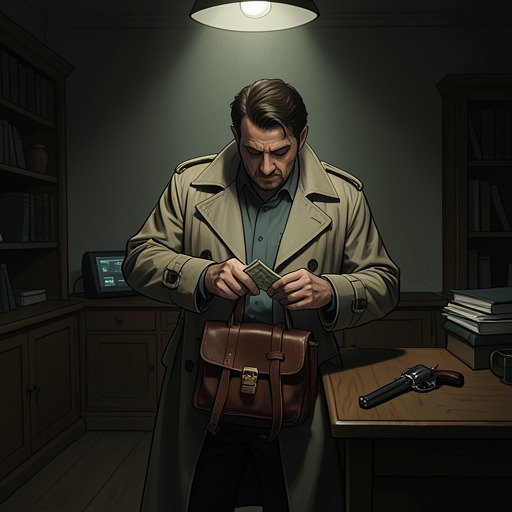
The robberies were blunt assaults rather than technically sophisticated burglaries. Although bankers and jewellers pressed the Government to strengthen protection, more frequent night-time police checks did little to address the danger. The assailants were not skilled safe-breakers working after closing; they were masked, armed men who appeared during business hours, when customers and staff were present, and demanded that everyone raise their hands. Their readiness to shoot made the ordinary opening hours of a bank or shop the most dangerous time.
Police Response and the Unexplained Proceeds
The response escalated as the robberies spread. By the end of July, three robbers had been wounded in separate attacks and taken into custody. The crisis had grown serious enough for the Compagnies Républicaines de Sécurité, known as the CRS, to be called in; for the first time, these anti-riot units were armed with submachine guns. It became routine for people entering a bank to pass one or two blue-uniformed CRS guards carrying loaded submachine carbines. The visible guard posts answered public alarm, but they could not remove the danger that came with an armed gang arriving in the middle of business.
Interrogations did little at first to explain the pattern. The three captured men proved to be either petty criminals exploiting the OAS’s existence as cover for general lawlessness or deserters from former colonial regiments who admitted OAS connections. None could explain why the robberies had begun so suddenly. Each said only that a gang boss had contacted him and assigned a bank or jeweller’s shop as a target. Investigators came to believe that these low-ranking participants had been promised a share of the proceeds and had carried out orders without knowing the campaign’s larger purpose.
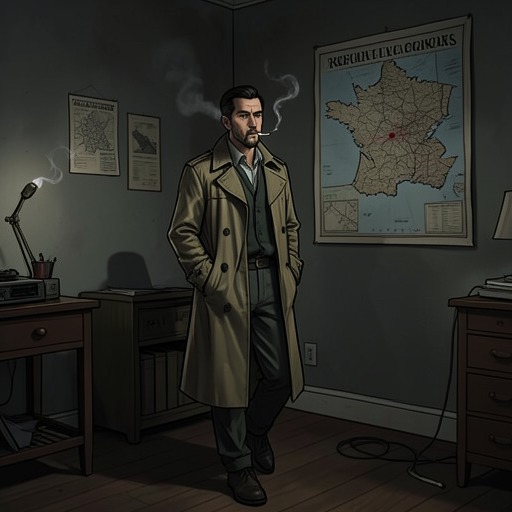
In the latter half of June, the investigation was assigned to Commissioner Maurice Bouvier, chief of the Brigade Criminelle. At his small, crowded office at the Quai des Orfèvres, a chart tracked the cash stolen and the approximate resale value of the jewels. By the latter half of July, the total exceeded two million new francs, or four hundred thousand dollars. After subtracting the cost of organizing the robberies and paying the gunmen, Bouvier still found a substantial sum unaccounted for. The discrepancy suggested that the robberies were financing something beyond the immediate gangs’ rewards.
The authorities soon concluded that the OAS was behind the wave and urgently needed money, but the explanation for that urgency remained unknown. The robberies were thus both a public crime spree and a concealed financial operation: the men arrested at the scene could identify their instructions and targets, but not the end to which the accumulating funds were being put. The authorities discovered why only in the first fortnight of August, and by then the campaign’s apparent purpose had become part of a larger investigation.
The OAS Leadership and the Unspent Balance
In the last week of June, as the robberies were spreading, General Guibaud received a report from the SDECE’s permanent office in Rome: Marc Rodin, René Montclair, and André Casson, the three leading figures of the Secret Army Organisation (OAS), had taken the top floor of a hotel near the Via Condotti and the floor below it for their bodyguards. Eight former Foreign Legion members guarded them day and night, and the leaders did not venture out. The report first suggested a conference, but the authorities came to suspect that the men were sheltering from the risk of abduction and interrogation after Antoine Argoud’s kidnapping. Guibaud took grim satisfaction in seeing the leaders of a clandestine organization reduced to such precautions, yet filed the report routinely; it did not explain the large sum missing from the robbery accounts.
That gap gave the crime wave its larger significance without immediately solving its mystery. The authorities connected the Secret Army Organisation to the sudden need for money, while the arrested gunmen knew only their assigned targets and promised shares. The leadership’s guarded refuge offered a contemporaneous sign of the organization’s vulnerability, not an answer about how the stolen funds would be used. The reason for the urgent demand for cash emerged only in the first fortnight of August, turning the robbery investigation into one thread of a wider inquiry.
From the Money Trail to the Hidden Secret
The first clear break in the mystery came not from the captured robbers but from the dying Viktor Kowalski. Colonel Rolland revisited the tortured man’s confused final words, checking the transcript against the recording. A garbled place-name resolved into Pension Kleist, an address in Vienna; another correction changed a supposed reference to a good foreigner into a blond one, and clarified that Kowalski had described him as a killer. The money trail had pointed toward a purpose beyond the gangs’ shares, but the recovered words pointed toward the person at the center of the secret.
The distinction mattered: the men arrested during the robberies had known their targets, not the campaign’s larger design. Only later did a tapped call to the OAS leaders’ hotel in Rome report that Kowalski had talked before dying and that the Jackal was exposed. The sudden need for funds thus led into a different kind of investigation, one driven by fragmentary intelligence and the prospect of a professional assassin rather than by the testimony of the street-level gunmen. The robbery wave’s unresolved balance became an early sign that the visible crimes were financing or serving a concealed operation whose true stakes would emerge through the pursuit of the killer.