OAS plot to assassinate Charles de Gaulle with the Jackal
The Day of the JackalThe OAS plot to assassinate Charles de Gaulle with the Jackal began as Marc Rodin’s answer to a security problem: after failed attempts and police penetration of OAS networks, the familiar pool of French conspirators could no longer reach the President. Rodin’s solution was to hire an unknown foreign professional, a man outside the organization’s files and France’s police records. The plan gave the assassin a new identity and a path into France, but its exposure transformed the contract into a race between a concealed timetable and an international investigation.
Origins and the security problem
Rodin approached the assassination as a practical problem rather than a matter of finding another willing gunman. The failures at Petit-Clamart and the Ecole Militaire had made the task harder, while security around Charles de Gaulle had tightened into concentric rings. Rodin spent two hours working through possible plans, testing each against its obstacles; security remained the decisive difficulty. The danger was not simply that an assassin might be caught, but that a familiar plot or familiar participant would be recognized before he could get close.
The surrounding conditions had worsened sharply for the OAS. Following the interrogation of prisoners after Petit-Clamart, three networks inside France had been shut down. Police raids uncovered weapons and supplies, and two further plots were overwhelmed while their conspirators met. The Action Service had penetrated the organization, and the kidnapping of Antoine Argoud showed how far it was prepared to go to seize and interrogate OAS leaders. With Argoud under interrogation, OAS leaders scattered abroad; the organization faced a loss of funds, support, members, and credibility. The execution of Jean-Marie Bastien-Thiry deepened the morale problem. A large, coordinated operation would risk being exposed long before its assassin reached Charles de Gaulle.
Rodin concluded that the candidate pool itself was compromised: men known to be both willing and capable were also known to French police. His alternative was an outsider, specifically a foreigner with no OAS or CNR membership and no place in French police files. The assassin would enter on a foreign passport, carry out the killing, and return to his own country. In Rodin’s calculation, escape from France mattered less than getting in undetected; he even imagined the OAS freeing the assassin after taking power. The political hope behind the violence was that the French public would rise against what the conspirators regarded as Charles de Gaulle’s regime.
Finding and hiring the assassin
Rodin began searching for a professional mercenary assassin after hearing of Jean-Marie Bastien-Thiry’s execution. By the time he presented the idea to André Casson and René Montclair, he had spent months looking for candidates and assembled three dossiers. He ranked them in order in case his first choice refused or could not take the job. The limited choice reflected the difficulty of finding credible information on professional killers: the most effective men, Rodin observed, might not appear in intelligence files at all.
The dossiers identified the candidates by nationality rather than name: a German, a South African, and an Englishman. Casson judged the Englishman far ahead on the record presented, and the other men ultimately accepted Rodin’s choice. During the meeting, Rodin asked the Englishman whether he would assassinate Charles de Gaulle. The man agreed, but treated the contract as a once-in-a-lifetime undertaking: success would end his career, while discovery could bring capture and revenge by the Gaullists. He demanded enough money both to live comfortably afterward and to secure protection. The discussion included a half-million-pound balance and an explicit warning that, if the OAS withheld payment, the assassin could turn against Rodin and his associates.
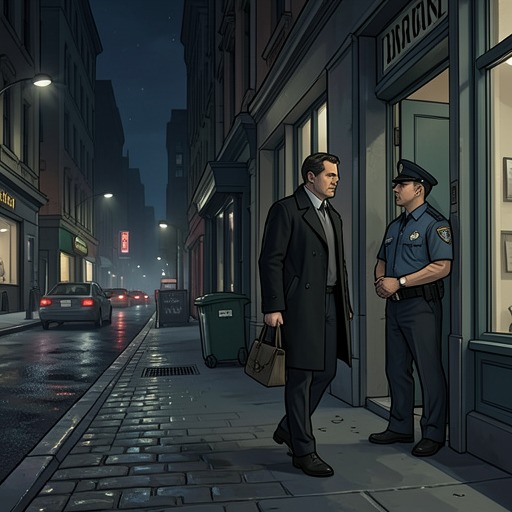
Rodin asked the Englishman to choose a codename. Since their discussion had turned to hunting, the man proposed The Jackal, a name Rodin accepted. Before leaving, the assassin agreed to begin general planning while the OAS arranged further contact. He departed quietly, stayed the night at an airport hotel, and flew back to London the next morning. Rodin’s recruitment thus created an operational separation between the OAS leadership and the killer: the organization supplied the contract, while the foreign outsider supplied the anonymity it believed its own ranks had lost.
Exposure and the investigation
The plot’s central premise—that an unknown assassin might evade the security system—also made the investigation unusually difficult. When Claude Lebel began seeking international police assistance, he could offer neither a name nor more than a poor description. He initially presented the request as preliminary rather than as a formal inter-police investigation, because officials could not yet be certain that an offence had moved beyond intention or preparation. The defining clue was not an appearance or known identity but a professional profile: the suspect would have to be a political contract killer with successful assassinations behind him, not merely a gangland gunman.
The investigation later faced a further uncertainty: the killer knew that the existence of an assassination plot had been uncovered, but the police did not know where he stood in his own timetable. Lebel argued that this imbalance might help the authorities. The assassin could not know how much progress they had made, and, once identified under his assumed name and located, might still be apprehended unaware. The possibility that the killer was already in France, perhaps even in central Paris, made that uncertainty a source of acute alarm among the officials responsible for Charles de Gaulle’s security.
The police also inferred that information was reaching the assassin. From the suspected purchase of paint in Gap, and the possibility that the car had already been transformed on the drive from Gap to Ussel, Lebel reasoned that someone had warned him his identity as Alexander Duggan had been discovered. Investigators considered whether the warning had come through an OAS agent among the officials who passed orders, or through the known contact Valmy. The evidence did not establish the route of the leak, but it strengthened the conclusion that the assassin had been tipped off and had chosen to continue regardless.
The timetable and the continuing danger
A week of apparent delay after entering France had initially puzzled Lebel. The assassin had left Gap without immediately becoming Pastor Jensen or taking an express train from Valence to Paris. Lebel eventually understood the interval not as aimless waiting but as evidence that the killer had chosen a specific day. The assassin possessed his own timetable; the police needed to discover the intended date by comparing that inference with Charles de Gaulle’s public engagements.
The planned disguise and the police perimeter brought the plot’s anonymity into sharp focus. At a checkpoint, an officer reported letting through only one person: an old, visibly ill cripple with an identification card and a disabled veteran’s card, whose address was 154 Rue de Rennes. The passage had seemed unremarkable because the man appeared exhausted and sick in the cold. In the context of the investigation, that apparently ordinary exception showed how a disguise could exploit the human judgments built into a security cordon. The plot’s decisive contest was therefore not only between the OAS and the state, but between a killer’s carefully chosen identity and the authorities’ ability to recognize him before his privately selected moment arrived.