Paris
The Day of the JackalParis is the target city and operational maze of the novel’s assassination plot: its public monuments give The Jackal firing positions to study, its crowds and hotels offer cover for changing identities, and its police institutions become the headquarters of an unprecedented manhunt. The city appears first as the seat of Charles de Gaulle’s power, but it becomes a landscape both the assassin and the investigators must read—one from rooftops, hotel registers, and crowds, the other through records, telephone lines, and street searches.
Political Center and Opening Threat
The story’s opening frame connects Paris to a failed attempt on the President’s life and to the execution that follows. At Fort d’Ivry, outside the city, Lieutenant-Colonel Jean-Marie Bastien-Thiry is executed on March 11, 1963, for leading Secret Army Organisation killers who had tried to shoot the President. The city beyond the prison walls continues to wake amid traffic; the firing squad’s shots barely disturb it. The contrast makes the execution seem at first like an ending, but the narrative presents it as the beginning of another threat.
That earlier attempt had taken place on August 22, 1962, while Paris was sweltering in the evening heat. As the Cabinet continued meeting inside the Élysée Palace, sixteen black Citroën saloons waited in the front courtyard, their drivers passing the time in the deepening shade. The palace’s gates opened shortly before half past seven as the President’s party prepared to leave. Paris is thus introduced not simply as a setting but as the point where the machinery of government and the vulnerability of a public schedule meet. After the attempt, the French police, backed by the Secret Service and the Gendarmerie, began what was described as the largest police operation in the country’s history.
The city’s political importance also shapes The Jackal’s calculations. A professional assassin assessing Charles de Gaulle’s exposure must reckon with a target who appears in public, but whose previous near-misses have made the security response unusually alert. The Jackal’s English appraisal is that the earlier failures have made the job harder: guards will not have relaxed into mechanical routines, and a shot will provoke an immediate response rather than the confusion on which an escape might depend. Paris concentrates both the opportunity—the President’s public presence—and the danger created by the state’s attention.
Reconnaissance Among Monuments
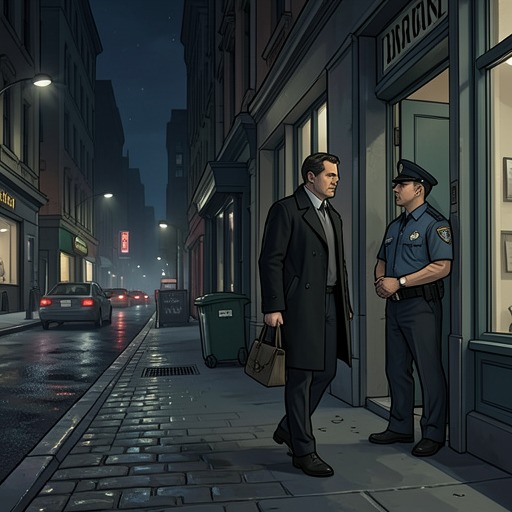
When The Jackal reaches Paris in late July, he chooses a modest hotel near the Place de la Madeleine rather than a more conspicuous establishment. His stay is expected to be longer than his stops in Copenhagen or Brussels, and he is wary that someone who had known him casually in London might recognize him. He wears dark glasses outdoors, but considers the hotel’s corridors and foyer the more dangerous places: an unexpected recognition there could connect his real name to the identity under which he has registered.
His daily routine is deliberately ordinary. He takes breakfast in his room, replaces the hotel’s blackcurrant jam with English marmalade bought from a delicatessen across the street, and is courteous to the staff. He speaks only a little French, with conspicuously poor pronunciation, and presents himself as a comfortable English visitor. The inconspicuous manners are part of his concealment: the hotel proprietress regards him as a gentleman, while nothing in his conduct invites attention.
Outside, the tourist’s map and notebook conceal a different purpose. The Jackal marks the places he most wants to see and studies them closely. For three days he circles the Arc de Triomphe and sits at the Café de l’Élysée, looking toward the monument and the rooftops around the Place de l’Étoile. His apparent interest in architecture masks an assessment of firing angles, distances from upper floors to the Eternal Flame, and possible escape routes down rear fire escapes into the crowd. The familiar Parisian spectacle becomes, in his attention, a set of practical lines: sight, distance, access, and exit.
He also visits the ossuary at Mont-Valérien, bringing flowers for the dead of the French Resistance. A guide, moved by the gesture, gives him an extensive tour and commentary. Yet The Jackal’s attention repeatedly shifts from the entrance of the ossuary to the high prison walls, which prevent a direct view into the courtyard from nearby rooftops. The visit shows how he uses the city’s commemorative landscape as cover for reconnaissance: a respectful tourist can look closely without appearing to be surveying a security problem.
The Manhunt Becomes a Citywide System
The counter-operation takes institutional shape in Paris on August 12. After a briefing by the Minister of the Interior, Claude Lebel is ordered to lead the investigation, given his own office, access to the resources of the agencies represented at the meeting, and no stated limit on costs. He makes the office functional as a command post: his usual secretary is to be removed from the secret, Lucien Caron is made his assistant, a camp bed and basic supplies are brought in, and ten outside telephone lines are assigned to the room. The detail matters because the hunt is not an abstract order; it becomes a working operation sustained through people, communications, and continuous preparation.
That night Lebel and Caron go to the International Criminal Police Organization’s Paris headquarters on Rue Paul Valéry. For three hours they make encrypted, long-distance calls to senior police officials abroad. Lebel cannot yet describe the request as a formal enquiry between forces, and he admits that the investigators have neither a name nor more than a poor description. The decisive feature he can offer is the kind of suspect they seek: a first-rate political contract assassin with successful killings behind him. Paris is therefore the hub of an inquiry that must cross national boundaries while the identity of its quarry remains uncertain.
The search also depends on ordinary records. During an overnight review, investigators find an entry showing that Alexander James Quentin Duggan entered France on the Brabant Express from Brussels on July 22 and another recording his departure for Brussels on July 31. A hotel card places Duggan near the Place de la Madeleine from July 22 through July 30 and carries a passport number matching the information received from London. Rather than immediately raid the hotel, Lebel visits quietly and establishes that the man was gone by August 15. A registration card, a passenger list, and a discreet conversation turn the tourist’s stay into evidence—but do not yet reveal where he has gone.
Crowds, Cover, and the Planned Strike
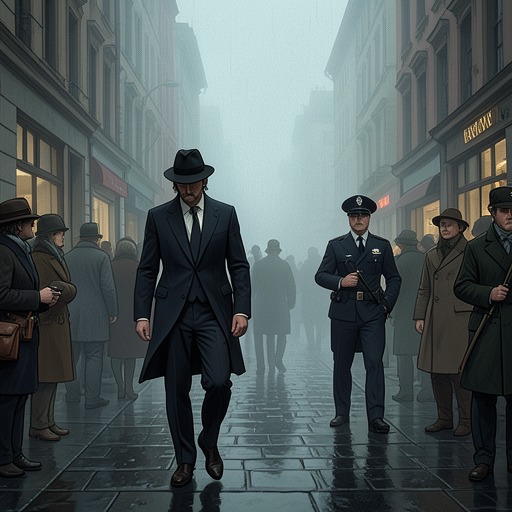
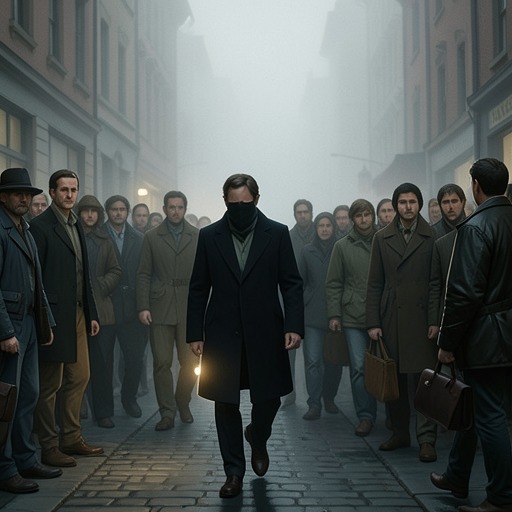
Paris’s scale makes the police response both powerful and diffuse. During two days of searching, officers check guest lists across hotels, pensions, rooming houses, hostels, bars, restaurants, nightclubs, cabarets, and cafés. Plainclothes men show the wanted man’s picture to those who work in such places; known OAS sympathizers’ homes are searched; more than seventy young men who resemble the suspect are taken for questioning and released. Hundreds of thousands of people in streets, taxis, and buses have their papers checked, while roadblocks appear on the main approaches to the city. The sweep reaches beyond formal policing into the underworld, where Corsicans warn pimps, prostitutes, hustlers, pickpockets, thieves, and conmen against withholding information.
The Jackal uses the same density in the opposite direction. After leaving a hotel, he deposits luggage at the Gare d’Austerlitz, changes out of a disguise, and slips into the Latin Quarter, where students and young people fill its narrow streets. Later he hides with Jules Bernard and kills him when the older man recognizes that the supposed Marty Schulberg’s eyes do not match the blue-eyed man described on the radio. The city offers concealment, but it also brings people close enough to notice inconsistencies; every new identity is a temporary refuge, not a secure home.
Lebel’s reasoning turns on the gap between what the police know and what the assassin knows. The investigators have learned that a plot exists, but they cannot tell how far The Jackal has progressed through his own timetable. Nor can they assume he has abandoned the attempt. Lebel eventually interprets the time The Jackal spent in France not as aimless delay but as evidence that he has selected a particular day. When a car connected to the fugitive is found, Lebel suspects that paint used to transform it was bought in Gap and that the suspect was tipped off about the discovery of his Duggan identity. The possibility of a leak compounds the difficulty of searching a city already placed under extraordinary pressure.
Liberation Day and the Limits of Surveillance
On Liberation Day, a cordon around the ceremony is breached by a supposed disabled veteran carrying an identity card and a war-invalid card, with an address on Rue de Rennes. A sentry allows him through because he appears ill and already belongs to the neighborhood. The disguise converts the ordinary credentials of a former serviceman into a pass through a closed street, showing how the same papers that enable police checks can also be exploited to satisfy them.
From six floors up and 130 metres away, The Jackal steadies his rifle on Charles de Gaulle as the President pins a medal on the veteran standing before him. The target’s head and temple are visible in the sight. But just before the bullet leaves the rifle, de Gaulle bends to kiss the veteran on both cheeks. The shot passes a fraction of an inch behind the moving head and buries itself harmlessly in the softened tarmac. The music continues, and the President proceeds to the next veteran without showing that he heard anything.
The missed shot crystallizes Paris’s double character in the novel. The city’s monuments, ceremonies, and crowds furnish the assassin with cover and carefully studied opportunities, while the police turn its lodging houses, streets, and transport routes into a network of observation. Yet neither side fully controls the city: an unexpected human gesture defeats a carefully measured line of fire, while the manhunt’s vast reach cannot immediately make the fugitive’s timetable legible. Paris is the physical ground of the plot and its central tactical problem—a place where plans must pass through public space, and where chance can intervene at the precise instant calculation seems complete.