Secret Army Organisation
The Day of the JackalThe Secret Army Organisation (OAS) is the clandestine movement formed from the defeated putschists who refused to accept Charles de Gaulle’s policy toward Algeria. It pledged to overthrow his government and sought to kill him, turning a military rebellion into an underground campaign. The organization’s history is one of political conviction hardening into violence, followed by the practical erosion of the networks on which that violence depended.
Political origins and purpose
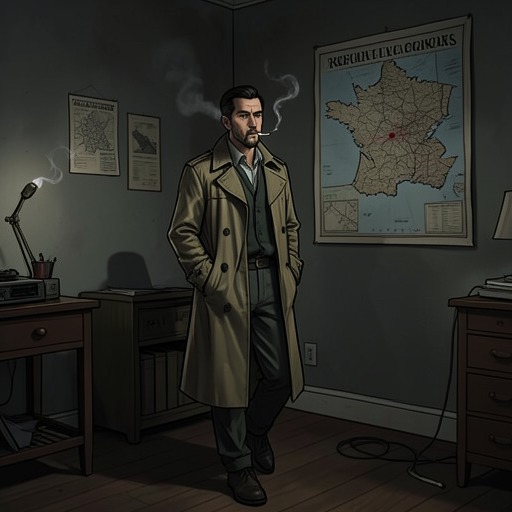
The OAS emerged from a crisis of military loyalty rooted in the colonial wars and in the question of French Algeria. Marc Rodin’s path into the movement illustrates the experience and convictions that fed its ranks. After service in Indochina and Algeria, he came to regard the French withdrawal from Indochina as a betrayal of soldiers who had died there. He believed that the Army, if backed by the government and the public, could have won, and that Algeria must not become another abandonment. His attachment to the Army was joined to hostility toward politicians and civilians whom he considered indifferent to its sacrifices.
Charles de Gaulle’s return to power in 1958 initially seemed to confirm Rodin’s expectations. De Gaulle had been recalled amid the demand for French Algeria, and Rodin believed that the new government would restore the country and sustain the Army’s cause. When de Gaulle’s policy instead moved away from that outcome, Rodin’s faith in the political system collapsed into hatred of the president and the institutions around him. He led nearly his entire battalion into the April 1961 Algiers putsch, which was defeated before it could secure the Army’s allegiance.
The OAS arose from the putsch’s surviving military opposition. When the mutiny broke, 120 officers, non-commissioned officers, and enlisted men from Rodin’s unit remained with him. They joined other putschists to form the Secret Army Organisation, pledging to overthrow the government. The organization therefore represented more than a private circle of conspirators: it gave a clandestine form to the refusal of some military men to accept the political settlement over Algeria. Yet the text distinguishes this committed minority from the many people who shared parts of its outlook. Widespread sympathy did not mean that many were willing to join an organization sworn to kill de Gaulle.
Leadership, membership, and methods
The OAS combined military experience with covert political violence. Its members included men formed by combat and by the belief that the Army had been betrayed by civilian rule. Jean-Marie Bastien-Thiry, an Air Ministry officer with a wife and three children, shows how the organization’s adherents could possess an outwardly conventional life while embracing assassination as patriotic service. He had lost nothing personally through the loss of Algeria; in his own understanding, killing de Gaulle would serve the country he believed the president had betrayed. His case makes clear that the movement’s violence was not presented by its adherents as personal revenge, but as political duty.
The organization’s leadership paired different kinds of ability. Antoine Argoud supplied flair, talent, and inspiration to the offensive launched against Metropolitan France from exile; Rodin brought organization, cunning, and practical judgment. Rodin had become Argoud’s deputy and operations chief in the winter of 1961. The distinction matters: the OAS was not described simply as a collection of gunmen. Its capacity to plan depended on coordination and calculation as well as ideological zeal.
The movement’s central objective was to remove de Gaulle and bring down his government. By March 1963, Rodin was considering how that objective could still be pursued after earlier assassination attempts had made presidential security more difficult to penetrate. He assessed the problem as one of overcoming concentric layers of protection, rather than merely finding willing killers. That emphasis on planning reveals the OAS’s strategic predicament: repeated failure tightened security, while the organization’s own covert activity was increasingly vulnerable to discovery.
Repression and the cost of defeat
The OAS’s position worsened as French settlers fled Algeria and its leaders became identifiable to the authorities. During the final seven weeks of the French presence, the organization exacted a destructive revenge on what the departing settlers were leaving behind. Once that period ended, exile awaited leaders whose names were known to the Gaullist authorities. The loss of a territorial base thus brought a sharp change in the movement’s circumstances: its campaign continued from exile, but with less secure access to supporters and underground networks in France.
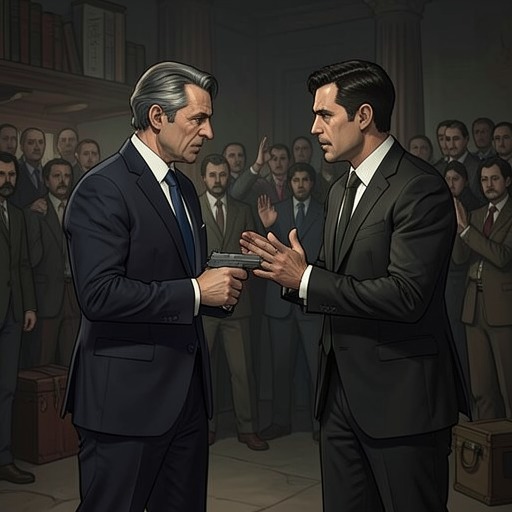
The French authorities’ response to the Petit-Clamart plot demonstrated the scale of the threat attributed to the movement and the state’s capacity to pursue it. After a routine roadblock stop near Valence led to the identification and questioning of a participant, Pierre-Denis Magade provided information during an eight-hour interrogation. He named the participants in the plot and nine others involved in its preparatory stages or equipment procurement, bringing the total identified to twenty-two. The ensuing inquiry did not catch everyone: Georges Watin escaped and was believed to be living in Spain with other OAS leaders among the former civilian settlers. The arrests and investigations exposed a broad network, while the escape of a leading figure showed that the pursuit remained incomplete.
The consequences were also personal and public. The Supreme Military Court sentenced Bastien-Thiry to death, and Charles de Gaulle upheld that sentence while commuting two others to life imprisonment. Bastien-Thiry was executed on March 11, 1963. His execution did not strengthen the OAS’s position: its sympathizers had expected results, and the organization’s failure to deliver them, together with the capture of Argoud, weakened support. The execution further accelerated that retreat.
Infiltration, decline, and narrative significance
By the time Rodin assessed the organization’s position, its problems were both financial and informational. Funds raised by bank robberies in Algeria were consumed by the costs of running the movement; donations from right-wing industrialists were drying up, and approaches for support met with disdain. Communications with the underground in France had become more tenuous, safe houses were being raided, and some supporters had withdrawn after Argoud’s capture. Rodin judged that the authorities had penetrated the movement so deeply that even high-level deliberations were leaking within days. In his assessment, conventional plans had become almost impossible to keep secret long enough to succeed.
The capture of Argoud also altered the organization’s leadership. The SDECE Action Service abducted him and took him across the frontier, an operation that demoralized the OAS but created an opening for his deputy. Rodin assumed command of operations aimed at assassinating de Gaulle. The change was a poor bargain for the organization: removing its senior leader weakened it, even as it elevated a capable planner. The contrast between Rodin’s methodical approach and the OAS’s worsening isolation gives the movement’s history its central tension. It could devise plans, but increasingly struggled to protect them, finance them, or keep the people and channels required to carry them out.
The Secret Army Organisation therefore stands at the intersection of military identity, colonial defeat, and clandestine violence. Its formation followed the failure of open military revolt; its purpose remained the overthrow of a government that accepted the end of French rule in Algeria; and its methods exposed it to investigation, infiltration, and loss of support. The narrative treats its members’ convictions seriously without making their political claims equivalent to those of the state: the OAS’s declared patriotism is inseparable from its commitment to assassination and destruction. Its decline is not simply the fading of an idea, but the breakdown of the organization’s money, communications, leadership, and confidence in secrecy.