The Jackal continues after learning the plot is exposed
The Day of the JackalThe Jackal continues after learning the plot is exposed marks the point when a compromised assassination plan becomes a solitary contest of adaptation. A warning from Valmy tells the Jackal that the Secret Army Organisation’s conspiracy is known in principle, but it does not make him turn back. Instead, he measures what the police know against the identities and documents he has prepared, weighs the risks of either choice, and leaves the Majestic to continue toward his objective. At the same time, Claude Lebel’s investigation tries to turn fragments of information into a usable picture of the unknown assassin. The episode makes persistence—not ignorance of the danger—the basis of the Jackal’s decision.
The warning and what the police know
The call begins with the Jackal identifying himself by his code-name and Valmy answering under his own. Valmy says that the Secret Army Organisation has been trying to reach him for two days. During the ten-minute conversation the Jackal mostly listens, occasionally asking a terse question. The warning forces him to confront an immediate change in circumstances: the police know that a plot exists, and Valmy advises him to abandon it and go home. But Valmy has no direct authority from Marc Rodin to cancel the operation. The message is therefore urgent without being an order that can settle the matter for him.
The distinction between a known conspiracy and an identified assassin shapes the Jackal’s calculation. He wonders how the bodyguard outside the door could have known his code-name, and whether the French police had worked out his intended role or Viktor Kowalski had recognized him. He also considers how little the police can tell from a description of a tall, blond foreigner in France during August. He believes they are looking for a man carrying Charles Calthrop’s passport, not for the person he can prove himself to be: Alexander Duggan. His assumption is that the investigation has not yet connected him to that identity.
That confidence rests on preparation rather than invisibility. The Jackal is travelling under an assumed name with a legitimate passport in that name, and he has three further sets of false papers, including two foreign passports, with matching disguises. He knows that Kowalski’s death has left even Rodin and the other members of the Secret Army Organisation without knowledge of his present identity or whereabouts. The exposure of the plan has weakened the secrecy surrounding the operation; it has not, in his view, given his pursuers a reliable way to find him.
The police build a case from fragments
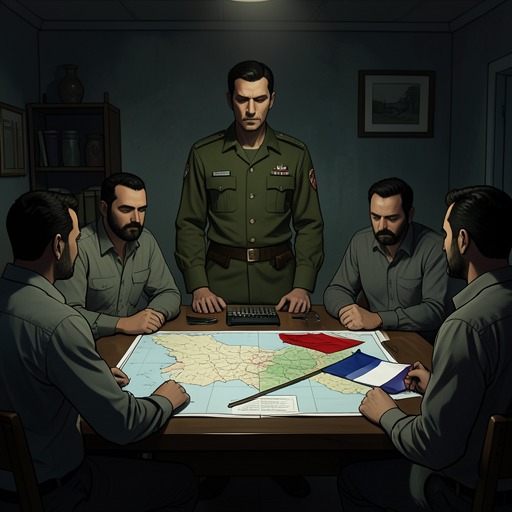
The Jackal’s appraisal is set against an investigation that begins with almost no identifying information. When the Minister of the Interior briefs Lebel, the task arrives as a directive rather than a request for advice. Lebel receives access to the resources of the officials assembled around the table and unlimited authority to incur costs. He responds by making the investigation operational: Caron is to become his combined assistant and secretary, the office is to be kept secret, and ten outside telephone lines and a permanent operator are to be assigned to it. Even the camp bed, washing supplies, and coffee are part of the working arrangements. The pursuit is presented as sustained institutional labour, not simply a detective’s solitary inspiration.
Lebel’s first approach to foreign police forces is deliberately tentative. He cannot yet describe the inquiry as a formal request between police forces because it is not clear whether an offence has been formulated or preparations begun. He offers only a poor description and admits that the investigators do not even have a name. Then he identifies the qualification that matters: the unknown man would have to be a leading professional contract assassin, with successful political killings behind him. The pauses on the other ends of the calls show how sharply that description changes the meaning of the request. Lebel believes there is only one target in France who could attract such a killer: Charles de Gaulle.
The investigation’s uncertainty persists even after it has been under way for seventy-two hours. Lebel tells the other officials that the assassin has his own timetable, and that the police cannot know where they have entered it. They can be certain only that the man knows the plot has been exposed, not how far the investigation has progressed. If they identify him under his new name and locate him under that name, they may still catch him unaware. The possibility that he could already be in Paris—or that the attempt could be imminent—makes this uncertainty frightening, but does not resolve it.
A choice between two dangers
The Jackal’s decision is not a simple preference for danger over safety. Going back would bring him into a dispute with Rodin and the Secret Army Organisation over the quarter-million dollars in his Zurich account. If he refused to return most of the money, he expects them to track him down, torture him for the signed document needed to release the account, and kill him. Avoiding that fate would consume much or all of the money he has. Continuing, meanwhile, means facing ever-greater danger as the French prepare for an attack they now know to expect. Each route threatens the independence and security he has sought; retreat would also require surrendering the money and the life it has enabled him to build.
That life gives the financial calculation its force. The Jackal recalls that he had long wanted to escape the drudgery of commuter trains and office forms for a world of expensive meals, good clothes, a smart flat, a sports car, and elegant women. In the preceding three years he had begun to obtain that life, though in glimpses. He notices the cost of the hotel bill and recognizes that maintaining this existence requires abundant dollars. The money is not just an abstract reward for the assassination; it underwrites the freedom and comfort he has been pursuing. Yet staying ahead of Rodin would itself consume the resources that make his chosen life possible.
The Secret Army Organisation’s lax security has also confirmed the Jackal’s distrust of its competence. Valmy’s warning offers an opportunity to withdraw, but the Jackal knows that the organization cannot simply revoke the job through Valmy. He is left to make the decision on his own terms. He recognizes that an exposed assassination plan will bring him against a fortress of security now on guard, but remains confident that his own plan can beat it. The confidence is measured against a real change in risk, not a belief that nothing has gone wrong.
Continuing into the manhunt
The Jackal’s departure resolves the immediate choice. He pays the bill, leaves a large tip, gets into the Alfa, and drives away from the Majestic toward the heart of France. The movement is quiet, but its consequence is substantial: he has chosen to carry the operation forward without waiting for Rodin to decide its fate. With Kowalski dead, he is on his own at last, a condition he had always wanted, even as it leaves him without the protection—or constraints—of the organization that hired him.
Meanwhile, the police pursue identities and records rather than a confirmed person. Rechecking the archives under Duggan’s name yields a border card: Alexander James Quentin Duggan entered France on the Brabant Express from Brussels on July 22, and another report records Duggan travelling from Paris to Brussels on the Etoile du Nord Express on July 31. A hotel card places a guest using that name and a matching passport number at a small hotel near the Place de la Madeleine from July 22 through July 30. Lebel visits the proprietor discreetly rather than ordering a raid, and establishes that the man was no longer there by August 15. These records provide a trail, but not yet a current location.
Later deductions show how rapidly the balance shifts. Lebel reasons that if the Jackal bought paint in Gap to transform his car, and drove it toward Ussel during the night, then the car was probably already altered; the purchase may therefore have occurred in Gap. If so, someone had warned him that the Duggan identity had been discovered, allowing him to anticipate the police and escape quickly. Lebel suspects Valmy may be the contact, but he cannot prove the source of the leak. The Jackal, for his part, has already understood that the police are closing in and continues anyway.
The delay that initially seems puzzling becomes another clue. Lebel asks why the Jackal did not leave Gap, take the train at Valence, and travel straight to Paris, instead of spending a week apparently killing time. His conclusion is that the assassin has chosen his day and is following a timetable of his own. Later, at the secured street, a sentry reports letting through an old, sick-looking cripple with an identification card and a war-disabled card, supposedly living at 154 Rue de Rennes. The report turns the Jackal’s reliance on disguises into a concrete vulnerability in the security line: his preparation can evade recognition, but only if the details of the disguise pass as ordinary. The episode’s decisive irony is that both sides act on partial knowledge. The police know the plot and hunt for a shifting identity; the Jackal knows the exposure has occurred and trusts the distance his aliases can still create.