The OAS's decline
The Day of the JackalThe OAS’s decline was not a clean collapse. Its political and military foundations had been battered by defeat and exile, and its clandestine apparatus was coming apart under pressure from both inside and outside. Yet it retained enough money, contacts, and resolve to commission an attempt on Charles de Gaulle. The contrast defines the organization’s final phase: its capacity to understand and control events diminished just as the consequences of its violence became most acute.
Roots of the organization’s crisis
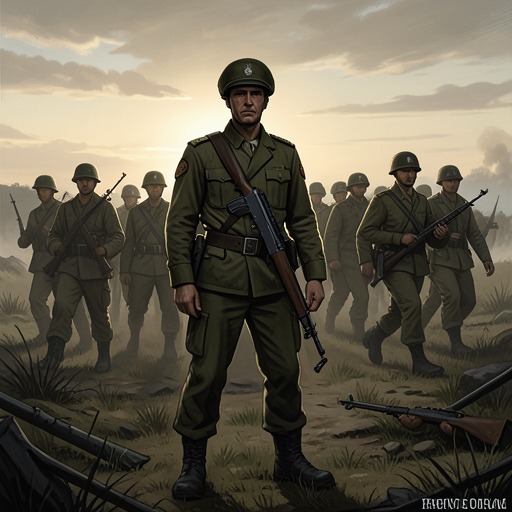
Marc Rodin’s commitment to the cause hardened through successive military and political defeats. After eight years of combat in Indochina, he regarded the withdrawal as a betrayal of the soldiers who had died there. He then went to Algeria in 1956 convinced that the Army could vindicate itself and restore its standing. The spreading rebellion, the violence of the city war, and the failure to secure the additional support he expected from France did not shake that conviction at first; he treated setbacks as reasons to intensify the struggle.
Charles de Gaulle’s return to power in 1958 initially seemed to confirm Rodin’s hopes. Rodin believed that de Gaulle’s support for French Algeria heralded a broader restoration of the Army and a renewed commitment to the settlers. When he concluded that de Gaulle’s policy did not include French Algeria, that faith turned into hatred. Rodin led nearly all his battalion into the April 1961 putsch against the government.
The putsch failed before it could gather momentum. In a decisive reversal, de Gaulle’s radio address reached troops across Algeria, and conscripts heard his appeal to choose their loyalty. Rodin retained 120 officers, non-commissioned officers, and enlisted men, helped by the unusually high proportion of experienced veterans in his unit. With other putschists, they formed the Secret Army Organisation, committed to overthrowing de Gaulle. The organization was born from a failed revolt: it had a remnant of loyal fighters, but its political aim had already been defeated by the government’s ability to command the Army’s allegiance.
Leadership losses and succession
The OAS campaign against Gaullist France combined terror with political advocacy. Antoine Argoud, its operations chief in exile and the guiding force behind the Petit-Clamart plot, recognized the value of presenting the movement in more respectable terms. He arranged a series of interviews for Georges Bidault, head of the National Resistance Council, the OAS’s political wing. Bidault’s public case could place a sober political argument over the organization’s violent activity, but that effort depended on Argoud’s strategic ability to coordinate it.
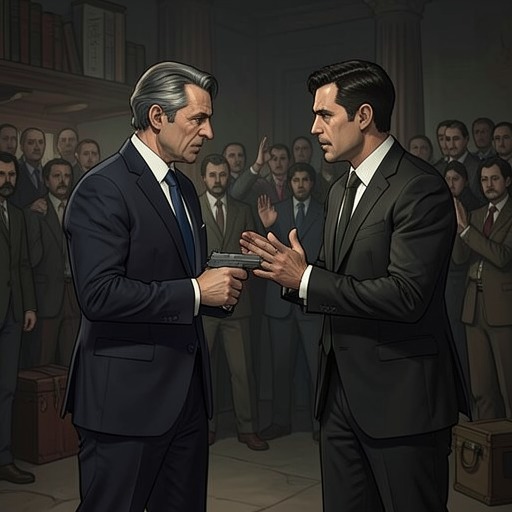
The SDECE Action Service removed Argoud by secretly bringing him across the frontier and leaving him, bound and injured, outside the police building. His capture demoralized the OAS, but did not end its operations. Rodin, previously Argoud’s little-known deputy, took command of the assassination campaign. The transfer proved a costly bargain for the organization’s opponents: Argoud was gone, but Rodin supplied the organization, calculation, and practical judgment needed to keep the offensive moving. Rodin’s succession therefore illustrates the difference between a damaging leadership loss and the destruction of the network itself.
Money, violence, and a hired assassin
The OAS’s weakening did not immediately deprive it of funds. Rodin received word that the organization’s combined Swiss accounts held more than $250,000 and instructed the bankers to transfer that amount to its hired assassin, The Jackal. He expected that the death of Charles de Gaulle would prompt right-wing industrialists and bankers to provide another $250,000, despite their recent reluctance to advance more money. In Rodin’s calculation, a successful assassination would transform a faltering movement into the authority of a renewed France and restore its backers’ confidence.
That expectation exposed both the organization’s desperation and its remaining reach. Rodin had to rely on the success of a single attack to unlock further financing, while the assassin controlled his own timetable. André Casson objected to sending the money without ensuring that The Jackal would receive up-to-date information about the President’s movements and security arrangements. Payment alone could not make the OAS master of the operation: it needed a Paris contact to supply intelligence, while the hired killer retained control over when to act.
A crumbling apparatus meets an unknown enemy
By the time the assassination threat resurfaced, Alexandre Sanguinetti had been encouraged to see the wave of bank robberies and smash-and-grab raids as the OAS’s death throes. Its apparatus appeared to be crumbling under pressure from the SDECE Action Service within and police and CRS forces without. The robberies looked like the last violence of men trying to finance comfortable exile. But an intercepted report overturned that reassuring interpretation: even the double agents infiltrated into senior OAS ranks had been outflanked by the assassin’s anonymity. The OAS’s accumulated dossiers were of little use because The Jackal was a foreigner.
Claude Lebel’s first approach to foreign police forces made the gap plain. He could offer only a poor description and no name, and had to explain that the target of their search would have to be a top professional political assassin with successful killings behind him. The authorities were pursuing a threat whose identity the OAS itself had been unable to provide. Their strategy, directed by Roger Frey, was to identify and trace the killer secretly rather than expose the investigation publicly or suspend the President’s engagements.
The investigation’s later deductions showed how easily the remaining information could be compromised. Lebel reasoned that The Jackal had probably bought paint in Gap to transform his car and that, if so, someone had tipped him off about the discovery of his Alexander Duggan identity. He suspected that the assassin’s sole contact might be Valmy, whose message to Rome had been intercepted by the DST. Yet Lebel also concluded that learning the assassination plot had been exposed did not make the killer abandon it: the man had his own timetable and knew more about its timing than his pursuers did.
The meaning of decline
The OAS’s decline is thus registered less by a single final defeat than by a widening loss of control. Its leaders were removed or forced into exile; its funding depended on a hoped-for political transformation; its operations drew police pressure and counterintelligence attention. Meanwhile, the foreign professional it had hired remained difficult to identify, and the extensive record-keeping that had once made the organization legible to investigators could not classify him.
The movement’s weakness and its danger coexist. Sanguinetti’s early interpretation of the robberies as mere death throes mistook visible criminal activity for the whole organization’s remaining capacity. The hidden assassination plan persisted outside that interpretation, while the assassin’s independent schedule frustrated both his employers’ need for timely information and the authorities’ effort to predict the strike. The OAS was losing the means to direct events, but its decline did not make those events harmless.