The threat to Charles de Gaulle's life
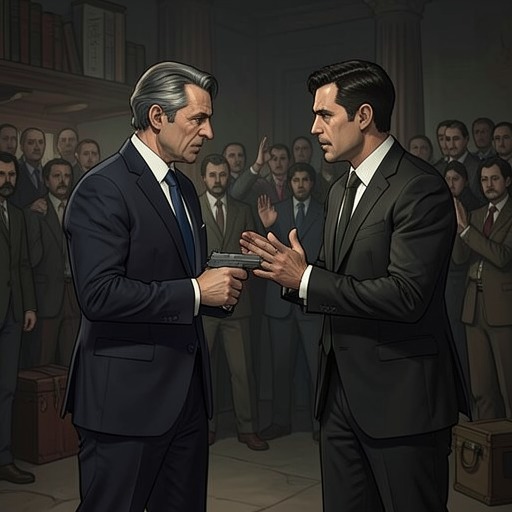
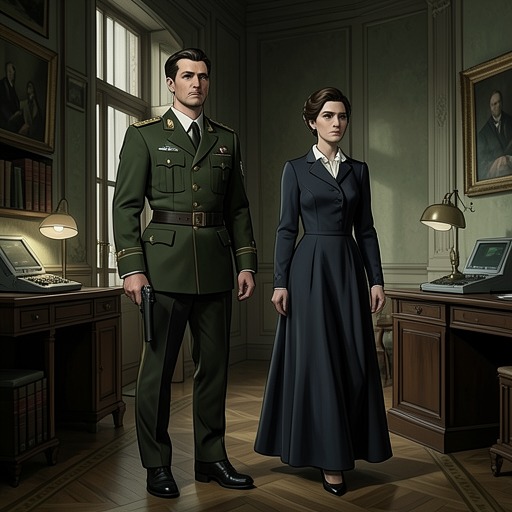
The Day of the JackalThe threat to Charles de Gaulle’s life is not simply another assassination plot. It is the possibility that an unidentified foreign professional, known only as The Jackal, can reach the President despite years of security precautions and a record of previous attempts. As the investigation grows, the danger becomes a test of the state itself: officials must protect Charles de Gaulle without publicly acknowledging the threat, while he refuses to withdraw from his scheduled appearances.
From failed attempts to a professional assassin
The OAS presents the killing of Charles de Gaulle as a political necessity, arguing that his death is the only way to end his rule and restore France to Frenchmen. Its record makes the new proposal both credible and alarming. Of six attempts by OAS supporters, three were exposed during planning, one was betrayed the day before it could be carried out, and two took place but missed their target. The organisation is therefore considering hiring a professional, but wants to know whether such a contract could succeed before committing its money.
The Englishman assessing the proposal explains why earlier failures have changed the conditions of any future attempt. At a target so exposed to the public, he argues, an assassin willing to die in the act would be the surest method; the failed attempts at Pont-de-Seine and Petit-Clamart lacked someone prepared to accept that certainty of sacrifice. A hired professional, by contrast, would want to survive. The Englishman considers the task possible with sufficient planning, but exceptionally difficult: Charles de Gaulle is already forewarned of the general intention to kill him, even though he does not know the particular plan. Earlier attempts have prevented the protective routines from becoming mechanical. If an attack occurs, the guards are less likely to freeze in surprise and more likely to pursue the assassin. The very history of failed plots has made the target harder to reach and escape from.
From intelligence report to national emergency
The immediate assessment reaches the authorities through Colonel Rolland’s report on Viktor Kowalski. Rolland recounts that he personally mounted an operation to capture the former legionnaire after luring him back to Marseille with the false belief that someone close to him was ill in hospital. Action Service agents seized him; during the arrest he crippled two agents and injured himself in an attempted suicide. He was hospitalized, where he made a confused confession. Rolland’s interpretation of that account forms the substance of his report, but he makes clear that corroborating enquiries are still in progress.
Despite that qualification, Rolland warns that, if the account is true, the plan is the most dangerous conception the terrorists could devise against the President. Its central difficulty for the authorities is that the intended assassin is a foreigner, identified only by the code name The Jackal, and may already be preparing the attack. Rolland treats it as his duty to report a national emergency, then handles the document with unusual precautions: he types the final copy himself, seals it with his personal seal, gives it the highest security classification, and destroys his handwritten draft by washing its ashes down a basin.
Commissaire Jean Ducret, head of Charles de Gaulle’s personal security corps and an expert on protecting an individual from assassination, accepts the gravity of Rolland’s warning. Six known plots have by then either failed in execution or been dismantled before they could be carried out. But this threat differs from those cases: the French agencies’ files, informants, and infiltrators inside the OAS may be useless against a foreigner working alone, without friends or local contacts. Roger Frey sees a political danger beyond the loss of one life. In his view, the death of Charles de Gaulle could lead to a putsch and civil war, given the precarious state of French institutions in 1963.
Secrecy, political limits, and covert investigation
Roger Frey’s account of the President’s instructions defines the government’s response as much as the threat itself. The report remains unconfirmed: it rests on Rolland’s reading of Viktor Kowalski’s confused confession, Kowalski has died, and enquiries in Vienna are continuing. Frey therefore resists launching a nationwide public hunt for a foreigner known only by a code name. At the same time, Charles de Gaulle formally forbids publicity, a national search, or any sign outside a small circle that anything is wrong. He fears that public knowledge would invite press scrutiny and foreign mockery, while making it appear that the President of France is hiding from a single foreigner.
The President also refuses to alter his public programme, even by an hour or a minute. This order frustrates Alexandre Sanguinetti, who argues that public appearances should stop until the assassin is caught. Sanguinetti already faces criticism for the government’s severe public-order measures, including identity checks, roadblocks, and the deployment of the CRS. He had hoped that police pressure and the Action Service’s work inside the OAS were bringing the organisation’s decline closer. Rolland’s report instead suggests that an anonymous outsider has bypassed the network of informants and the accumulated files on OAS associates.
At a meeting of departmental chiefs, Roger Frey requires absolute secrecy and insists that the investigation receive immediate personal attention from those present, not be delegated to junior officials except where the task itself can be concealed. The restriction is not merely procedural: without a public alarm, police activity must be made to look routine. Commissaire Claude Lebel likewise approaches foreign police forces cautiously. In calls with senior investigators abroad, he says that he cannot yet present the matter as an official investigation between police forces, because the authorities do not know whether an offence has been formulated or preparations have begun. He asks them to think of political contract killers with successful operations behind them, rather than ordinary gangland gunmen, while withholding the wider circumstances.
A manhunt without a known identity
The investigation’s central weakness is the gap between knowing what kind of person to seek and knowing who he is. At a progress meeting, officials report that Customs officers at every French border post have been instructed to check the luggage and passports of tall, blond male foreigners. DST officials are to examine passports for possible forgeries. The checks are presented as routine snap searches, so travellers and the press are not meant to discover that they form a coordinated national screen. A proposal to seize one of the three OAS chiefs in Rome is rejected after the Quai d’Orsay objects on diplomatic grounds; the President also opposes it, although he knows the reason for the proposal.
The French intelligence review has not identified a professional political killer outside the OAS and its sympathisers who cannot be accounted for. Claude Lebel therefore asks international colleagues to help identify a class of suspect before he can provide a name. The search remains tentative in public form but urgent in its implications: there is only one target in France likely to interest a first-rank political assassin.
After seventy-two hours of investigation, Lebel explains that the police do not know where the killer stands in his own timetable. The assassin knows that a plot has been exposed in principle, but cannot know how far the investigation has advanced. If the police can identify and locate him under a new name, they may still catch him unaware. Colonel Rolland considers another possibility: The Jackal might have learned from Marc Rodin, through Valmy, that the plot had been exposed and left his lodging to dispose of evidence. A weapon and ammunition might even have been discarded in a Scottish lake, leaving him able to return to his own police without incriminating evidence. That possibility could make a prosecution difficult; it does not establish that he has abandoned the plan.
Public protection and the remaining uncertainty
As Paris prepares for the next day’s ceremonies, the President’s itinerary remains intact. Charles de Gaulle is to rekindle the Eternal Flame at the Arc de Triomphe at ten, attend High Mass at Notre-Dame de Paris at eleven, visit the shrine of the martyred resistants at Mont-Valérien at half past twelve, and return to the palace for lunch and a siesta. At four, he is due to present Medailles de la Liberation to ten veterans of the Resistance at the square in front of Gare Montparnasse. The station’s old facade may soon be altered by construction, making the ceremony a particularly visible occasion, but the schedule is not to be cancelled.
The security plan answers that exposure with layers of restrictions. Steel barriers are to be erected hours before each ceremony; the enclosed areas, including their sewers, are to be searched from top to bottom, and every nearby house and flat is to be checked. Armed watchers will occupy surrounding rooftops. Police are to be placed even on the roof and among the spires of Notre-Dame de Paris, while priests, acolytes, and choirboys are searched for weapons. Special lapel badges are to be issued to police and CRS officers in case the assassin tries to pose as one of them.
Other precautions are deliberately hidden from Charles de Gaulle. Bullet-proof windows are secretly fitted to the Citroën DS 19 he will ride in, and the driver is instructed to move faster than usual in case the assassin attempts a snap shot at the car. Commissaire Jean Ducret adds unusually tall officers and officials to the group surrounding the President. Everyone coming within two hundred metres is to be searched, without exception; press and diplomatic passes will be changed at dawn, and anyone carrying a package or a long object is to be removed from the area. These measures promise an extraordinary degree of protection, but they also expose how little the investigators know about the weapon, disguise, or point of attack they must anticipate.
Claude Lebel does not claim to have solved that problem. He reasons that The Jackal is a mercenary who wants to survive and spend his money, and that the plan was worked out during a reconnaissance visit in the last eight days of July. The assassin has endured betrayal and pursuit by two of the world’s strongest police forces and is still in France, armed and hidden, perhaps under yet another face and identity card. Lebel concludes that he must emerge on the day of the ceremonies; the remaining task is to recognize him when he does. The threat consequently persists in a stark form: the authorities have mobilized extensive protection, but no confirmed identity, no known timetable, and no reliable account of how the assassin intends to get close.