Viktor Kowalski
The Day of the JackalViktor Kowalski is a Polish former corporal of the Foreign Legion of France, a onetime subordinate of Marc Rodin, and a trusted guard and courier for the Secret Army Organisation. His role is decisive because he connects Rodin’s isolated leadership to the organization’s outside world, and because his capture turns that routine into the breach that exposes the hired assassin. Beneath the professional violence is a guarded private life: Kowalski has a daughter he cannot openly claim, and news of her illness unsettles him more deeply than the work around him.
Identity and Background
Kowalski’s history begins in occupied Poland. He was twelve when the Germans invaded; a year later his parents were taken away in a dark van. He understood that his sister was working in a hotel taken over by the Germans and frequented by their officers, a situation that so distressed his parents that they protested to the military governor. At fifteen, Kowalski joined the partisans and killed his first German. When the Russians arrived, he remembered his parents’ fear of them and the terrible stories they had told him. He left the partisans, who were later executed on a commissar’s orders, and headed west. The account presents this early life as a succession of losses and abrupt choices, not as a settled political identity.
By adulthood, Kowalski had become a Polish member of the Foreign Legion of France. He served in Marc Rodin’s original company in Indochina and Vietnam, and Rodin later used him for special assignments. A police report also associates Kowalski with Sandor Kovacs, a Hungarian-born Legion deserter and Secret Army Organisation gunman. During the violence in the Bone and Constantine areas of Algeria in 1961, the two men had operated as partners in terror murders of pro-government figures. The pairing places Kowalski not merely among Rodin’s guards but among the organization’s experienced practitioners of political violence.
Guard and Courier
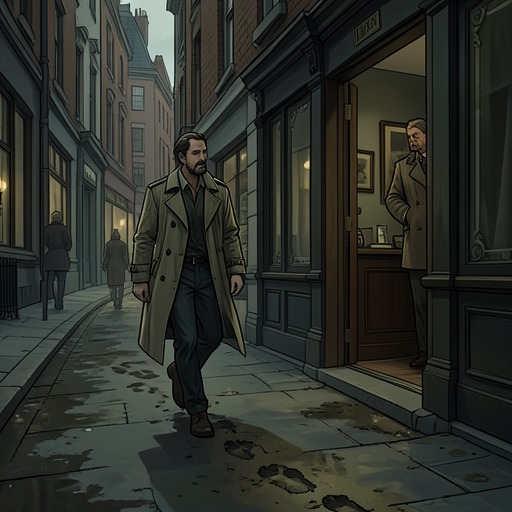
At the Hotel Eden-Wolff in Vienna, Kowalski’s presence is first registered through physical control and silence. André Casson walks toward room 64, unaware that a man has followed him from an alcove; as Casson raises his hand to knock, Kowalski grips his wrist. The heavy, watchful guard has crossed the thin cord carpet without making a sound. Casson briefly imagines the swift removal of Antoine Argoud from the hotel four months earlier, then recognizes Kowalski as a former Legionnaire from Rodin’s company. Rodin confirms that Casson is expected, and Kowalski releases him. He returns to the shadows outside the room, a quiet threshold guard whose function is to make access to the OAS leaders conditional on Rodin’s authority.
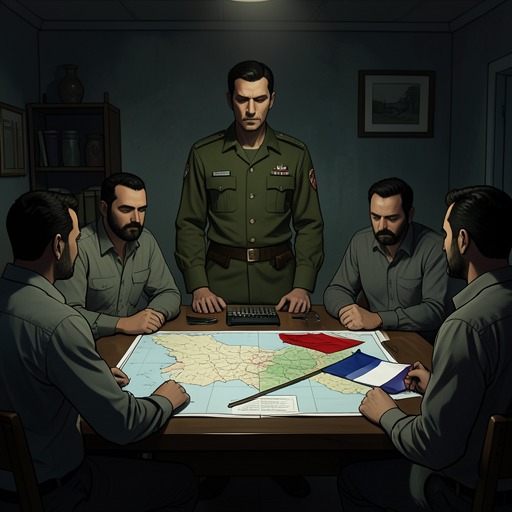
Later, with Rodin, Montclair, and Casson confined in a top-floor suite in Rome, Kowalski becomes the group’s regular courier. Eight guards protect the men, who have remained in the building since June 18. The French surveillance team is instructed to watch rather than approach, so the organization’s communications routine continues undisturbed. Kowalski carries the mail between the suite and the outside world, his movements monitored by the authorities but not interrupted.
His method at the post office is careful and practiced. Identified to postal officials as Poitiers through apparently adequate false papers or a letter of authority, he waits near the box in the main hall until five minutes before collection. He drops in the letters, then remains until the entire contents are collected and carried back into the building for sorting. The police regard interference as likely to provoke violence, an option ruled out by instructions from Paris. On occasion, he also places long-distance calls from the overseas-call counter. To handle an important incoming letter concerning the money accumulated through the previous month’s robberies, he is sent back to the post office with a steel mail case chained to his wrist. The chain and the scheduled second trip make visible how the courier’s routine is also a security procedure.
Family and Private Attachment
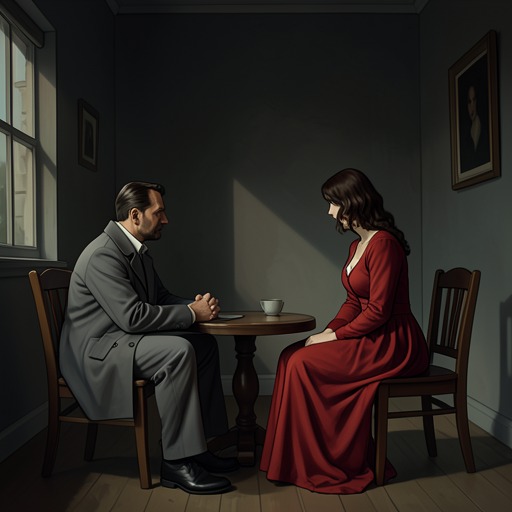
Kowalski’s most intimate connection is to Sylvie, the daughter he had with Julie. In late 1955 Julie gave birth to a blue-eyed, golden-haired girl. JoJo Grzybowski and his wife adopted the child with Julie’s agreement and named her Sylvie. They informed Kowalski by letter. He felt strangely pleased, but told no one. His silence is bound to his experience of dispossession: he had never owned anything that, once disclosed, had not been taken away from him. The adoption allows Sylvie to be raised by JoJo and his wife, while Kowalski’s concealed knowledge leaves him attached to her at a distance.
That guarded attachment becomes immediate when he learns Sylvie is seriously ill with leukemia. The news worries him through the morning, interrupting the emotional distance that otherwise suits his role. Yet he continues with his assignment after lunch, going upstairs to have the steel case chained to his wrist before making the second postal visit. The contrast is stark: the man entrusted with protecting a large sum and maintaining a clandestine communications route is privately preoccupied with a child whose illness he cannot remedy through obedience or force.
Kowalski’s temperament is also shaped by his reliance on command. When no superior’s order or standing instruction decides what he should do, it takes him a long time to reach a decision. By Monday morning, however, he has made up his mind. The narrative marks that decision without turning it into a general declaration of independence; its significance lies in how unusual deliberation is for a man accustomed to acting within orders, routines, and assigned duties.
Capture and Exposure
The communications network eventually carries news of Kowalski’s capture back to Rodin. A hurried message arrives, and Rodin crumples the paper in anger, cursing Kowalski. The report indicates that Kowalski has returned to France, or perhaps been seized inside Italy and abducted, and that he has talked under pressure. A separate call intercepted at a post office near the Gare du Nord gives the warning in compressed operational language: Valmy tells Poitiers that the Jackal has been exposed, that Kowalski was taken, and that he sang before dying. The courier identity and the real man behind it are now linked to the collapse of the conspiracy’s secrecy.
Rodin’s recollection supplies a possible path by which the assassin’s code-name became known. When Rodin parted from the Englishman, Kowalski was only a few feet down the corridor. He had been annoyed that the visitor had spotted him in the alcove, a professional guard outmanoeuvred by another professional and waiting for trouble. Rodin remembers saying good evening to the visitor as Mr Jackal. Because Kowalski was nearby, the exchange becomes a possible source of the name later revealed under pressure; the account establishes the proximity and Rodin’s alarm, but does not resolve precisely what Kowalski heard or how that information reached his captors.
The interrogation ends in bodily destruction. Strapped into a chair, Kowalski is connected by wires to small metal electrodes and an on-off switch. His body arches upward against the restraints; his legs and wrists strain until the leather appears to cut into him, and swollen eyes bulge toward the ceiling. His scream continues as the recording runs. At 4:10 in the afternoon, he breaks. The scene makes the cost of the intercepted message explicit: the information that reaches the authorities is extracted through torture, and Kowalski dies after giving it.
Narrative Role and Ending
Kowalski’s death changes what the authorities know about the threat. The intercepted warning tells them that the assassin is exposed, while the French investigation works from the fact that a plot against the President exists and that the killer has a timetable known only to himself. That uncertainty drives the hunt: investigators cannot tell how far the assassin has progressed, and they hope to identify and locate him under a new name before he realizes how much the authorities know. Kowalski’s confession therefore supplies a crucial alarm, but not a complete map of the intended attack.
The assassin’s own later uncertainty underscores the limits of what the confession disclosed. Remembering the hulking Pole from the Vienna hotel, he cannot understand how the guard outside the door knew his code-name or what he had been hired to do. He considers whether the French police worked it out or whether Kowalski sensed his identity, since Kowalski too had been a killer, though an awkward and clumsy one. This recollection leaves the exact route of disclosure unsettled while confirming the lasting consequence: the guard whose task was to keep outsiders away from Rodin’s circle becomes, through capture and death, the point at which its secret begins to escape.