
The City as a Field of Portents
The Death of Bunny MunroThis flow traces how coastal places, damaged objects, and recurring natural signs make Bunny’s private crisis feel public and unavoidable.
increasing Bearing strength in each event
 decreasing
Bearing strength in each eventdecreasingThe Burning Landmark
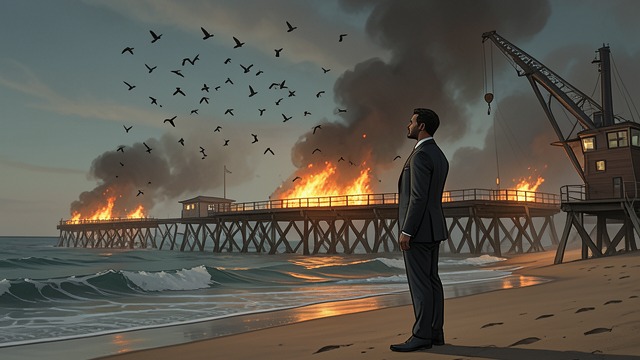
The Burning Landmark
A familiar coast altered
Bunny looks across from his hotel and sees the West Pier burning. The familiar seafront becomes an image of destruction and helplessness.
A warning absorbed but ignored
Starlings scream above the flames, yet Bunny returns to his room and his routines. The event functions as public disaster and as a portent for a life he refuses to examine.
The Yellow Car

The Yellow Car
A moving refuge
The Yellow Fiat Punto carries Bunny and Bunny Junior away from the damaged flat. Its bright color and unreliable engine make it both a comic companion and their fragile shelter.
Danger travels with them
Bunny drives recklessly, and the car becomes the setting for abandoned waits, frightening encounters, and finally a fatal collision. Escape does not remove the family from danger.
A Coastal Monster
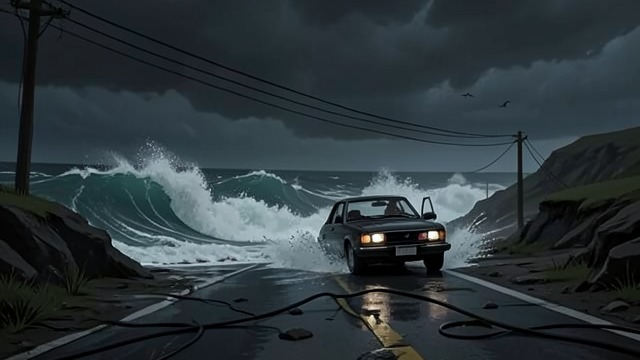
A Coastal Monster
Weather becomes hostile
Waves spill across the road, wind batters the Punto, and a fallen power line appears to move toward Bunny. The coast becomes a threatening environment that mirrors his panic.
Perception and danger overlap
Bunny knows that he may be seeing things, but the storm remains physically dangerous. The scene refuses a clean boundary between distorted perception and real threat.
The Rubbish Yard
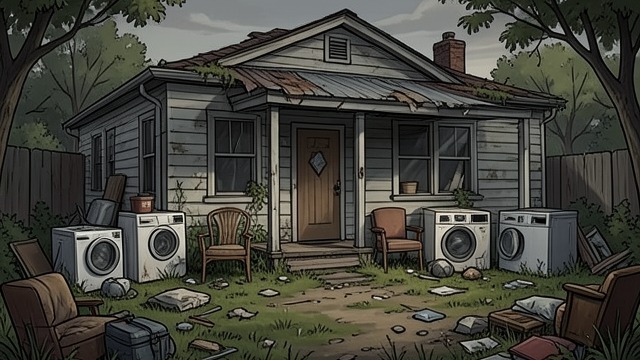
The Rubbish Yard
A landscape of neglect
The bungalow sits amid broken appliances, discarded furniture, and a damaged yard. Bunny enters without his samples, drawn forward despite a strong sense of dread.
The environment reflects harm
The surroundings anticipate the desperate, violent encounter inside. The junk-filled property becomes a physical counterpart to a world where vulnerable lives have been left without care.
The Camp of Bright Lights
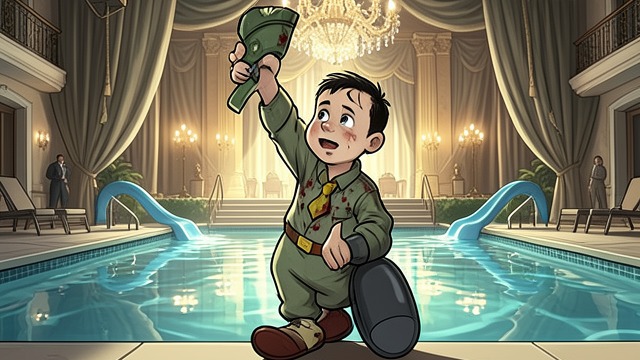
The Camp of Bright Lights
Cheerfulness surrounds sorrow
The swimming pool, fibreglass attractions, and glowing ballroom create an unusually festive landscape. Bunny arrives there carrying injury, shame, and the memory of childhood.
A stage for reckoning
The bright setting does not erase suffering; it gives Bunny a place to address it publicly. The contrast makes his final confession feel both theatrical and painfully sincere.
The morning Bunny sees the West Pier
As Bunny and Bunny Junior begin the road trip
During the stormy drive toward Georgia
At Mary Armstrong’s bungalow
At Butlins on the final night
