“We must love one another or die”
The Death of Bunny MunroThe recurring maxim We must love one another or die gives the novel a compact ethical appeal: love is presented not as sentiment alone, but as a condition of human connection. Its appearances place that appeal beside Bunny’s anger and regret, making it a challenge he hears before he can fully answer it.
The Maxim at Mrs Brooks’s
When Mrs Brooks discusses Beethoven and Auden, Bunny admits that the subject is over his head and describes himself as a working stiff. Her appeal to Auden’s words therefore meets not literary engagement but distance: the maxim is offered to someone who does not claim to understand its cultural or spiritual framing.
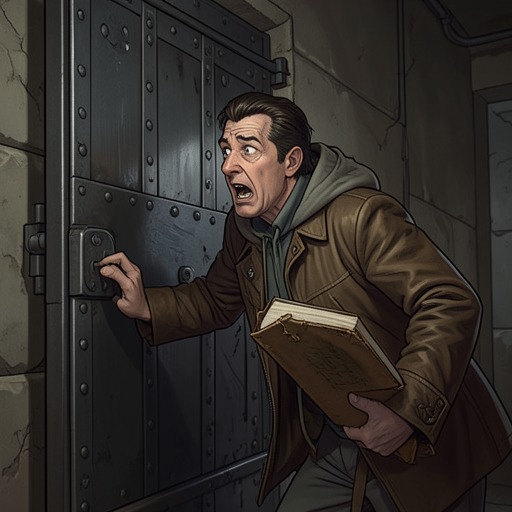
Later, as Bunny is seized by rage at his wife, Mrs Brooks, his son, his dying father, and the demands he feels coming from the world around him, she takes his hand and repeats the maxim. The moment sets her insistence on mutual love against his resentment and his unsuccessful attempt to divert his thoughts. The words do not settle his anger; they make the moral demand present within it.
Repetition and Response
The maxim returns in the final exchange with a musician. Bunny says he is trying to put things right, and the musician answers with a related appeal to love. Bunny responds that he has heard it before; regret rises in him, and he puts a hand to his heart. The recurrence connects Mrs Brooks’s earlier plea to Bunny’s later effort to repair what he can, without claiming that the effort has already succeeded.
The musician’s image of love as superglue keeping the heart of the world pumping gives the repeated appeal a sustaining, almost physical metaphor. Across these scenes, the words move from an admonition Bunny seems unable to take in to a phrase he recognizes while expressing regret. Their force lies in that contrast: the maxim remains simple, while Bunny’s capacity to answer it is uncertain.