Brighton
The Death of Bunny MunroBrighton functions as a geographical answer, a summer spectacle, and an increasingly ominous destination in Bunny Munro’s story. Bunny’s connection to the city is unstable: during a confused exchange, it is named as the place where he lives, yet he struggles to keep even that basic orientation in view. Later, the coastal road and seafront become the setting for his exuberant attention to women, while reports of the Horned Killer make Brighton a point on the killer’s southbound route. The city thus gathers together Bunny’s private disorder and a danger moving through the wider world.
A Place Bunny Struggles to Locate
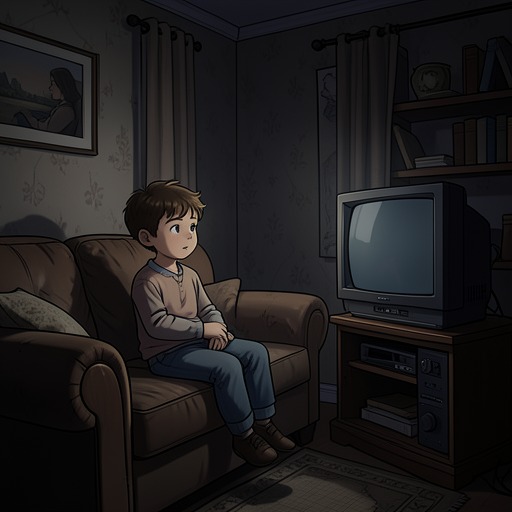
Early on, Bunny hears an apocalyptic sound outside but is not curious enough to investigate. A leak on the ceiling forms a droplet that falls onto his chest; in response, he asks Libby where they live. The answer is Brighton, followed by the clarification that it is down south. The exchange places the city within an intimate domestic memory, but its matter-of-fact answer contrasts with Bunny’s disorientation. He has to ask where home is, and the exchange gives the reader a plain geographical point while suggesting that his grasp on his circumstances is tenuous.
The later drive toward home gives that point a more concrete setting. At 12.15, Bunny starts the yellow Fiat Punto with a nagging awareness that he is not home, and a vague memory that Libby was upset the previous night. He cannot recall the reasons. Instead, he dwells on his idealized image of his wife and on his conviction that he loves her. Emerging into seaside sunshine, he sees summer unfolding along the seafront and slows the car to look. His route carries him on toward his flat at Grayson Court in Portslade. Brighton is therefore not presented only as a label for home: it is part of a coastal landscape that Bunny passes through while evading the emotional facts he cannot bring clearly to mind.
The Seafront and Bunny’s Summer Gaze
The seafront is introduced through Bunny’s heightened, self-centred perception. He reads the summer crowd as an abundant spectacle, slowing the Punto and rolling down its window as he watches people along the lawns and beach. His attention is dominated by women’s bodies and by the possibility of sexual access; his narration turns the public landscape into a succession of objects for his appetite. The scene’s brightness and movement matter, but they do not make his gaze generous. The city’s public summer life becomes material for private fantasy.
That fantasy gathers momentum as Bunny drives. A song on the radio intensifies his excitement, and the thought of a woman he has encountered earlier feeds his reverie. After noticing a billboard, he abruptly changes direction, parks, and masturbates in the car. He then rejoins traffic and continues to his flat, still in high spirits and wondering whether Libby will want sex. The episode links Brighton’s open, crowded summer setting to a much narrower pattern: Bunny converts what he sees into desire, then carries that desire back into the strained domestic relationship whose trouble he has not faced. The city does not correct his self-deception; in this passage, its apparent abundance helps sustain it.
A Destination on the Killer’s Route
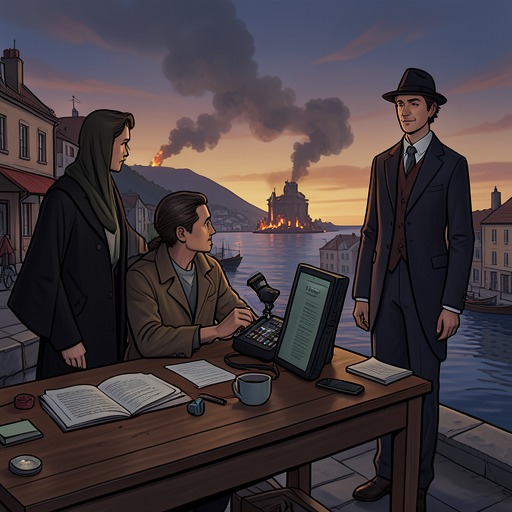
Brighton’s meaning changes when news coverage brings the Horned Killer into the same coastal geography. While visiting Pamela Stokes in Newhaven, Bunny catches a glimpse of CCTV footage on a large television. Sunlight obscures the image, so he cannot be certain of what he is seeing, but the screams he recognizes leave him with a sense of terror. For a moment, he wonders how close the killer is to Brighton. The distance between the city and the violence becomes a question Bunny cannot answer with confidence.
Later, in a café on Western Road, a television report describes a young mother murdered with a garden fork in her home in Maida Vale and recalls the killer’s appearance on CCTV in a shopping complex in Queensway before he disappeared again. A map of England displays his southbound progress as a red line. Bunny thinks the map resembles a cartoon rabbit without ears, and some part of him takes the report personally, though he does not know why. The café worker observes that the killer is working his way to Brighton. That remark makes explicit what the map has already suggested: the city is not just Bunny’s homeward reference point but a possible endpoint in the killer’s movement.
Coastal Setting and Narrative Tension
Other scenes extend the coastal geography without making Brighton a stable refuge. After leaving Mrs Brooks’ home, Bunny stands outside, notices that the starlings have gone, and walks toward Marine Parade. There he encounters a female police officer beside the Punto. The scene places him in a public coastal setting just after an unsettling visit, with the birds’ disappearance and the piano he thinks he can still hear carrying the unease beyond the house. Brighton’s streets and adjoining locations repeatedly connect ordinary movement—driving, walking, stopping—to moments when Bunny’s perception becomes unreliable or threat enters his awareness.
The city’s narrative force rests on this contrast. In the summer drive, Brighton is associated with sunlight, crowds, and Bunny’s overconfident appetite; in the television reports, it is a destination approached by a murderer whose route is marked across the country. At first, Bunny can name Brighton only through a prompted exchange about where he lives. Later, he recognizes its possible proximity to danger, but that recognition remains partial: the obscured footage leaves him uncertain, and the report that the killer is heading south does not show what will happen next. Brighton consequently anchors the story’s coastal movement while holding two opposed possibilities in view: familiar home and approaching menace.