Bunny Munro
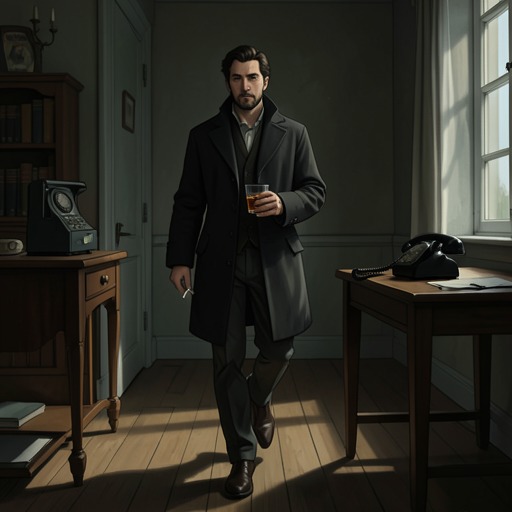
The Death of Bunny MunroBunny Munro is a traveling beauty-products salesman who builds his identity around appetite, charm, and the conviction that he can persuade almost anyone. These performances give him a way to move through the world, but they also conceal how little control he has over himself or the consequences of his conduct. After his wife, Libby Munro, dies by suicide, Bunny takes their son, Bunny Junior, on a sales trip. The journey exposes the gap between the salesman he imagines himself to be and the husband and father his actions have made him.
Identity and Background
Bunny’s confidence is most visible in his belief that sexual attraction operates like a force he can deploy at will. In the breakfast room of the Grenville Hotel, he watches a waitress walk away and imagines that her turning back would confirm his irresistible magnetism. His fantasy recasts her ordinary decision as a momentous choice about her future, while his own desire supplies the story’s supposed certainty. The scene reveals the self-serving logic of his charm: he treats another person’s attention as proof of his power, rather than as something she is free to withhold.
His work as a salesman offers a second, more respectable version of the same confidence. Bunny can recite an elaborate pitch for luxury skin care even while a television in a customer’s home appears to show news footage of the Horned Killer. The juxtaposition places his polished sales language beside a public atmosphere of danger: he registers the crowd’s terror, wonders how near the violence is to Brighton, and continues describing the product. His gift for keeping the pitch moving is real, but it does not amount to sound judgment or emotional steadiness.
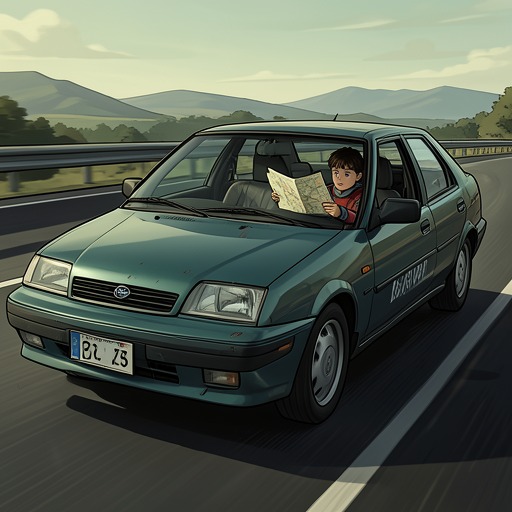
Bunny also relies on an idealized picture of his marriage. Driving his yellow Fiat Punto along the seafront, he recalls Libby as she was during their courtship, despite a nagging awareness that she had been upset the previous night. He cannot bring the reason to mind; instead, the sunny day and his romanticized image of her restore his conviction that he loves her. His optimism therefore functions less as evidence that the marriage is well than as a refusal to let its troubled present dislodge the past he prefers.
Libby’s Death and the Past He Avoids
The discovery of Libby’s body in their bedroom shatters the ordinary domestic setting. Bunny Junior enters the room and notices the television and the carpet, while Bunny sees Libby hanging from the security grille in her orange nightdress. His immediate response is not a composed understanding of what has happened but a quiet curse and a stunned, involuntary thought that he tries to suppress. The boy’s attention to small details, set against his father’s frozen reaction, makes the discovery a rupture experienced differently by each of them.
Afterward, Bunny watches attendants carry Libby to an ambulance from the balcony, drinking lager and smoking as the scene proceeds with what seems to him an unsettling routine. The distance of the balcony does not make the loss manageable; it leaves him watching rather than acting, with no clear response to the fact that his wife is gone. His later sense that Libby continues to pursue or accuse him belongs to this unresolved grief as well as to his fear of what their shared history means.
That history includes a betrayal Bunny remembers while alone in a house. He recalls returning from a night out with an unconscious woman in a hotel room and finding Libby at the door. She sees the situation, turns away, and afterward changes: she stops confronting him about it, becomes withdrawn, and spends much of her time watching television, sitting, or sleeping. Bunny remembers this change as a puzzle and even frames her continued sexual relationship with him as unexpected. The memory supplies a painful contrast to his earlier idealized picture of their marriage: Libby’s silence was not proof that the betrayal had passed harmlessly.
Fatherhood and the Sales Journey
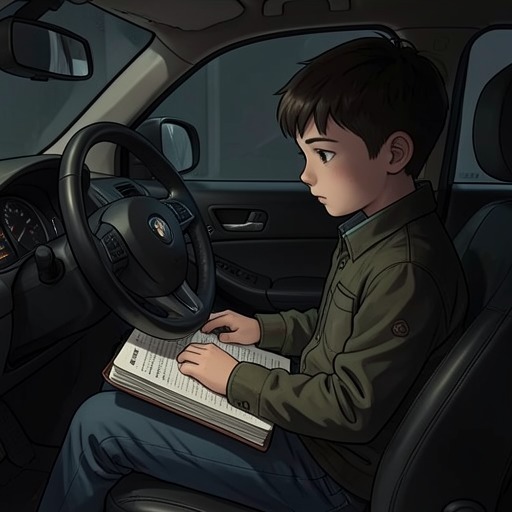
Bunny announces that he and Bunny Junior are hitting the road, presenting the trip as an adventure and immediately turning his son’s appearance into a lesson in salesmanship. He tells him to be presentable, even though the boy is wearing a worn, hole-covered T-shirt that he keeps for reasons of nostalgia. Bunny’s attention moves quickly from the child’s attachment to his own practical rule. The road becomes both a workplace and a makeshift school in which he intends to teach his son the business.
On the customer route through the Wellborne Estate in Portslade, Bunny drives very slowly, checks Geoffrey’s customer list, and searches the tower blocks for the matching flat. As he does so, he explains how shaking a great tree would disturb the creatures living in it. Bunny Junior listens, retains the lesson, and recognizes that its meaning may become clear only later. The scene gives Bunny’s instruction a reach beyond immediate selling: his father’s metaphor offers the boy a way of thinking, even as Bunny’s example of adult conduct remains compromised.
The father-son bond is neither simply tender nor simply coercive. Bunny can praise his son’s knowledge with exuberance, laughing, grabbing him in a headlock, and celebrating when the boy identifies Ulaanbaatar. Yet when Bunny Junior asks to return to school, Bunny frames the choice as a test of loyalty and ambition. He asks whether the boy would rather be with his father or among schoolchildren, and whether he wants to learn the business or fail to amount to something. Bunny Junior, meanwhile, asks to put his glasses back on because the light hurts his eyes and he fears he may be going blind. Bunny insists on an answer to his own question instead of meeting the immediate need his son has expressed. His paternal authority thus mixes affection and instruction with pressure and inattention.
Family Conflict and Mounting Strain
Bunny’s relationship with his father exposes the inheritance behind his ideas of manhood and work. When Poodle makes a cutting remark about the older man, Bunny responds with a sudden seriousness, warning him not to insult his father. Poodle is too intoxicated and disoriented to hear the threat. Bunny’s reaction nevertheless marks a point at which family loyalty briefly outweighs his usual passivity, even though it does not resolve the history between father and son.
That history is laid bare when Bunny’s dying father insists that he had tried to teach Bunny the business and shown him beautiful things, only to see him selling toilet brushes. The old man’s complaint turns commercial failure into a judgment about the son’s life. Bunny’s own anger also gathers around the father’s cancer, Libby’s absence, his son waiting in the car, and the women he resents. At Mrs Brooks’s home, a confrontation with his appetites and frustrations coincides with the loud piano and starlings battering at the window. Mrs Brooks takes his hand and urges mutual love; Bunny, unable to answer her plainly, keeps his eyes lowered. The episode places a demand for human connection beside his impulse to retreat into resentment and sexual fantasy.
Reckoning and Narrative Significance
At a low point, Bunny’s mind shifts from frantic questions toward the sense that he knows what to do. The relief comes before he makes his intentions clear, and it does not immediately erase his habitual behavior. The contrast is important: insight appears not as a completed transformation but as a possibility emerging within a life still governed by evasions.
Later, after a collision with a concrete mixer truck and a lightning strike, Bunny stands before an audience and begins a public testimony. River, the waitress from the Grenville Hotel, recognizes him from the front of the crowd, and applause gives way to outrage. Bunny nonetheless returns to the microphone, identifies himself as a salesman, and asks for the audience’s time. He describes the crash, the lightning, and the danger his nine-year-old son faced, then frames his survival as a question of why he was spared. The public scene reverses the earlier breakfast-room fantasy: River is no longer a figure in Bunny’s private script but a witness whose recognition helps the crowd see him for what he is.
Bunny’s arc turns on the failure of his preferred performances to contain reality. The salesman’s practiced optimism cannot restore his marriage, his jokes cannot settle the conflict with his father, and his lessons cannot substitute for attending to his son’s needs. His final public address begins to confront rather than evade consequence, but its setting matters: he speaks before people who recognize him, after danger has made his private conduct visible. The novel therefore gives his salesmanship a double meaning. It is his talent for making a persuasive case, and the habitual mask he must finally stand before others without relying on.