Bunny Munro Senior’s terminal lung cancer
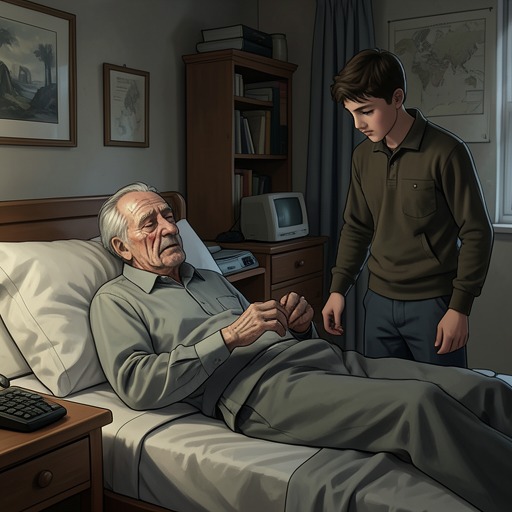
The Death of Bunny MunroBunny Munro Senior’s terminal lung cancer forces Bunny to confront both his father’s urgent need for professional care and the unresolved bitterness between them. The illness is not presented as a story of treatment or recovery: it sharpens a long-standing father-son conflict, in which practical help is refused and an old grievance about the family business remains painfully alive.
Urgent News and Professional Care
The cancer enters the immediate plot through an urgent call relayed by Geoffrey. Miss Lumley, who identifies herself as Bunny Munro Senior’s carer, has contacted the office and insists that Bunny go to his father’s home promptly. The message makes clear that the situation is serious: the carer describes it as a matter of grave importance, and Geoffrey adds that the old man is very ill. Bunny’s startled response—questioning whether he must go at once—marks the news as an interruption that cannot simply be fitted around his existing concerns.
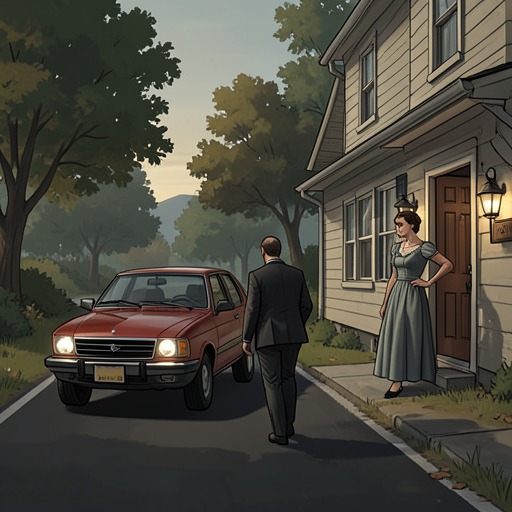
At the house, Miss Lumley says that she is quitting and tells Bunny that his father is dying and needs continuous professional care. She specifically says that he needs to be in hospital. Bunny answers as though he had assumed that providing care was already her responsibility; her reply makes the limits of the arrangement unmistakable. She presses the keys into his hand, leaving him to face the situation directly. The scene establishes a clear practical consequence of the cancer: the care his father requires exceeds what is being provided at home, and hospital care is being urged, not shown as something he has accepted.
Symptoms and Refusal of Help
Bunny Munro Senior’s own account of the diagnosis is bitterly ironic. At eighty, he treats the fact that he has developed lung cancer as an outrageous misfortune, rather than expressing fear or asking for assistance. His response comes amid persistent coughing and visible weakness. He continues smoking in the exchange, a stark detail set against the illness he names, though the narrative does not explain the medical history of the cancer or describe any treatment.
Bunny asks whether there is anything he can do, but his father rejects the offer as absurd. When Bunny urges him to obtain proper medical attention, the recommendation meets the same resistance. The old man’s replies are not a practical discussion of care; they turn the question back against his son, as though Bunny’s concern cannot be separated from their history. The cancer therefore creates an immediate need that Bunny recognizes, while the father’s hostility prevents that recognition from becoming an uncomplicated act of assistance.
An Old Grievance Reopened
The illness also draws the father’s anger toward the business he once tried to teach Bunny. He accuses his son of rejecting the work and opportunities he offered, and contrasts the beautiful things he says he wanted to show him with Bunny’s present livelihood selling household products. Bunny defends the work as being conducted through a reputable company, but his father reduces it to a humiliating nickname and repeats that Bunny disappointed him. The argument presents their estrangement not as a new consequence of the diagnosis but as a conflict the diagnosis cannot displace.
The exchange also complicates Bunny’s response. Earlier, when Poodle makes a disparaging remark about Bunny’s father, Bunny reacts with sudden force and tells him to stop. That brief defense does not resolve the antagonism at the bedside: Bunny can resent or oppose his father’s rejection and still resist an outsider’s insult. In the room, Bunny tries to meet the present emergency by asking what he can do and insisting on medical attention; his father answers by returning to the older accusation that Bunny squandered the family’s business inheritance. Cancer intensifies the pressure of the encounter but does not erase the grievance that shapes it.
Admission and Rejection
The clearest acknowledgment of the illness comes after Bunny has turned away. His father calls him back and, holding out his handkerchief, tells him that he is dying. Bunny’s eyes fill with tears, and he turns as if to return to the room. The admission briefly changes the emotional register: beneath the insults and accusations is a direct statement of impending death, met by a visible response from the son.
But the moment does not become a reconciliation. As Bunny tries to step back inside, his father reaches out with his walking stick and pushes the door shut. The closing gesture gives the scene its stark ending: Bunny has heard the truth and is willing to come closer, yet his father denies him entry. The cancer makes their separation urgent and potentially final, while the final action preserves the relationship’s defining contradiction—care is needed, offered, and refused. The narrative provides no subsequent account of hospital admission or medical outcome, leaving the father’s illness and the unresolved breach between them as distinct but inseparable sources of tension.