Butlins Holiday Camp, Bognor Regis
The Death of Bunny MunroButlins Holiday Camp, Bognor Regis is presented as a brightly staged world of leisure, but its significance extends beyond its attractions: the camp connects Bunny’s childhood with his uneasy present. An advertisement first makes it the object of his excited recognition; later, its familiar paths and landmarks frame a nighttime gathering whose promise of delight sits uneasily beside Bunny’s mourning and the visitors’ uncertainty.
Setting and advertised attractions
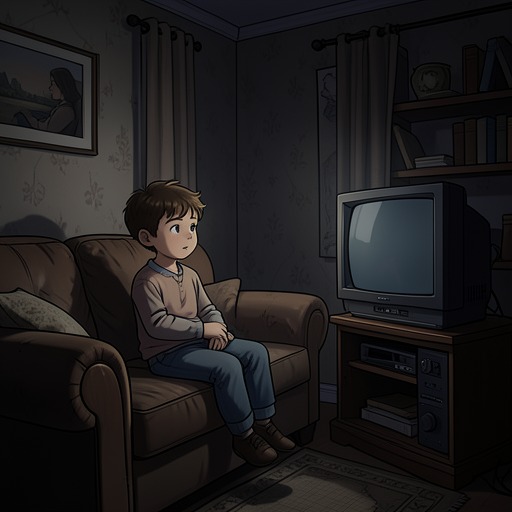
The camp appears first on television in an advertisement aimed at Bunny and Bunny Junior. Yellow cartoon stars frame photographs that cartwheel across the screen, turning the site into a sequence of pleasures: the Tiki Bar, with simulated electrical storms; the Empress Ballroom, with crimson curtains and a tuxedoed band; indoor and outdoor swimming pools; a monorail and putting green; adult quiz nights; the Apache Fort; the Gaiety Building; and an amusement arcade. A giant fibreglass rabbit stands sentry beside the pool. Smiling staff in red coats guide smiling patrons to their chalets, presenting the camp as a place where welcome and entertainment are carefully arranged.
The advertisement ends on the camp’s mission statement, “Our true intent is all for your delight.” For Bunny, the name alone prompts an outburst of recognition and enthusiasm. He calls the camp the best place in the world and tells Bunny Junior that his own father took him there as a child. That declaration begins as a delighted response to the screen, but the mention of his father immediately brings a painful bodily sensation: Bunny feels as though a butcher’s hook has twisted in his bowels.
Bunny’s childhood recollection
Bunny’s account of the earlier visit is edged with suspicion. He speculates that Bunny Munro Senior may have brought him to the camp while pursuing a liaison, describing his father as a man who liked women; the speculation is Bunny’s, not an established account of what the older man intended. He remembers a more definite sequence: on arrival, his father changed his shirt, shaved, put pomade in his hair, and sent the boy down to the pool, saying he would come and get him later.
In memory, the swimming pool is crowded and vivid: turquoise water churns among screaming children, with terraced lawns and a fifteen-foot, bucktoothed rabbit nearby. Bunny recalls crouching in the water with only his eyes above the surface, gliding like a crocodile or alligator while watching other children jump in, make splashes, and cavort. He felt unseen, yet could see everyone. The remembered game gives the place two positions at once: Bunny is physically among the children, but also observing them from the water’s edge of visibility. As he tells the story, Bunny Junior’s breathing deepens and he appears to fall asleep. Bunny drinks Scotch and misses the bedside table when he tries to put down his glass; the tumbler rolls across the carpet while he sinks further into the memory.
The camp at night
Later, the camp’s paths and attractions reappear around a crowd of women walking toward the Main Hall. The night sky, sea breeze, and sodium-lit thoroughfare give the approach an unusually magical atmosphere. At the swimming pool, a reinforced-concrete elephant in a yellow tutu spouts strawberry-coloured water from its raised trunk. The giant fibreglass rabbit stands beside the water-slide, and the women pass it without knowing that Bunny is watching from his chalet window.
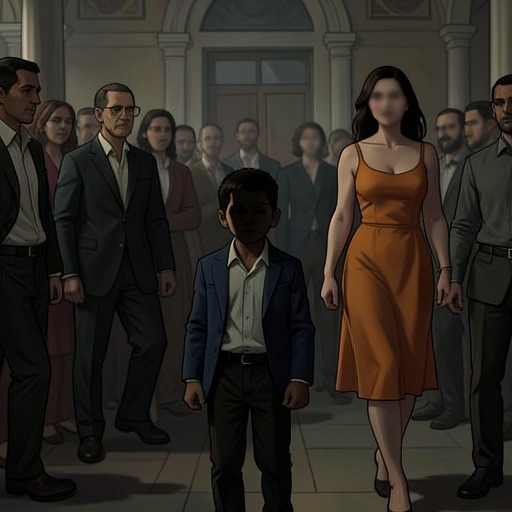
Other landmarks line their route: a children’s electric train circles the main pool, its engine bearing the clown face Bunny remembers from his childhood visit. He also recalls the fun fair, monorail, Apache Fort, and Dutch windmill as the crowd moves past empty swings, deserted slides, and abandoned seesaws. The women pass the Gaiety Building, putting green, and amusement arcade, then ascend the stairs into the Main Hall. They hold invitations and look at one another, unsure why they are there. The gathering’s purpose is not explained in this scene; what the location supplies is its approach, its audience, and the conspicuous promise above the entrance.
Memory, promise, and contrast
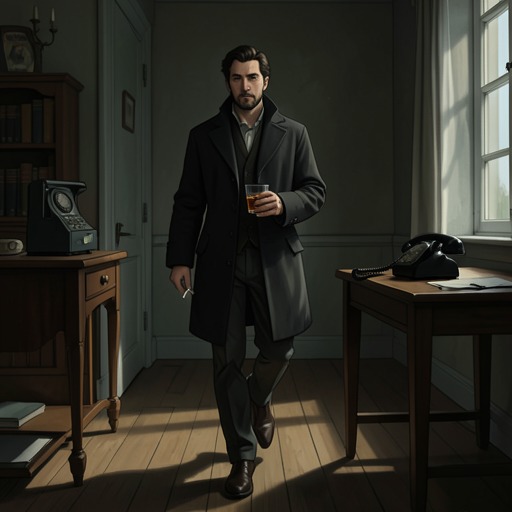
Bunny watches the women from the chalet window as the camp’s attractions become a route toward the Main Hall. His stance is described as determined, feet planted, chin raised and shoulders squared, but mourning remains visible around his eyes. He has changed into a fresh red-striped shirt with a white collar and cuffs, added pomade to his hair, arranged his lovelock, and shaved; a webbed scar curls above his open collar, with another thin scar above his right eye. His careful presentation echoes the grooming he remembers from his father’s arrival, though the evidence does not make the two scenes identical in purpose.
Above the Main Hall, the mission statement blinks in candy-pink neon: “OUR TRUE INTENT IS ALL FOR YOUR DELIGHT”. Bunny repeats it to himself and drains a can of Coca-Cola. The slogan’s brightness and the advertised images of smiling holidaymakers stand against the women’s uncertainty as they enter, and against Bunny’s private association of the camp with a father who left him waiting at the pool. The location thus holds more than one time and emotional register: a commercial promise of collective pleasure, a boy’s solitary watching, and a bereaved man positioned outside a gathering he has arranged the details of his appearance to face. Its returning objects—the poolside rabbit, the train, the paths, and the sign—make the camp a meeting point between remembered childhood and Bunny’s present.