The Encyclopaedia
The Death of Bunny MunroThe Encyclopaedia is Bunny Junior’s constant reference point and, at moments of crisis, a kind of companion. It gives him precise language for what he sees and facts about the world beyond his immediate troubles, yet cannot tell him what to do about his mother’s absence or his father’s breakdown. As its pages become soaked, scorched, and difficult to separate, the book’s material damage makes visible the limits of the certainty Bunny Junior seeks from it.
Reference and Interpretation
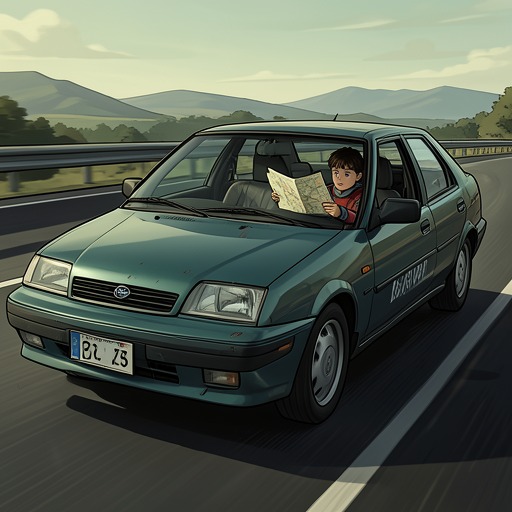
While waiting in the Punto on Marine Parade, Bunny Junior watches passers-by and wonders what he is doing on the journey and when Bunny will teach him how to sell. He fears that advanced blepharitis may be making him blind, and even wonders whether he is going insane. The Encyclopaedia gives him definitions for Mirage and Apparition: one describes distorted objects produced by refracted light, the other the experience of seeing someone who is not present. These entries supply categories for unusual perception, but Bunny Junior cannot make them explain his own experience. He believes his mother is looking for him and will find him if he waits; the definitions do not resolve whether that belief is vision, hope, or something else.
The book’s answers also coexist with the ordinary, urgent demands of his body. Bunny Junior thinks he should have eaten his Cornish pasty at lunchtime, sees youths eating chips, and smells fish and chips from a booth across the road. His hunger interrupts his attempt to understand his mother’s imagined search. The Encyclopaedia can define an optical illusion, but it cannot satisfy hunger or tell him what important thing he wants to say to his mother. Its authority is real but bounded: it names phenomena without settling their personal meaning.
A Store of Wonders
Later, Bunny Junior closes the book after reading about the Midwife Toad, whose male carries eggs on his legs until they hatch. He is astonished by the fact and reflects on how amazing the world is. This episode shows the Encyclopaedia at its most successful: it expands his sense of life through a concrete piece of natural history, giving him a moment of wonder independent of the anxieties surrounding the journey.
The same volume cannot, however, provide the kind of answer he most wants. In the Punto, its pages contain what he imagines as all the information anyone could need, including facts about Edgar Rice Burroughs, four-eyed fish, and Joseph Guillotin. Yet Bunny Junior still does not know what to do about Bunny, who is crying, driving in circles, smoking, and drinking. The contrast is not simply between correct and incorrect information. The book can preserve facts, but its abundance does not translate into practical understanding of a parent in crisis. Bunny Junior’s attachment to it—as though it were his only friend—coexists with his recognition that it cannot help him in this moment.
Damage and Use
During the storm, rain beats against the Punto and the green bin liners taped over its shattered windows. Bunny Junior clutches The Encyclopaedia to his chest, fearing that water might ruin it; the book is a vulnerable object he tries to protect even while he is bewildered by Bunny’s behaviour. Its knowledge remains intact in principle, but the child’s familiar resource offers no answer to the immediate question of what to do. The scene places a fragile book inside a damaged car, with Bunny Junior attempting to guard one while unable to control the other or steady his father.
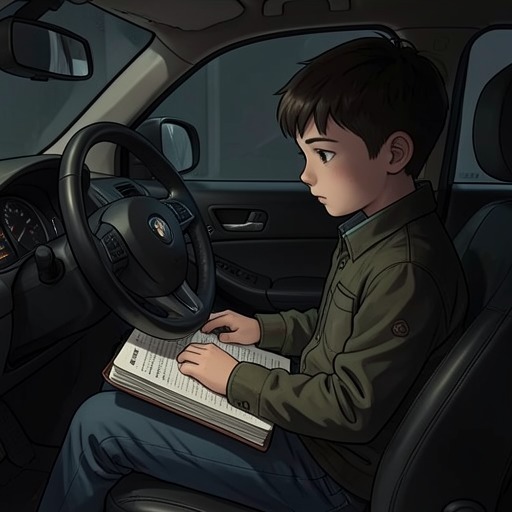
Later, he picks up the scorched remnants, their pages swollen by rain, from a low laminated coffee table. He carefully peels the ruined pages apart until he finds the definition of Fantasy. The definition describes an imagined situation that does not correspond with reality but expresses desires or aims, often involving the impossible or highly unlikely. Bunny Junior closes the book and asks Bunny who would have guessed that, secretly pinching his leg. The gesture tests the distinction the definition has just supplied: the Encyclopaedia can describe fantasy, but Bunny Junior uses his own body to check the reality of what is happening around him. The book has not become useless; rather, its damaged condition and the question he asks show how he must interpret its words for himself.
Narrative Significance
Across these episodes, The Encyclopaedia shifts from reference work to protected possession and then to a damaged text that Bunny Junior actively handles. At first, he consults it to classify visions and make sense of his mother’s perceived presence. Its account of the Midwife Toad opens a window onto the world’s strangeness; its factual entries about writers, fish, and history remain available when his family life becomes confusing. But information cannot perform the work of care. The book cannot feed him, find his mother, explain Bunny’s tears, or decide what Bunny Junior should do.
That gap gives the object its significance in the father-and-son story. Bunny Junior repeatedly turns toward a source that promises comprehensive knowledge, while the scenes around it present needs that no definition can resolve. Rain and scorching do not erase the facts so much as expose their dependence on a material book that can be damaged. By the time Bunny Junior searches the ruined pages for Fantasy, reading has become an act of separation and judgment: he finds a concept, closes the volume, and tests the world against it. The Encyclopaedia remains a companion, but not an answer key to grief or responsibility.