Agnolella
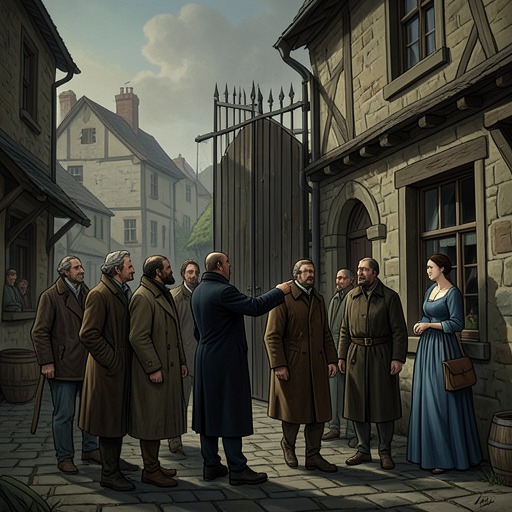
The DecameronAgnolella is the young, beautiful daughter of Gigliuozzo Saullo, a commoner who is nevertheless much beloved by the people of Rome. In Elisa’s tale, her love for Pietro Boccamazza meets resistance from his family and is tested by a violent separation in the woods. Agnolella’s quick response to danger, her endurance while lost, and the help she accepts from others bring the lovers back together; their marriage, celebrated at a mountain castle, leads to a peaceful life in Rome.
Identity and Background
Agnolella is introduced as a young woman of great beauty, loved by Pietro for her appearance and character. Her father, Gigliuozzo Saullo, is of plebeian condition, but the narrator emphasizes that he is dear to the Romans. The difference between her family’s standing and Pietro’s is central to the obstacle facing the couple: Pietro belongs to a highly honored Roman family, whose members reject the match and warn Gigliuozzo not to take Pietro’s proposal seriously if he wishes to remain their friend or kinsman.
The tale gives Agnolella no independent account of her life before Pietro’s courtship. Instead, it presents her through the mutual recognition of love between the two young people. Pietro arranges, through an intermediary, to learn whether she would accept his plan to flee with him. Her agreement makes the flight a shared decision, not a unilateral abduction, and establishes that she is willing to risk separation from her family’s protection rather than abandon the relationship.
Love and the Decision to Flee
Pietro loves Agnolella and asks to marry her, but his relatives’ opposition closes the path he believes would let him win her openly. He is so distressed by their refusal that he seems near to death from grief. When he learns that Agnolella also consents to the alternative, he resolves to carry out their wishes by taking her away from Rome. They set out early on horseback for Anagni, where Pietro has trusted friends, without time to hold a wedding because they fear pursuit.
The flight places their private bond against the authority of family and social rank. Their intention is to marry, but at this stage they have not yet done so: they ride together, speak of their love, and kiss as they travel. That distinction matters to the story’s ending, where the couple’s desire is eventually given public and familial recognition through a wedding rather than left as an elopement alone.
Separation in the Wood
Pietro does not know the road well. After the pair take a left-hand path instead of the right one, they come near a small castle, from which a dozen footmen suddenly emerge. Agnolella sees the danger before Pietro does and cries out to warn him. She turns her hackney toward a great wood, spurs it onward, and holds to the saddle-bow as the horse carries her away at a gallop. Pietro, who has been watching her rather than the road, is seized by the men before he realizes what is happening.
The lovers are separated by the very misdirection that has already made them vulnerable. Pietro’s captors threaten to strip him, take his horse, and hang him from an oak to spite their enemies. An ambush by a larger force interrupts them, allowing Pietro to escape, but he cannot find the route Agnolella took. He spends the day searching and calling for her, afraid both that he will not get out of the wood and that she may be killed by a wild animal. Agnolella, meanwhile, wanders alone through the forest, weeping and calling for Pietro. As evening comes and she sees no sign of him, she follows a narrow path that her hackney takes and reaches the remote home of an elderly couple.
The old man tells her that she is more than a dozen miles from Anagni and that no other lodging is near enough to reach before dark. He and his wife warn her that dangerous bands, both friendly and hostile, pass through the area, and that they would not be able to protect her if anyone tried to harm her. Their warning gives the shelter a real risk rather than making it a simple refuge. When a band of rogues arrives, Agnolella hides in the hay. One man throws his lance into it, tearing her dress close to her left breast and nearly exposing her hiding place. She remains silent until the men leave; they take her hackney with them, so she must continue on foot.
Shelter, Reunion, and Marriage
At daybreak, the elderly couple escort Agnolella to a castle about five miles away, telling her she will be safe there. It belongs to Lionello di Campodifiore of the Orsini family, and his wife happens to be present. The lady recognizes Agnolella immediately and receives her warmly. She already knows Pietro as her husband’s friend. After hearing Agnolella’s account and learning where Pietro had been captured, she fears he is dead, but promises that Agnolella can remain at the castle until a safe opportunity arises to send her back to Rome.
Pietro survives separately through the night in a tree. His hackney breaks free and is killed by a pack of wolves, leaving him without the companion and support he had relied on in his distress. At daybreak he sees a fire, finds shepherds who give him food and warmth, and learns that Lionello’s castle is nearby. Two shepherds accompany him there. He is overjoyed to find Agnolella alive, while she shares his happiness; each had feared for the other during the separation.
The castle lady first rebukes Pietro for acting against his relatives’ wishes. She then recognizes that both lovers are resolved, that their marriage is an honorable desire, and that each has escaped dangers in the wood. Rather than insist on the families’ original opposition, she agrees to the match and undertakes to make peace between Pietro and his kin. The couple marry at once, with the wedding paid for by Lionello’s household. After several days, they return to Rome under escort. Although Pietro’s relatives are angry at first, the lady succeeds in reconciling them with him, and the couple live together peacefully into old age.
Narrative Role and Significance
Agnolella’s role is defined by decisions made under constraint. She accepts the risk of flight because an open marriage has been blocked; when danger appears on the road, she reacts faster than Pietro and escapes; when separated, she continues to seek shelter despite being alone and far from her intended destination. Her survival depends partly on her own alertness and partly on help from the elderly couple and Lionello’s wife. The story therefore links romantic resolve not to an uninterrupted escape but to a chain of dangers, temporary refuges, and acts of assistance.
The ending reverses the lovers’ initial predicament. Pietro’s family had threatened to withdraw its kinship from Gigliuozzo if he consented to the marriage; at the castle, a woman with the authority and means to help instead enables the marriage and later restores peace with Pietro’s relatives. The private choice to flee becomes a public wedding, and the separation that seemed to end the lovers’ hopes becomes the occasion for their reunion. Agnolella’s story closes not with triumph over her family in isolation, but with love accepted and sustained within a reconciled social world.