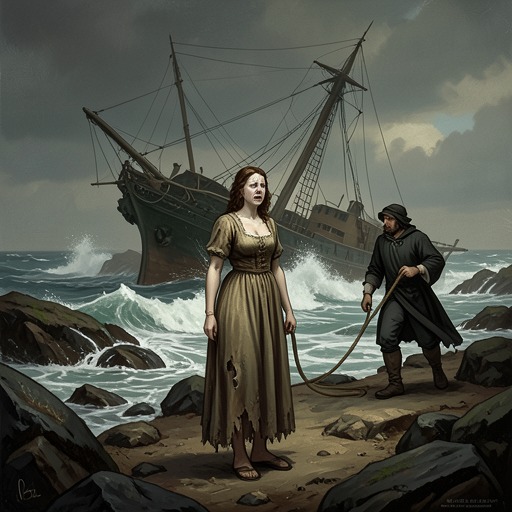
Constantine
The DecameronConstantine is the son of the Emperor of Constantinople and a prince who comes to the aid of the Duke of Athens as war approaches. In the story of Alatiel, his role turns a political alliance into another stage in her repeated capture and transfer: although he presents his action as a remedy for his sister’s grievance, he takes Alatiel for himself and carries her away by force.
Position in the Conflict
The Duke of Athens faces a new enemy after the discovery of the murdered Prince of the Morea. As the new prince gathers an army, Constantine arrives with Manuel, his cousin, and a substantial following, sent by their father, the Emperor of Constantinople, to support the duke. The duke and duchess receive the two princes with honor; the duchess is Constantine’s sister.
The duchess tells them that the war has arisen from the duke’s offense against her: he has taken Alatiel, a woman whose presence she considers an affront. She asks her brothers to find a remedy that will preserve the duke’s honor and bring her relief. Constantine and Manuel already know the facts, console her, and learn where Alatiel is staying. Their visit to her is thus framed at first as a response to the duchess’s complaint, though Constantine’s private purpose soon diverges from it.
Desire and Abandonment of Duty
When the duke hosts a meal for the princes in a garden belonging to Alatiel’s residence, Constantine sits beside her and is struck by her beauty. He repeatedly gazes at her, persuading himself that the duke can be excused for his conduct—and that anyone might commit treason or another wrong for so beautiful a woman. His admiration becomes a desire to take her from the duke, which he conceals from everyone.
The military crisis does not end while Constantine’s attention shifts. When the duke’s forces leave Athens to defend the frontier against the approaching prince, Constantine goes with them. After several days, still preoccupied with Alatiel, he pretends to be seriously ill so that he can return to Athens. He leaves his command in Manuel’s hands. His feigned illness marks a clear break between his public duty as an ally and the private objective that now governs his actions.
The Abduction
Back in Athens, Constantine speaks with his sister about the injury she believes the duke has done her. He offers to remove Alatiel, presenting the plan as a way to ease the duchess’s grievance rather than as an act of desire. The duchess approves, provided that the duke never discovers her involvement; Constantine promises secrecy and receives her consent to proceed.
He secretly equips a light vessel and sends it toward the garden. One evening, he goes to Alatiel’s pavilion with companions and is welcomed by her and her attendants. Under the pretense that he has a message from the duke, he draws Alatiel aside toward a gate opening onto the sea. A man of his has already opened it. At Constantine’s signal, the vessel comes to the gate, and his men seize Alatiel and carry her aboard. He threatens her attendants with death if they stir or speak. His explanation—that he means not to rob the duke of his woman but to undo the affront against his sister—conceals the personal desire that prompted the scheme.
Chios and the Pattern of Fortune
Constantine boards the vessel beside the weeping Alatiel and orders the rowers out to sea. They reach Aegina after daybreak, land, and rest; there Constantine takes his pleasure with her while she laments the misfortune of her beauty. After a few days they sail on to Chios, where he chooses to settle, fearing his father’s anger and the possibility that Alatiel will be taken from him.
Alatiel mourns her fate for some days. In time, comforted by Constantine, she begins again to accept the pleasure that fortune has placed before her. The episode repeats the tale’s pattern of sudden displacement: Alatiel’s beauty draws powerful men toward her, while political explanations and claims of honor disguise acts of possession. Constantine’s conspicuous change is not a moral reckoning or a return to the battlefield, but the substitution of private desire for military responsibility and the establishment of a new refuge in Chios.