Crete
The DecameronCrete is a destination of flight in two sharply contrasting tales: for Cimon and Lysimachus it offers refuge, kinship, and marriage before they return home; for three other couples it becomes the setting of jealous violence and a flight that ends in poverty. Its narrative significance lies in this double role—as a place where lovers may briefly secure a life together, but not a guarantee of lasting safety.
A refuge for Cimon and Lysimachus
After Cimon and his companions seize Iphigenia from the Rhodians, Cimon chooses not to return to Cyprus. He and his company turn instead toward Crete, where they expect to find security among their many relatives and friends. The change of destination follows a violent escape by sea: Cimon has won Iphigenia by force, and the group needs a place where they can evade immediate retaliation.
They reach Crete and are welcomed by friends and kin. Cimon and Lysimachus marry the women they have carried off, Iphigenia and Cassandra, and enjoy their new lives there. The refuge proves temporary, however. After an exile, Cimon returns to Cyprus with Iphigenia, while Lysimachus returns to Rhodes with Cassandra; both couples live happily in their respective homelands. Crete thus provides shelter and a setting for marriage, but the couples’ eventual futures unfold elsewhere.
Flight and catastrophe
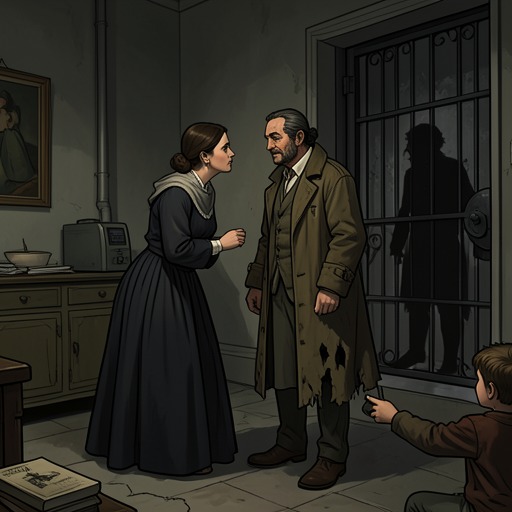
A separate tale sends three young men and three sisters fleeing together to Crete. Their escape does not resolve the dangers surrounding them. The eldest sister, Ninetta, kills her lover Restagnone out of jealousy. To save Ninetta from death, her sister Maddalena yields herself to the Duke of Crete; afterward, Maddalena’s own lover, Folco, kills her and flees with Ninetta.
The remaining couple, Ughetto and Bertella, are accused of the new murder, arrested, and made to confess. Facing death, they bribe their keepers and escape to Rhodes, where they eventually die in poverty. In this account, Crete is a point in a chain of desperate choices: the group’s flight brings no stable protection, and the survivors must flee again.
A place of opposed outcomes
The two stories give Crete no single, settled meaning. Cimon and Lysimachus arrive with a place of refuge in mind and find a welcoming network of friends and relatives; the other lovers’ arrival marks no such secure beginning. Their stories make the island a temporary stage on which love, danger, and escape intersect, while sharply different outcomes—marriage and eventual return in one tale, murder and impoverishment in the other—depend on what happens among the people who flee there.