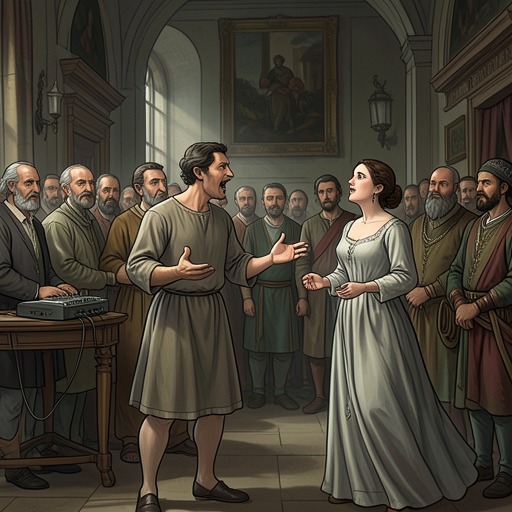
Currado Gianfigliazzi
The DecameronCurrado Gianfigliazzi is a noble citizen known for liberality, magnificence, and a knightly way of life, as well as for his delight in hawks and hounds. In the episode of the one-legged crane, he appears as both a generous host and an exacting master: a falcon of his brings down a young, fat crane, which he sends to his Venetian cook, Chichibio, to roast for supper. When the bird reaches the table missing a thigh, Currado’s authority turns a kitchen theft into a test with a threatened punishment at stake.
Identity and Household
Currado’s social standing is established before the comic dispute begins. He is presented as a prominent citizen whose habits include the pursuits of a knight, and he entertains guests at supper. The crane comes from his own hunt and is intended for that meal; sending it to Chichibio with instructions to prepare it well places the cook under a clear obligation to his master and host.
The missing thigh originates in Chichibio’s affection for Brunetta, a neighborhood woman who enters the kitchen when the crane is nearly cooked and smells savoury. She asks for a thigh and threatens to withhold her favors if he refuses. Chichibio gives one to her. Currado is therefore not confronting an unexplained accident: the bird served to him and his guests has been diminished by the cook’s attempt to please someone else.
The Missing Thigh and the Threat
Seeing the crane at table with one thigh gone, Currado asks Chichibio where it has gone. The cook replies without hesitation that cranes have only one thigh and one leg. Currado rejects the claim from his own experience, but, out of regard for the strangers present, does not prolong the argument over supper. Instead, he requires Chichibio to demonstrate the supposed fact the next morning and warns that, if the claim proves false, the cook will suffer a punishment he will remember.
The delay does not soften Currado’s anger. At daybreak he has the horses brought, puts Chichibio on a rouncey, and takes him toward a watercourse where cranes can be seen in the morning. The ride makes the dispute concrete: Currado intends to show his servant the birds and expose the lie, while Chichibio, frightened and unable to see a way out, follows him knowing that his story must be made good or fail.
The Morning Test
Before Currado sees them, Chichibio spots twelve cranes on the bank, each standing on one leg as cranes do when asleep. He points them out as confirmation of his claim. Currado moves closer and cries out; the birds lower their other legs and take flight. The sight plainly disproves the cook’s account, and Currado challenges him again, now with the birds’ two legs visible.
Chichibio answers that Currado did not cry out to the crane served the previous evening; had he done so, it too would have put out its other thigh and leg. The excuse does not make the original deception true. Its force lies in turning the difference between the sleeping birds and the startled ones into an improvised explanation, and in using Currado’s own action in the morning test as the hinge of the joke.
Anger Turned to Laughter
Currado’s response changes the ending of the encounter. Chichibio’s answer so amuses him that his anger gives way to laughter, and he concedes the comic logic of the reply. The threatened punishment is averted; the cook makes peace with his master through a final piece of verbal quickness.
The episode defines Currado through a small but decisive reversal. His rank gives his threat real weight, and his insistence on seeing the cranes shows that he will not simply accept an implausible answer. Yet the test produces an opportunity for wit as well as proof: once Chichibio turns the demonstration into a joke, Currado can relinquish anger without pretending that the lie was sound. His movement from stern judgment to laughter makes the master’s response as important to the resolution as the servant’s ingenuity.