Dreams as Omens
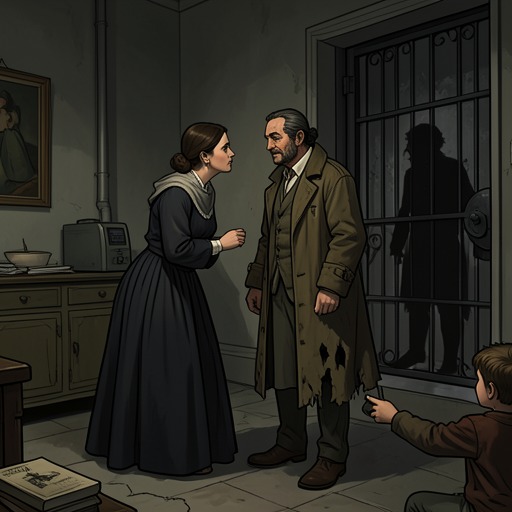
The DecameronDreams as Omens is a narrative motif in which sleep offers images that may seem to disclose what waking life has not yet revealed. In Pamfilo’s story of Andrevuola and Gabriotto, two lovers each dream of a violent loss, but Gabriotto dismisses both visions as empty fancy. His sudden death gives the dreams the force of prophecy, while the storyteller’s careful reflections resist the simpler claim that every dream must foretell the future.
A storyteller’s caution
Pamfilo introduces his story by placing it beside Filomena’s preceding tale. He distinguishes a dream of an event already past from the dreams in his own story, which concern something yet to come. He then considers the opposing habits of belief: some people trust every dream as though it were a waking sight, while others give dreams no credence until a danger they seemed to foretell has arrived. He accepts neither extreme. Dreams, he argues, are neither always true nor always false, and one should not abandon a virtuous intention because of a hostile dream or take an apparently favorable dream as permission to do wrong. This framing makes the story more than a simple demonstration of prediction: the dream’s significance emerges through what happens, and the narrator keeps its lesson qualified.
Andrevuola’s vision
Andrevuola is a young, unmarried daughter of Messer Negro da Ponte Carraro in Brescia. She falls in love with Gabriotto, a neighbor of modest standing whose manners and appearance are praised. With the aid of a household servant, she brings him secretly to her father’s garden. The lovers become husband and wife in secret, continuing their meetings there.
One night Andrevuola dreams that she is in the garden with Gabriotto, holding him in her arms. A dark, frightening shape emerges from his body. She cannot make out its form, but it tears him from her embrace with great force and carries him underground; she can see neither the shape nor Gabriotto again. The dream turns the garden, the place of their private happiness, into the setting for an abrupt separation. Andrevuola wakes relieved that the loss has not yet occurred, but fear remains with her.
When Gabriotto wishes to visit the next night, she tries to prevent him from coming. Rather than let him suspect another reason, she receives him in the garden. She gathers red and white roses and sits with him beside a clear fountain. After they have spent time together, she explains why she had tried to keep him away and recounts the dream. Its force lies partly in the contrast between her dread and the familiar tenderness of their meeting: she has dreamed of being deprived of Gabriotto, yet finds herself holding him again.
Gabriotto’s counter-dream
Gabriotto answers Andrevuola’s fear with disbelief. He attributes dreams to eating too much or too little and says that many are vain. He counters her vision with one of his own, unknowingly offering a second, more detailed image of the same impending loss.
In his dream he hunts in a fair wood and captures a beautiful white hind, which becomes tame and stays constantly beside him. He places a gold collar around its neck and holds it by a gold chain. As the hind lies with its head in his bosom, a hungry black greyhound appears. Gabriotto offers no resistance as it pushes its muzzle into the left side of his chest, gnaws its way to his heart, and carries the heart away. The pain awakens him; he checks his side, finds nothing wrong, and makes light of having done so.
The two dreams differ in shape but converge in their image of a loved body violently taken away. Andrevuola sees an obscure dark presence wrench Gabriotto from her arms and disappear underground. Gabriotto sees a black animal tear out his heart. The white hind and its gold collar and chain give his dream an image of attachment and possession; the black dog breaks into that scene and destroys it. His interpretation treats the vision as an ordinary product of the body, but its imagery becomes difficult to dismiss once events turn.
Fulfillment and interpretation
As the lovers embrace in the garden, Gabriotto suddenly sighs, asks Andrevuola for help, and says he is dying. He falls onto the grass. She draws him into her lap and asks what is wrong, but he cannot answer; after panting and sweating, he dies. The suddenness of his death echoes the dreams’ abrupt violence, while his heart-centered vision gives the reader a striking image against which to understand the fatal change. The story does not explain his death medically; its sequence instead makes the dreams appear ominously prescient.
Pamfilo’s framing leaves room for both the uncanny force of the dreams and caution about what they prove. Gabriotto’s confidence that dreams are meaningless is exposed as mistaken in this instance, but the storyteller does not turn that reversal into a rule that every dream predicts an event. The motif works through dramatic irony: the audience hears the images, watches Gabriotto reject their significance, and then sees a loss that resembles what they seemed to announce. Their function is not only to foreshadow death. They make the lovers’ last meeting painfully charged, because Andrevuola’s fear and Gabriotto’s calm dismissal accompany the same gathering in the garden. The dream that he laughs away becomes, in retrospect, the story’s most exact warning.