Goats
The DecameronThe goats in Beritola Caracciola’s story turn a scene of utter isolation into an unexpected bond of care. A recently delivered she-goat and her two newborn kids offer the abandoned woman companionship; later, the kids’ flight from dogs brings Currado Malespina to her hiding place and sets her journey away from the island in motion.
The goats and Beritola’s isolation
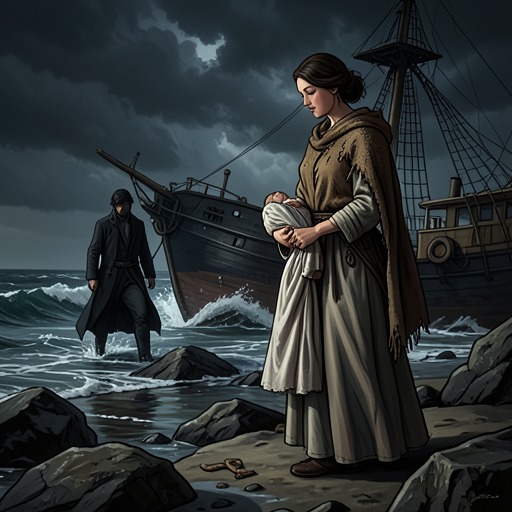
After pirates seize the little ship carrying her children, Beritola searches the shore and nearby caves, then returns at night to the cavern where she has been living. Hungry the following day, she eats herbs. In the midst of her grief and uncertainty about the future, she sees a she-goat enter a neighboring cavern and leave for the woods. Inside, she finds two tiny kids, apparently born that day.
The she-goat’s milk has not yet dried after giving birth. Beritola lifts the kids and puts them to her breast; they suckle and thereafter make no distinction between her and their own mother. The nursing is an act of immediate, practical care, but it also gives the bereaved woman company in a place where she has lost her human family. She grows familiar with the adult goat as well as its young, and resolves to live and die there, subsisting on herbs and water.
From refuge to rescue
Months later, Currado Malespina comes to the island with his wife and servants. While Currado and his party are exploring, his dogs start the now much larger kids as they graze. Pursued by the dogs, the kids flee straight into Beritola’s cavern. She rises and uses a staff to drive the dogs away, protecting the animals that have become her companions.
Currado and his wife follow the dogs and encounter Beritola, now lean, darkened, and hairy from her solitary life. The goats have thus led the visitors to the cave: the kids’ familiar refuge brings their pursuers to the woman whom Currado recognizes through her account of her circumstances. He knows her husband, Arrighetto Capece, and is moved by her misfortunes.
A bond carried beyond the island
Currado offers to take Beritola home or give her a place in his household, but she refuses to go where she might be recognized. After repeated entreaties, Currado’s wife persuades her to travel with them to Lunigiana. Beritola does not leave the goats behind: when the she-goat returns and greets her affectionately, she embarks with both kids and their mother.
Because Beritola’s own name is unknown where she has been living, the account says she is called Cavriuola on account of the she-goat. At Currado’s castle she lives in widow’s dress as a humble, obedient attendant to his wife, while continuing to cherish the kids. The goats therefore accompany her out of isolation and into a new household, preserving the relationship formed through nursing and shared refuge.
Narrative significance
The animals are not merely scenery in Beritola’s abandonment. Their dependence on her gives her a reciprocal bond after the loss of her children, and their attachment is made visible both when the kids accept her as their dam and when the adult goat returns to her with affection. Later, the kids’ return to the cavern connects that intimate refuge to the human world: the dogs pursue them, Beritola defends them, and Currado discovers her. The goats’ presence links survival, recognition, and departure without erasing the companionship that sustained her on the island.