Louis
The DecameronLouis is the son of Gautier of Antwerp, and his story turns on a name imposed for safety: as Perrot, later famed as Perrot the Picard, he grows from a child in exile into a celebrated warrior and marshal. His changed identity protects him after his father’s disgrace, but it also makes recognition the final step in the family’s return from obscurity.
Identity and Background
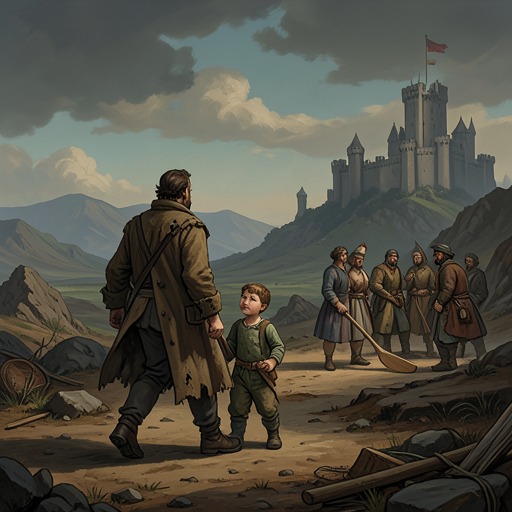
Louis is about nine years old when his father, fleeing to England with Louis and his younger sister Violante, reaches London in mean apparel. Gautier instructs the children to endure the poverty that has overtaken them through no fault of their own and, above all, never to disclose their parentage. To secure that concealment, he changes his son’s name to Perrot and his daughter’s to Jeannette. The new names are not a rejection of their family but a precaution against the danger their noble birth could bring while their father remains an exile.
Life Under an Assumed Name
Gautier leaves Louis in Wales in the service of the English king’s marshal. Louis grows up there under the name Perrot the Picard, separated from his father and sister and known by the identity his father devised. The story gives no account of his reunion with Violante during this period; instead, it traces his progress through the household and service that become the setting for his rise.
Rise and Recognition
Perrot wins his lord’s favor and becomes renowned for his prowess. He excels in tournaments, jousts, and other feats of arms, until no one in the land is said to rival him. When a pestilential sickness sweeps through Wales, the marshal, his wife, their only son, and many of their kin die. Perrot survives alongside the marshal’s daughter and the remaining household servants. With the approval and counsel of local gentlemen, the daughter takes Perrot as her husband, and he becomes lord of the inheritance. The English king, hearing of the marshal’s death and Perrot’s worth, appoints him marshal in his former lord’s place.
Family Reunion and Narrative Significance
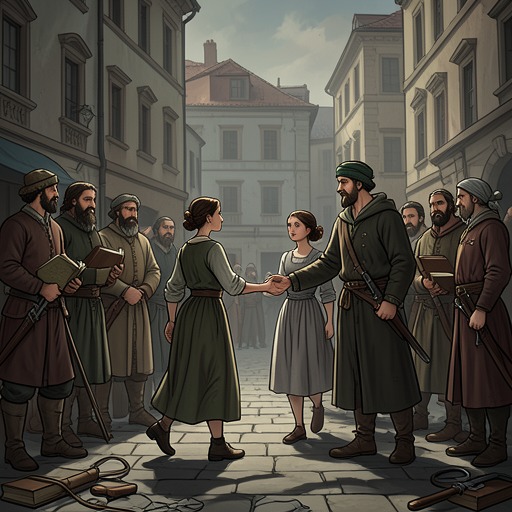
After Gautier learns that the French king has declared him innocent and intends to restore him, he goes with Jamy Lamiens to meet Perrot. Rather than claim the reward being offered for the discovery of the exiled family, Gautier proposes that it be awarded to Jamy, who has married Violante without a dowry. He then reveals himself as Perrot’s father and identifies Perrot as the son of the Count of Antwerp. Perrot recognizes him, weeps, falls at his feet, and embraces him. Jamy, remembering the affronts he had directed at Gautier when the count lived in disguise, asks forgiveness; Gautier raises him and grants it. Louis’s trajectory thus joins two forms of restoration: the public recognition of his birth and the private recovery of his family, made possible in part by the identity that had kept him safe.