Ponza
The DecameronPonza is the place where Madam Beritola Caracciola’s flight from the political upheaval in Sicily becomes a second, more intimate catastrophe: left behind when pirates seize her children and their nurse, she grieves in isolation and survives among wild goats. In the story, the island is at once a point of accidental refuge and the setting for a profound separation from family and human society.
Island setting and arrival
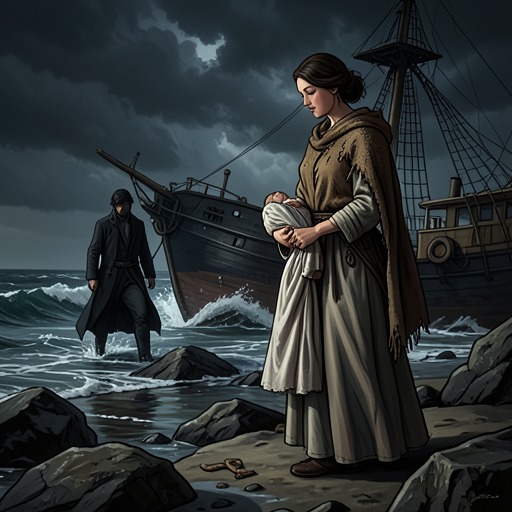
After the death of Emperor Frederick II, Manfred became King of Sicily, and Arrighetto Capece, who governed the island for him, prepared to flee when Charles I of Anjou defeated Manfred at the Battle of Benevento and Sicily passed to Charles. Arrighetto was captured. Fearing shame and not knowing his fate, his pregnant wife, Madam Beritola, abandoned her possessions and escaped by boat with her young son Giusfredi. She gave birth to Scacciato on Lipari, then set out with both children and a nurse for Naples, where she hoped to rejoin her kin.
The voyage did not reach its intended destination. Wind drove the ship to Ponza, where the travelers entered a small inlet and waited for a chance to continue. The accompanying note identifies Ponza as an island in the Gulf of Gaeta, about seventy miles from Naples, and says that it appears to have been deserted in Boccaccio’s time. The island’s remoteness gives the family a temporary stopping place, but no secure refuge.
Separation and search
While the others remained by the shore, Madam Beritola went inland to a secluded spot to mourn Arrighetto. Her lament had become a daily practice. During one of these absences, a pirate galley arrived without being noticed by anyone, seized the nurse and both children along with the other people and goods aboard the little ship, and departed.
Returning to the shore to visit her children, Beritola found them gone. She looked out to sea and saw the galley towing the small vessel away; only then did she understand that the children had been taken as well as her husband. She collapsed on the beach, calling for her family. When her senses returned, she searched for a long time, looking through every cavern, but found no trace of them. As night approached, she went back to the cavern where she usually wept and spent the night in fear and anguish.
Life among the goats
The next day, hunger forced Beritola to eat herbs. As she sat grieving and wondering what her life would become, she saw a she-goat enter a nearby cavern and then leave for the woods. Inside she found two very young kids, apparently born that day. Because her milk had not dried after giving birth to Scacciato, she lifted them to her breast. They suckled willingly and thereafter treated her as their mother.
This small act of care alters the island’s solitude without undoing its loss. Beritola grows familiar with the old goat and its young, finding company where no human companion remains. She stays on Ponza, living on herbs and water and weeping whenever she remembers her husband, children, and former life.
Narrative significance
Ponza marks the gap between Beritola’s intended return to her family and the unforeseen course of her story. The storm brings her there by chance; the pirate raid then removes the children while she is away, making the island the scene of her deepest isolation. The goats offer neither news nor rescue, but their acceptance of her gives her a reason to endure in the immediate aftermath of loss. Her time on the island thus binds human bereavement to a spare image of survival: a mother alone in a cavern, nursing animals that have lost their own mother.