Santa Maria Novella
The DecameronSanta Maria Novella is the Florentine church where seven young women meet amid the plague of 1348, and the setting from which the Decameron’s storytelling company takes shape. In a city nearly emptied by disease, the church joins public worship to an improvised gathering: after service, the women sit together, speak of the crisis, and begin the exchange that leads away from the streets of Florence and toward the stories that structure the work.
Setting in Plague-Stricken Florence
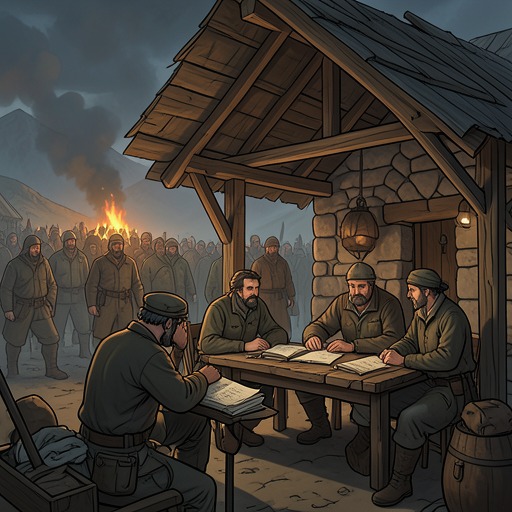
The meeting occurs in the spring of 1348, after the plague has spread west and reached Florence. The narrative describes a city overwhelmed by illness and death: remedies seem ineffective, infection is feared through contact with the sick and their belongings, and terror has broken the ordinary bonds between neighbors and even close relatives. Many people flee the city, while others fall sick with little care. Against this background, Santa Maria Novella is notably almost empty on the morning of the gathering.
The account places the meeting on a Tuesday morning, when the women have come to hear divine service in mourning attire, appropriate to the season. Their presence in a church does not erase the surrounding catastrophe; it situates their first conversation within a city where religious observance, grief, and the effort to decide how to live now coexist.
The Gathering
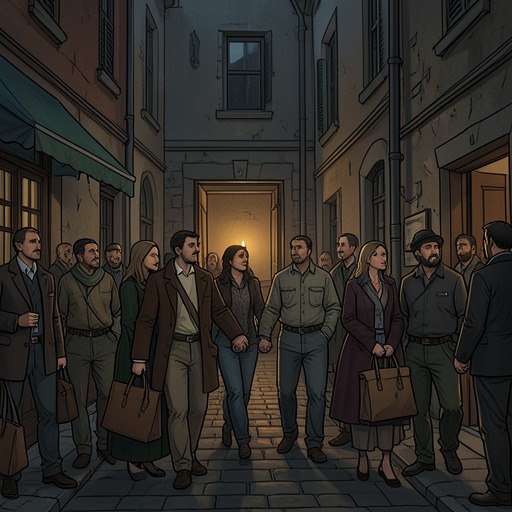
Seven women meet there by chance, in a corner of the church. They are connected by friendship, neighborhood, or kinship, and range in age from eighteen to twenty-eight. The narrator describes them as discreet, noble-born, graceful, well-mannered, and lively. Their meeting is therefore neither an announced assembly nor a planned departure: the story begins with familiar social ties gathering in a public place during an emergency.
They sit in a ring and, after sighing and setting aside their prayers, talk about the conditions of the time. When the others fall silent, Pampinea begins to speak. Her initiative turns the group’s shared presence into deliberation: the church is where the women first consider a response to the disorder around them, before their conversations develop into the company’s storytelling routine.
A Place in the Narrative Frame
The narrator says he learned of the gathering afterward from someone he considered trustworthy. He withholds the women’s actual names, explaining that he does not want the later telling and hearing of their stories to expose them to shame or give envious critics grounds to attack their reputations. Instead, he assigns names, including Pampinea, Fiammetta, Filomena, Emilia, Lauretta, Neifile, and Elisa, so that their speech can be followed without confusion.
That framing makes Santa Maria Novella more than a backdrop. The church anchors the account of the plague to a specific encounter, while the narrator’s careful presentation of the women establishes how their words will be preserved and distinguished. The gathering begins in the familiar form of worship and conversation, but it also inaugurates the narrative space in which stories can be told and heard.
Narrative Significance
Santa Maria Novella marks a change of scale: from the city’s mass suffering to a small circle of women who can speak together. The contrast is not presented as an escape from the plague’s reality; their mourning clothes and their conversation about the times keep that reality in view. Rather, the church provides the setting for the company’s first act of collective attention, as the women move from sighs and prayers to discussion and, with Pampinea’s opening, toward the storytelling that will organize the work.