Ughetto
The DecameronUghetto is one of two wealthy young companions drawn into a clandestine household formed around three sisters and their lovers. He joins a scheme to pool fortunes, leave Marseilles, and live with Bertella; the venture brings him briefly to a life of abundance in Crete, then into a chain of suspicion, coerced confession, and flight that ends in poverty on Rhodes. His story makes him both a participant in an audacious escape and one of the people harmed by the jealousies and violence it cannot contain.
Identity and Introduction
Ughetto is introduced as a young man whose father is dead and who has inherited great wealth. He falls in love with Bertella, the youngest of the three daughters of Narnald Cluada, a rich merchant then away in Spain on business. Bertella is fourteen; her elder sisters, Ninetta and Maddalena, are fifteen-year-old twins. Ughetto’s love for Bertella brings him into the company of Folco, another wealthy young man who loves Maddalena, and Restagnone, Ninetta’s lover.
The decisive proposal, however, comes from Restagnone. Having noticed Folco and Ughetto’s devotion to the sisters, he reasons that their wealth can finance a shared escape and compensate for his own lack of means. He presents the three men as allies who could travel with the sisters and live together as happily as brothers. Ughetto’s place in the plan thus begins with a bargain: love supplies the purpose, but pooled property supplies the means.
The Escape to Crete
Folco and Ughetto agree to Restagnone’s proposal. They sell some lands under the pretense that they intend to trade with the proceeds, turn their other goods into money, and secretly equip a light brigantine. The preparations are practical and collective, while the sisters’ participation depends on Ninetta. Knowing her sisters’ feelings, she persuades them to embrace the venture until they can scarcely wait for its completion.
On the appointed night, the sisters take a great quantity of money and jewels from their father’s coffer and leave home as arranged. The young men are waiting; all six board the brigantine and row out to sea. They reach Genoa the next evening, then resume their journey, arriving at Crete before the eighth day. There they buy substantial estates near Candia and build comfortable houses. The former fugitives settle into a lordly life, surrounded by servants, hounds, hawks, and horses, with banquets and entertainments marking their new prosperity.
Ughetto’s successful arrival is also the high point of the shared project. The riches that enabled escape appear to have secured the lovers’ independence and ease. Yet the arrangement depends on more than common wealth: the men’s attachments must endure, and the narrator soon shows how quickly abundance and possession can unsettle them.
Violence and Separation
The rupture begins with Restagnone, whose love for Ninetta wanes once he can have her without hindrance. He becomes enamored of a young woman of the country and courts her with entertainments and attentions. Ninetta learns of this and responds with jealousy and reproaches. Restagnone dies, and the duke has Ninetta seized to discover what she knows about his death. The duke intends to punish her, while Folco and Ughetto receive private notice of the arrest and fear she will be burned.
Maddalena tries to save her sister by agreeing to the duke’s desire on two conditions: Ninetta must be returned safe and the arrangement must remain secret. The duke accepts, secretly sleeps with Maddalena, and stages Ninetta’s apparent removal in a sack as though she were to be drowned at sea. He then returns her to her sister. Ughetto and Folco, meanwhile, are released after being led to believe that Ninetta has died; they go home to console Maddalena and Bertella.
Folco soon discovers that Ninetta is alive in Maddalena’s palace. When Maddalena explains how she secured her sister’s release, he responds in rage and kills her. He then conceals his purpose from Ninetta, pretending he is taking her to safety as her sister had planned. Ninetta leaves with him that night without saying goodbye to Maddalena. Folco and Ninetta reach the shore with only a little money and embark on a vessel; their destination is never learned.
Flight and Narrative Significance
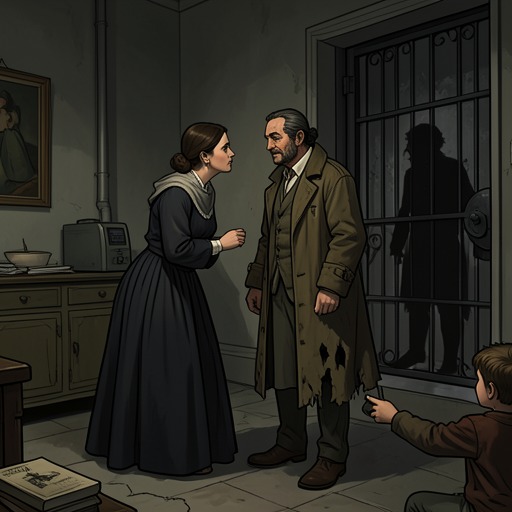
The next day, Maddalena’s murder brings the duke back into the story. People who hate or envy Ughetto inform against him, and the duke, grieving for Maddalena, arrests Ughetto and Bertella before they know that Folco and Ninetta have departed. He compels them to confess themselves guilty along with Folco. The accusation makes Ughetto suffer for a killing he did not commit: the group’s shared history and his association with Folco are enough to draw him into the consequences of Folco’s act.
Ughetto and Bertella escape by bribing their keepers with money they had hidden at home for urgent need. They leave by night with the guards, without time to take any of their other possessions, and flee to Rhodes. There they live only briefly before falling into poverty and distress. The fortune that first made the escape possible cannot protect them from the violence that follows or preserve the prosperous life they built near Candia.
The story’s closing judgment connects the group’s ruin to Restagnone’s uncontrolled love and Ninetta’s rage, which bring suffering not only to themselves but to others. Ughetto is not described as initiating the betrayals or the murder; his trajectory instead shows how an alliance formed for private happiness makes its members vulnerable to one another’s choices. He begins with wealth and a plan for a life of pleasure, reaches apparent security in Crete, and ends displaced and impoverished, his fortunes determined by conflicts that spread beyond their original lovers.