
Lee Bodecker’s Corrupt Bargains
The Devil All the TimeThis thread traces Lee Bodecker’s compromised use of law enforcement, his uneasy attachment to Sandy Henderson, and his fatal pursuit of Arvin Eugene Russell.
increasing Bearing strength in each event
 decreasing
Bearing strength in each eventdecreasingAmbition in the Badge
Authority as Opportunity
A planned ascent
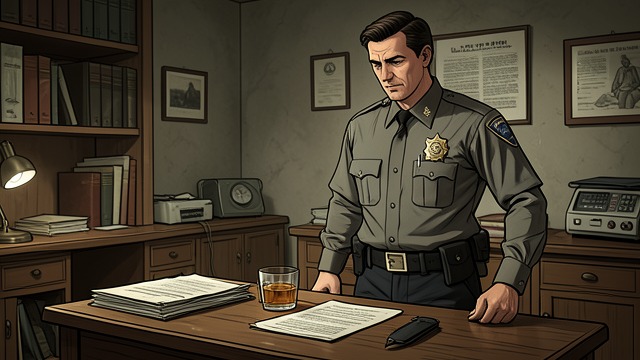
Lee Bodecker returns from the Army and sees his position as a deputy as a route to money and political power. He resents Sheriff Hen Matthews’s public prominence and imagines replacing him, using whatever leverage he can gather before the next election.
His family obligations serve as both burden and excuse. He pays bills for his mother and sister Sandy Henderson but thinks of leaving them behind as soon as his own prospects improve.
A private appetite for control
Bodecker’s fantasies of abusing his absent father reveal how he understands authority: as the power to punish someone without witnesses. That impulse sits uneasily beside the badge he wears in public.
His ambition therefore begins with a contradiction. He wants the legitimacy of elected office while already treating law enforcement as a tool for personal advantage.
Tater Brown’s Payments
The Badge for Sale
Criminal work
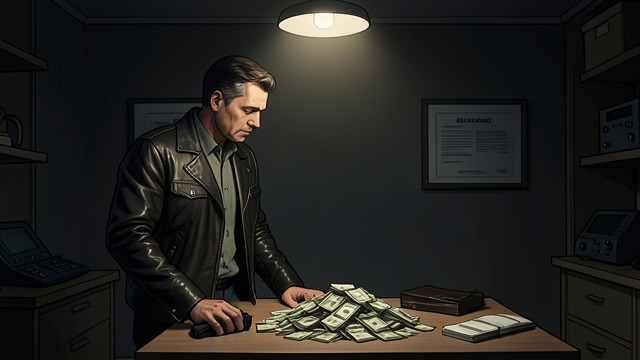
Bodecker becomes involved in paid work for Tater Brown, using his position to locate and capture people the criminal wants removed. In one case, he shoots Coonrod in the back of the head after dragging him into the woods, collecting a payment that rises to five thousand dollars.
The money rewards Bodecker for turning an official power into private violence. He recognizes that his earlier choices have trapped him, but he continues because the arrangement has become too dangerous to leave cleanly.
A widening risk
Bodecker knows that public discovery of his dealings could destroy his political career. When Sandy warns that Tater Brown’s circle may put him in prison, he dismisses her concern even though she has seen money passed to him.
His corruption is no longer a single compromised act. It becomes a network of obligations that shapes how he responds to threats and makes his later investigation of the Henderson murders inseparable from his own self-preservation.
A Warning About Sandy
Family Concern and Political Fear
A report from town
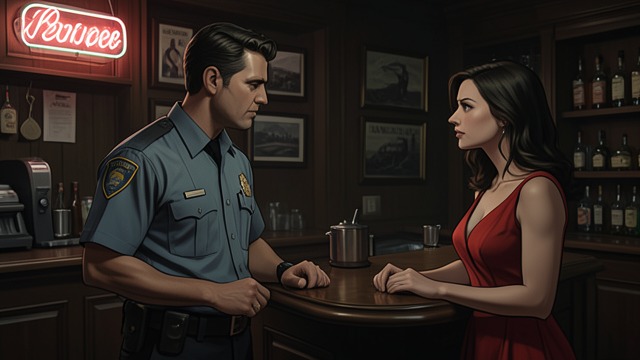
A caller tells Bodecker that Sandy Henderson has been selling sex from the back of the Tecumseh Lounge. The allegation unsettles him because it could damage his standing, and he goes to the bar to ask whether she is there and how long she has been away.
Bodecker learns that Sandy and Carl Henderson are traveling. He frames his concern partly as a matter of family protection, but he is also afraid that attention to her conduct will expose his own dealings with Tater Brown.
A strained bond
The siblings are not close, and Bodecker’s concern arrives mixed with judgment and self-interest. He later questions a teenage waitress about Carl’s visits to the White Cow Diner, warning her to call him if Carl asks her to pose for photographs.
His protectiveness never becomes a clear break from coercion. He seeks information about Sandy and Carl while continuing to make decisions for them through authority and intimidation.
The Henderson Investigation
A Sheriff Protecting Himself
The evidence at the scene
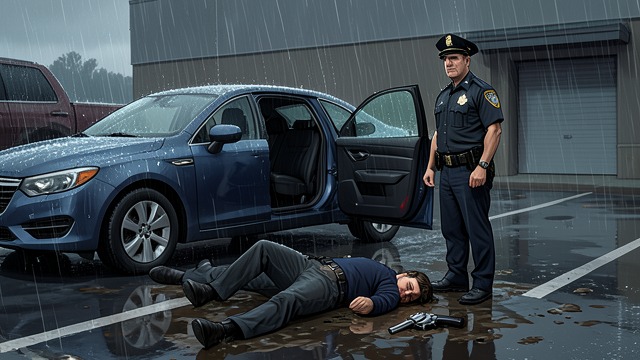
Bodecker arrives at the station wagon where Carl Henderson and Sandy Henderson have been killed. He studies Sandy’s wounds, identifies the ammunition in her pistol as blanks, and notices that Carl did not fire his own weapon.
His reconstruction suggests that the shooter was in the backseat before moving outside the car. The scene tells him that a capable gunman killed the couple, but the details also connect to the secrets he has kept about his sister and brother-in-law.
Evidence concealed
Bodecker secretly removes film from the car and later finds Carl’s hidden photographs. Rather than preserve evidence for the investigation, he burns the photographs and film at a dump, fearing what the images might reveal about Sandy and the family.
He also arranges for Carl to receive an unmarked pauper’s grave. The investigation becomes a cover-up as much as a search for the killer, and Bodecker’s private shame distorts the public pursuit of justice.
The Last Pursuit

The Sheriff Meets Arvin
A concealed pursuit
After a call from Sheriff Tick Thompson identifies Arvin Eugene Russell as a suspect in a preacher’s murder, Bodecker recognizes the boy from the night Willard Russell died. He hides the West Virginia lead from his deputy and burns the photographs that might expose Sandy’s role in Carl’s crimes.
He goes alone to the abandoned Russell property, carrying a shotgun and hoping to take control of the situation before anyone else can question him. His plan includes turning Arvin into a political story if it serves his future, but he also wants to suppress the truth about Sandy.
The clearing becomes a reckoning
At the prayer clearing, Bodecker confronts Arvin and refuses to surrender his weapon. Arvin shoots him, then shows him the photograph of Sandy holding a dead victim, explaining that he had begged her to put the gun down.
Bodecker dies before he can respond. Arvin buries his pistol beside Jack’s remains and leaves the clearing, while the sheriff’s death closes a chain of corruption, secrecy, and violence that Bodecker had hoped to manage rather than answer for.
In the years after Lee Bodecker leaves the Army
Before the 1966 investigation of Carl and Sandy Henderson
Summer 1965 in Meade
August 1966 after Carl and Sandy are found dead
Near the ending in 1966 at the prayer clearing
