
Willard and Charlotte’s Devotion
The Devil All the TimeThis thread follows Willard Russell and Charlotte Russell from their sudden courtship through marriage, illness, and Willard’s desperate attempt to keep her alive.
increasing Bearing strength in each event
 decreasing
Bearing strength in each eventdecreasingLove at the Wooden Spoon
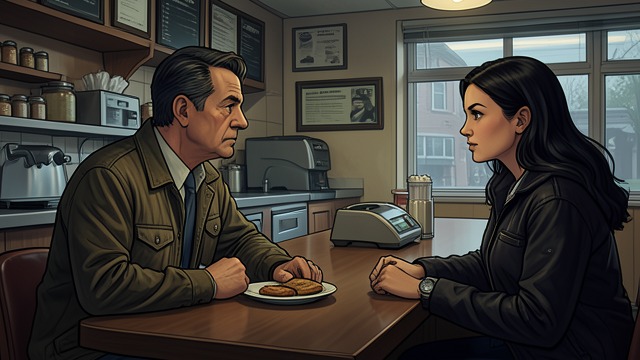
Love at the Wooden Spoon
An Unexpected Meeting
On the way home after serving in the United States Army, Willard Russell stops at the Wooden Spoon in Meade, Ohio. The dark-haired waitress, Charlotte Russell, leaves him nearly unable to speak. After the violence and death he has witnessed in the war, her ordinary presence feels like a sudden opening toward another life.
Willard remembers the meal as the best he has ever had, despite its poor cooking. The significance lies not in the food but in the attention he gives Charlotte. He leaves without learning her name, yet the encounter becomes the beginning of a devotion that reorganizes his plans.
Choosing a Future
Back home, Willard talks about Charlotte with unusual openness. Emma Russell worries because she had promised God that her son would marry Helen Laferty, but Willard is already intent on returning to Ohio to find the waitress.
He goes back, meets Charlotte properly, and marries her. The choice establishes a family life far from the hills where he grew up. It also leaves Emma to reconcile her promise with the fact that Willard has chosen love for himself.
Building a Home Together
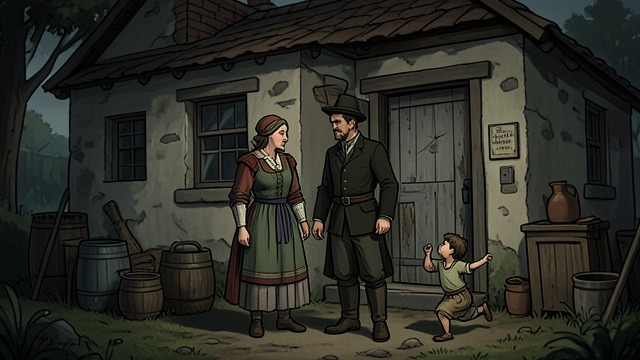
Building a Home Together
A Family Takes Shape
Willard Russell and Charlotte Russell welcome their son, Arvin Eugene Russell, in 1948. They settle in Meade, Ohio, and later rent a farmhouse on the Mitchell Flats. For Charlotte, whose childhood offered little stability, the worn house becomes a possibility: a place their son might always call home.
The couple’s hopes do not take identical forms. Charlotte wants to save enough to buy the farmhouse, while Willard finds comfort in the woods and in his private prayers. Even so, the household’s daily work and their shared care for Arvin make the rented home a joint project.
Strain Around the Dream
Their landlord, Henry Dunlap, repeatedly manipulates the price and taunts Willard with the couple’s limited means. Willard restrains his anger partly because he knows how much Charlotte wants the house. His efforts to keep the peace are one expression of his attachment to her dream.
The farmhouse never becomes theirs through ordinary saving. The difficulty makes later events more painful: Charlotte’s wish for a secure home remains unfinished just as illness forces the family to face a much more immediate loss.
A Promise at the Sickbed
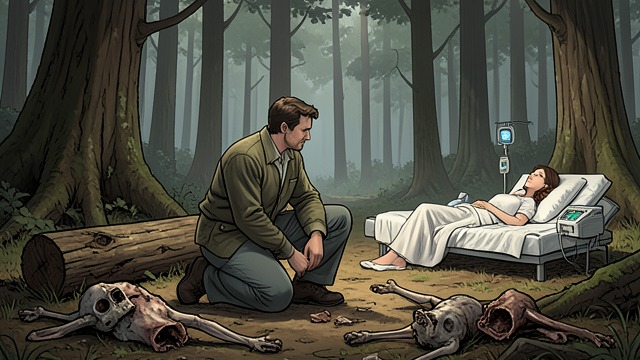
A Promise at the Sickbed
Refusing to Abandon Hope
When doctors tell Willard Russell that Charlotte Russell has terminal cancer, he brings her home rather than let her spend her remaining time in the hospital. He tries to give her what she wants: to be in the farmhouse and, for a while, imagine that it belongs to them.
Willard turns to the prayer clearing, determined to find a way to save her. He expands it, raises more crosses, and draws Arvin Eugene Russell into the repeated prayers. His actions are driven by devotion, but his certainty turns the family’s grief into an increasingly punishing religious trial.
Love Becomes Desperation
Willard begins sacrificing animals, believing that something beyond prayer may be required. The rotting remains and the worsening smell make the clearing a physical expression of the death he is trying to hold back. Charlotte, increasingly disoriented and in pain, asks him to stop and let her die in peace.
He cannot accept her request. His attachment to Charlotte is genuine, yet he puts his need to save her above her stated wishes and makes Arvin share the burden. When she dies, Willard’s devotion has become inseparable from helplessness, guilt, and the destruction of the home life they had hoped to build.
The Last Vigil
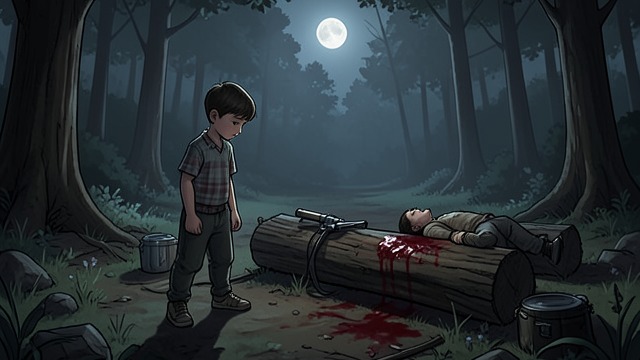
The Last Vigil
Grief Without a Shared Language
After Charlotte Russell’s funeral, Arvin Eugene Russell cannot find comfort in the prayers that dominated the final weeks of her life. Willard Russell returns alone to the clearing, still surrounded by the remains of his effort to keep her alive.
Arvin tells his father that he will not pray anymore. He is not trying to reject Charlotte; he is refusing to continue a ritual that made him watch her suffering without changing its outcome. The difference between father and son is now impossible to hide.
An Irreversible Separation
Willard has killed himself at the prayer log. Arvin discovers him and feels the absence of tears as another consequence of the exhausting months that preceded Charlotte’s death. Whatever love Willard felt for his wife has led him to a place from which he cannot return to his son.
The scene leaves the marriage as an enduring presence in Arvin’s memory: Willard’s devotion to Charlotte explains the depth of his despair, but not all the harm he caused while acting on it. The family bond survives only in the boy’s effort to understand what his parents meant to one another and what their losses have left him.
Autumn 1945, on Willard’s journey home from war
1948 to the early 1950s, after Arvin’s birth
Summer 1958, after Charlotte is brought home from the hospital
Late summer 1958, after Charlotte’s funeral
