
Hank Bell’s Small Horizon
The Devil All the TimeThis thread follows Hank Bell’s modest hopes for escape from Knockemstiff and his two encounters with Arvin Eugene Russell at pivotal moments.
increasing Bearing strength in each event
 decreasing
Bearing strength in each eventdecreasingA Life on Hold
The Promise of Elsewhere
A modest ambition
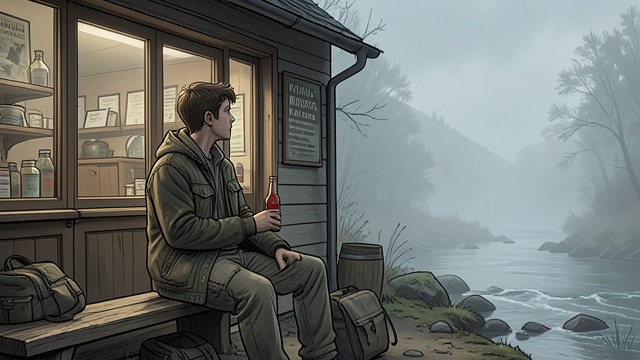
Hank Bell lives in a camper behind Maude’s store and saves a little money from his work there. He talks about leaving Knockemstiff but has not decided whether to head north or south, treating the decision as something he can postpone.
His immediate dream is more specific: a trip to Cincinnati, a ballgame, and the experience of buying a hot dog at the park. He imagines that travel will mark the beginning of a different life, although he has never been farther west than Hillsboro.
Local gravity
The town’s familiar routines both comfort and constrain him. Hank watches the fog rise from the creek, listens to the boys on the bridge, and imagines their simple wants as a life he might envy.
His plans are earnest but indefinite. The store and the people who pass through it keep him anchored to Knockemstiff even as he tells himself that he is still young enough to begin elsewhere.
The Boy at Closing Time
An Unexpected Witness
A child seeking help
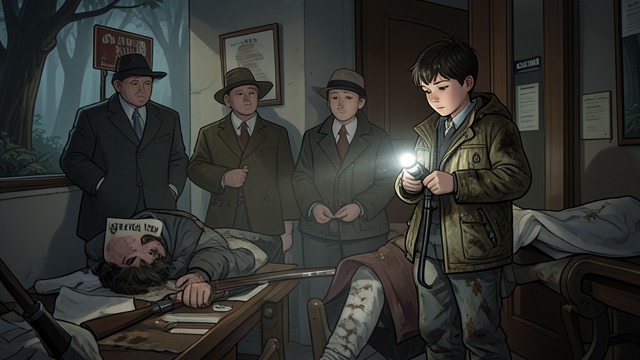
On the night Willard Russell dies, Hank sees Arvin Eugene Russell approaching the store with a flashlight. The boy says that his father is dead and asks Hank to contact the law because he has never used a telephone.
Hank initially wonders whether grief has confused him, but he offers Arvin a root beer and listens. The boy explains that Willard’s throat is cut and that the body lies in the woods near the prayer log.
A first act of trust
Hank calls for the sheriff and stays with Arvin while they wait. He does not turn the child away for having no money, telling him that he can owe for the drink.
The encounter interrupts Hank’s private daydreams and brings him face to face with a tragedy larger than he can understand. Arvin’s plain account and composure remain with him, making this one of the defining nights Hank remembers about the Russell family.
Waiting for Cincinnati
A Dream Beside the Store
The witness stays behind
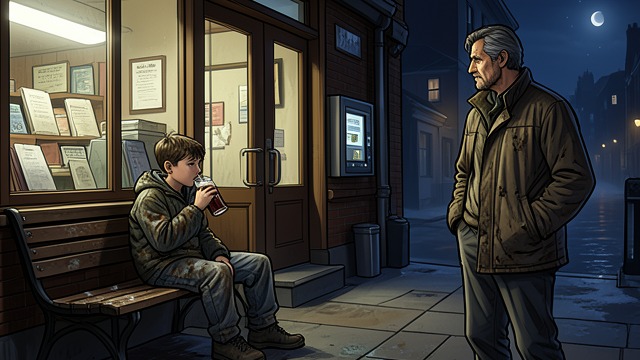
After calling the law, Hank sits with Arvin outside the store. He offers a cigarette, but the boy declines and drinks his root beer while the night settles around them.
Hank’s attention drifts back to his own life and his humiliating encounter with Mildred McDonald. He imagines a future trip to Cincinnati and a woman who might make him feel unlike the lonely young man he believes the town has made him.
Two different departures
Arvin’s grief and Hank’s fantasies share the same bench but point in opposite directions. Arvin has just lost both parents and must leave with the welfare worker; Hank can only imagine a departure that he has not yet made.
Their brief conversation establishes Hank as a kindly witness, not a rescuer. He gives the boy practical help and companionship, while the promise of travel remains a private hope that keeps Hank facing outward from his cramped life.
The Familiar Storekeeper
Recognition at the Counter
An old place, a changed boy
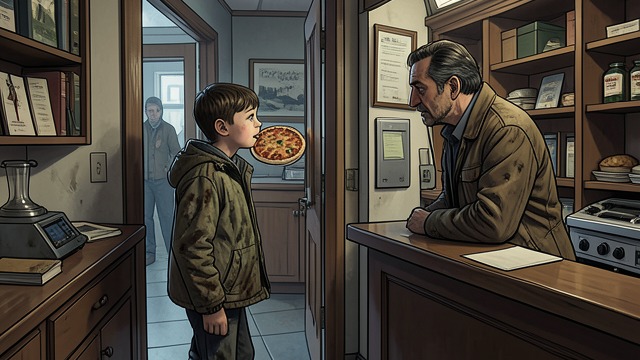
Arvin returns to Knockemstiff on foot and enters Maude’s store for root beer and supplies. Hank, older and more worn, recognizes him as the boy who came for help on the night of his father’s death.
Hank tells him that the old house burned down and recounts what the town believes about Henry Dunlap’s murder. He also answers Arvin’s question about Janey Wagner, offering the small local updates that make the past feel both recognizable and irretrievable.
Gratitude remembered
Before leaving, Arvin thanks Hank for his kindness years earlier and says he has not forgotten it. Hank remembers the pie on the boy’s face and Bodecker mistaking it for blood, turning an old emergency into a vivid shared memory.
The exchange provides Arvin with a brief human connection before he goes back toward the ruins of his childhood. Hank’s simple generosity has endured longer than the storekeeper’s own plans to leave town.
A Question About the City
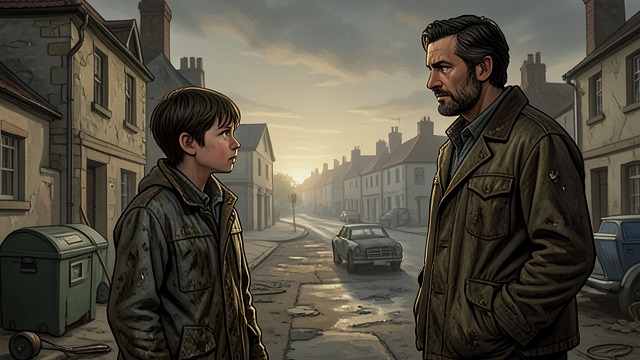
An Unfinished Invitation
Hank looks outward again
After hearing about Lee Bodecker’s sister’s death, Hank remarks that Bodecker might have deserved the same fate. Arvin does not explain what he knows, and the conversation remains on the surface of local gossip.
Hank then asks whether Arvin has ever been to Cincinnati. The question returns to the dream Hank voiced years earlier, when a journey to the city seemed capable of starting his life anew.
No shared destination
Arvin says that he has not been there, though he has heard plenty about it. He leaves without promising to meet Hank later, and Hank’s invitation remains a possibility rather than a plan.
The exchange gives Hank’s thread a quiet, open ending. His wish to see beyond Knockemstiff persists, while Arvin moves north alone, carrying losses that Hank can acknowledge but cannot share.
Late summer 1958 in Knockemstiff
The evening Willard Russell dies in 1958
The evening after Willard’s funeral in 1958
Eight years after Arvin leaves Knockemstiff
At the end of Arvin’s visit in 1966
