Bavaria
The Disappearance of Josef MengeleBavaria anchors two sharply different parts of Josef Mengele’s history: the hometown and family world he sought to escape, and the rural refuge where he concealed himself after the war. Günzburg, Munich, and a farm near Mengele’s hometown mark its roles in his early ambitions, his postwar evasion, and his later memories of his father.
Home and Ambition
Mengele grew up in the orbit of Günzburg and later recalled that, by the age of fifteen, he had resolved not to remain there under his father’s authority. His account links the town to both familial pressure and ambition: he imagined a future beyond the place where he had been raised.
His education also took him to Munich, one of several university settings he remembered alongside Vienna and Frankfurt. In retrospect, these cities belonged to the formative years when he pursued scientific distinction, working hard while classmates socialized and adopting the research ambitions that shaped his later career.
A Postwar Refuge
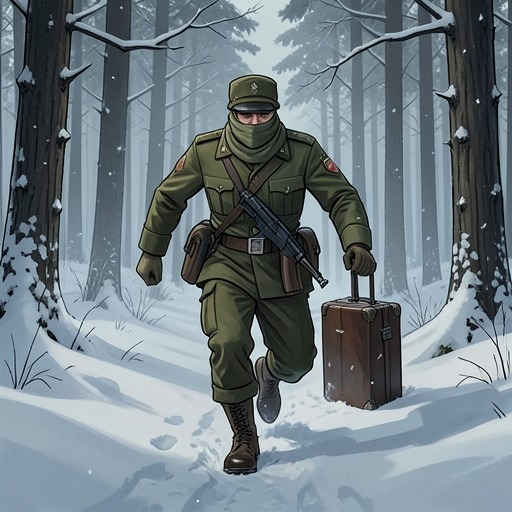
After leaving Poland in January 1945, Mengele spent three years in hiding on a farm near Günzburg. Living under the assumed name Fritz Hollmann, he cut hay and sorted potatoes, occupations that concealed his identity in a rural setting close to his hometown. Bavaria thus became a place of concealment as well as origin: he remained near familiar ground while living under a different name.
At Easter, he left the farm and crossed the Dolomites by forest paths into South Tyrol, where he took the name Helmut Gregor. That departure ended his Bavarian refuge and began the next stage of his escape through Italy to Genoa and, ultimately, Argentina.
Family Memory and the Region
Years later, while in Paraguay, Mengele mourned his father by recalling a childhood excursion with him. In the summer of 1919, the two climbed Hirschberg and picnicked above the Bavarian lakes; Mengele remembered a butterfly landing on his sleeve. He also recalled his father’s Latin prayer, which had been recited to him at bedtime after he nearly drowned as a child.
The memory complicates Bavaria’s place in his story without softening the record of his actions. The region appears as the landscape of an intimate paternal recollection, but also as the vicinity in which he hid after the war and from which he eventually fled. Its significance lies in that tension between remembered home and practical refuge.